

An irrigation controller decides when the plants get watered, which zones get it, and for how long, by switching pumps and solenoid valves on a schedule. Add nutrient and it becomes a fertigation controller, injecting feed into the irrigation stream as it runs. This is the delivery and the timing; it is a different job from the dosing loop, which sets how strong the solution is. Together they answer the two halves of feeding a crop: what is in the water, and when it reaches the roots.
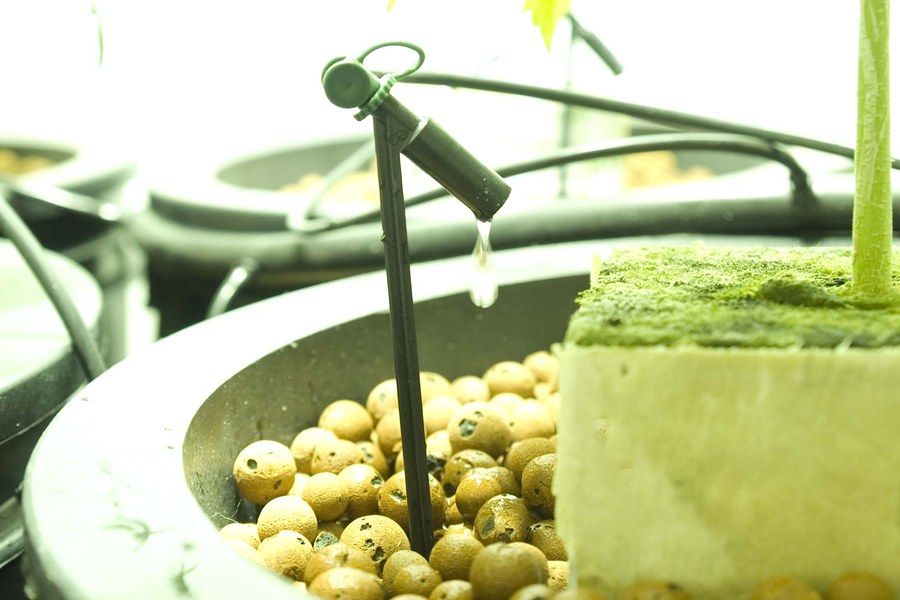
What it is.
A controller, a pump or a pressurized supply, and one or more solenoid valves, wired into a schedule. The controller can be a simple hose-tap timer, a multi-zone irrigation controller, or a microcontroller running the logic. It opens a valve or starts a pump to deliver a measured amount of water, then closes it, on the clock or on a sensor’s say-so. The valves and pumps are switched through relays, since many irrigation solenoids run on 24V AC and a pump can be a heavy load.
Scheduled or on-demand.
The first decision is what triggers a watering: the clock, or a sensor reading the medium. Side by side:
| Spec | Scheduled (timer) | On-demand (sensor) |
|---|---|---|
| Triggers on | The clock, at set times | A soil-moisture or weight reading |
| Needs | A reliable timer | A sensor in the root zone |
| Strength | Simple and predictable | Matches real plant demand, saves water |
| Watch for | Over or under-watering as conditions change | A misplaced or failed sensor making a bad call |
| Best for | Stable rooms, steady drip | Variable conditions, tight efficiency |
A pure schedule is simple and predictable, and it suits a stable room on steady drip. On-demand watering watches a soil-moisture sensor or weighs the pot and waters only when the medium dries to a threshold, which matches real demand and saves water but leans entirely on the sensor being placed well and working. The common middle ground is a schedule with a sensor as a check: water on the clock, but skip or extend a cycle based on what the medium actually reads.
Zones and valves.
Most systems water in zones, each one a solenoid valve feeding a group of plants, and the controller runs them in sequence rather than all at once, because a pump or supply line can only push so much water at a time. A larger system adds a master valve and a pump-start signal so the supply is only live while a zone is actually watering. The controller’s job is to step through the zones, hold each open for its set run time, and never open more at once than the supply can feed.
Cycle and soak.
One long watering often runs straight through the medium and out the bottom before the roots can take it up, and in dry coco or rockwool the water can channel down one path and leave the rest dry. Cycle-and-soak breaks a watering into several short pulses with rest between, so each pulse wets the medium and the soak lets it spread and absorb before the next. A controller that can run pulses instead of one long shot gives more even moisture and less runoff, which is one of the clearest reasons to use a real controller over a plain tap timer.
Fertigation: feed in the flow.
Fertigation is feeding and watering in one act, and there are two ways to do it. Batch fertigation mixes a tank to the target strength first (this is where the dosing loop holds pH and EC), and the irrigation controller simply delivers from that tank. Inline injection doses concentrate straight into the flowing water as a zone runs, using dosing pumps or a venturi injector, so the feed is mixed on the way to the plants. Either way it helps to read the runoff: measuring the EC of what drains tells you whether the crop is being fed too richly or too lean, and a flow sensor confirms each zone actually delivered.
Backflow and dry-run safety.
Two hazards deserve real care. The first is backflow: when you inject nutrient into a line fed from a drinking-water supply, a pressure drop can siphon that nutrient back into the potable water, so a backflow preventer is not optional and is often required by code. The second is a dry run: a pump that keeps running after the reservoir empties can burn itself out in minutes, so tie a water-level sensor to a low-level cutoff. Add a filter to keep emitters from clogging, and remember that a stuck valve floods or starves a zone just as a stuck relay does anywhere else.
Key facts.
Where it fits, and where it doesn’t.
Where it fits
- Drip and emitter systems across several zones.
- Cycle-and-soak in coco, rockwool, or pots.
- Fertigation, batch or injected into the flow.
- On-demand watering driven by a moisture sensor.
Where it doesn’t
- Setting the solution’s strength; that is the dosing loop.
- A pump left to run dry with no level cutoff.
- Injecting feed with no backflow preventer.
- A clogged, unfiltered line the controller cannot fix.
Resources.
The chemistry it delivers, the sensors that guide it, and the brain that runs it:
Dosing & fertigation Soil-moisture sensors Water-level sensor Home Assistant
Frequently asked questions.
What does an irrigation controller do?
It decides when the plants get watered, which zones get it, and for how long, by switching pumps and solenoid valves on a schedule. Add nutrient and it becomes a fertigation controller, injecting feed into the irrigation stream as it runs. It handles delivery and timing, which is a different job from the dosing loop that sets how strong the nutrient solution is.
Should I water on a timer or on a sensor?
A timer is simple and predictable and suits a stable room on steady drip. A sensor-driven, on-demand setup waters only when a soil-moisture sensor or pot weight says the medium has dried to a threshold, which matches real demand and saves water but depends on the sensor being placed well and working. The common middle ground is a schedule with a sensor as a check: water on the clock, but skip or extend a cycle based on what the medium reads.
What is cycle-and-soak watering?
It breaks a watering into several short pulses with rest between them instead of one long shot. Each pulse wets the medium and the soak lets the water spread and absorb before the next pulse. This gives more even moisture and less runoff than a single long watering, which can channel through dry coco or rockwool and run out the bottom before the roots take it up. The ability to run pulses is a main reason to use a real controller over a plain tap timer.
How is fertigation different from dosing?
Dosing sets how strong the solution is, holding pH and EC at target. Fertigation delivers that feed with the water during an irrigation event. You can do it as a batch, mixing a tank to strength first and then irrigating from it, or by inline injection, dosing concentrate into the flowing water as a zone runs. The irrigation controller handles the timing and delivery; the dosing loop handles the chemistry.
What safety does a fertigation system need?
Two things above all. A backflow preventer, because injecting nutrient into a line fed from drinking water means a pressure drop could siphon nutrient back into the potable supply, which is often required by code. And a dry-run cutoff, because a pump that keeps running after the reservoir empties can burn out in minutes, so tie a water-level sensor to a low-level shutoff. Add a filter to stop emitter clogging too.