

Knowing how full a tank or reservoir is turns out to matter a lot: a nutrient reservoir that runs dry kills a pump, a rain barrel that overflows wastes the catch, and a livestock trough nobody checks is a welfare problem. A water-level sensor answers the simple question “how much is in there” from a screen instead of a walk. The methods range from a dead-simple float switch to a non-contact ultrasonic reading, and the right one depends on the tank, the water, and whether you need a single alarm or a full gauge.
Why level matters.
Level is one of those readings that prevents disasters more than it optimizes yields. A dry reservoir can burn out a pump in minutes. An overflowing dosing tank spills nutrients or chemicals. A sump or low spot filling up is the first sign of a leak or a flood. And a remote tank you would otherwise have to climb to check becomes a number on a dashboard, with an alert when it crosses a threshold. For a grower, level sensing is mostly about catching the bad thing before it happens.
Compare the methods.
Five ways to read a level, from a one-dollar float to a non-contact beam. The tinted column is the everyday pick for a tank or reservoir, because it gives a full reading and never touches the water.
| Spec | Float switch | Optical point | UltrasonicOur pick | Pressure | eTape |
|---|---|---|---|---|---|
| Reads | On/off at a level | On/off at a point | Continuous, non-contact | Continuous depth | Continuous strip |
| Contact | In the water | In the water | Above, no contact | Submerged, sealed | On the wall, sealed |
| Best for | Pump protection, alarms | A point-level trigger | Tanks and reservoirs | Deep tanks and wells | Mid-size tanks |
| Note | Cheap, simple, reliable | No moving parts | Good for dirty or nutrient water | Reads pressure as depth | Neat, but specialty |
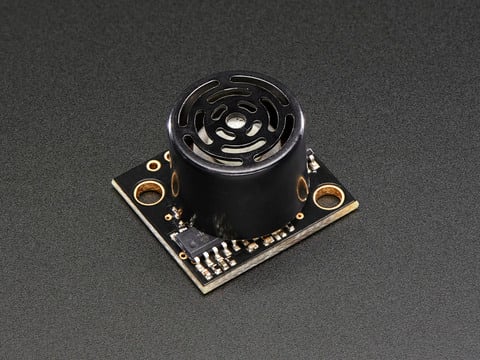
For the deep dives, the ultrasonic sensor is the non-contact, full-reading choice for most tanks, and the eTape is a continuous strip for when you want a contact gauge. A float switch is the cheapest on/off option (a floating magnet trips a reed switch), and a submersible pressure sensor reads depth from the bottom of a deep tank or well. Match the method to the job below.
Keep it out of the water.
The biggest practical split is whether the sensor touches the water or not. Anything in the water (a float, an optical point, an eTape) eventually fouls, scales up, or, with cheap parts, corrodes, and in a nutrient solution that happens faster. A non-contact ultrasonic sensor sits above the water and never touches it, so there is nothing to clean or corrode, which is why it is the go-to for nutrient reservoirs and dirty water. When you can read the level without dipping anything in, do, and save the contact methods for clean water or simple alarms.
Point vs continuous.
Decide what you actually need. A point sensor (a float switch or optical sensor) only tells you whether the water is above or below one spot, which is all you need for “the pump must never run dry” or “alert me when it is nearly empty.” A continuous sensor (ultrasonic, pressure, eTape) gives the actual level as a number, so you can see the trend, estimate how many days of water are left, and chart it. Point sensing is cheaper and simpler; continuous tells you more. Many setups use both: a continuous gauge for the dashboard and a hard float switch as a fail-safe.
Where they fit, and where they don’t.
Where they fit
- Nutrient reservoirs and irrigation tanks.
- Rain barrels and harvested-water cisterns.
- Pump dry-run protection and overflow alarms.
- Livestock troughs and remote tanks you cannot easily check.
Where they don’t
- Flow rate; that is a flow meter, not a level sensor.
- Water quality; use water chemistry sensors.
- Foamy or turbulent surfaces, which fool ultrasonic.
- Cheap contact sensors in nutrient solution, which foul fast.
Resources.
The deep dives and a place to send the reading; external links open in a new tab:
Ultrasonic level sensor eTape level sensor Water chemistry All sensors
Frequently asked questions.
What is the best way to measure a water tank level?
For most tanks and reservoirs, a non-contact ultrasonic sensor mounted above the water: it gives a continuous reading and never touches the water, so there is nothing to foul or corrode. For a simple “don’t run dry” alarm, a cheap float switch is enough. For a deep tank or well, a submersible pressure sensor reads depth from the bottom.
Why use a non-contact sensor for a nutrient reservoir?
Because anything sitting in a nutrient solution fouls, scales, or corrodes over time, and cheap contact sensors do it fast. A non-contact ultrasonic sensor sits above the water and reads the level by echo, so nothing is in the solution to clean or degrade. That makes it the reliable choice for hydroponic and dosing reservoirs.
What is the difference between point and continuous level sensing?
A point sensor, like a float switch, only tells you whether the water is above or below one spot, which is all you need to protect a pump or trigger a low alarm. A continuous sensor, like ultrasonic, pressure, or eTape, gives the actual level as a number, so you can chart the trend and estimate days of water left. Many setups use a continuous gauge plus a float switch as a fail-safe.
Can a water-level sensor warn me before a tank runs dry?
Yes, and that is its best use. Wire the sensor to a microcontroller, push the level to Home Assistant or a similar hub, and set a threshold so a low reservoir or a rising sump sends an alert before it becomes a problem. A continuous sensor can even estimate how long until empty from the rate of change.
Does an ultrasonic level sensor work outdoors?
Yes, with a weatherproof version (the JSN-SR04T is the common waterproof ultrasonic). Mount it above the highest water line, pointed straight down at the surface. Watch for foam, heavy turbulence, or steep tank walls, which can scatter the echo, and for condensation on the transducer in humid spots. In a calm tank it is reliable.