
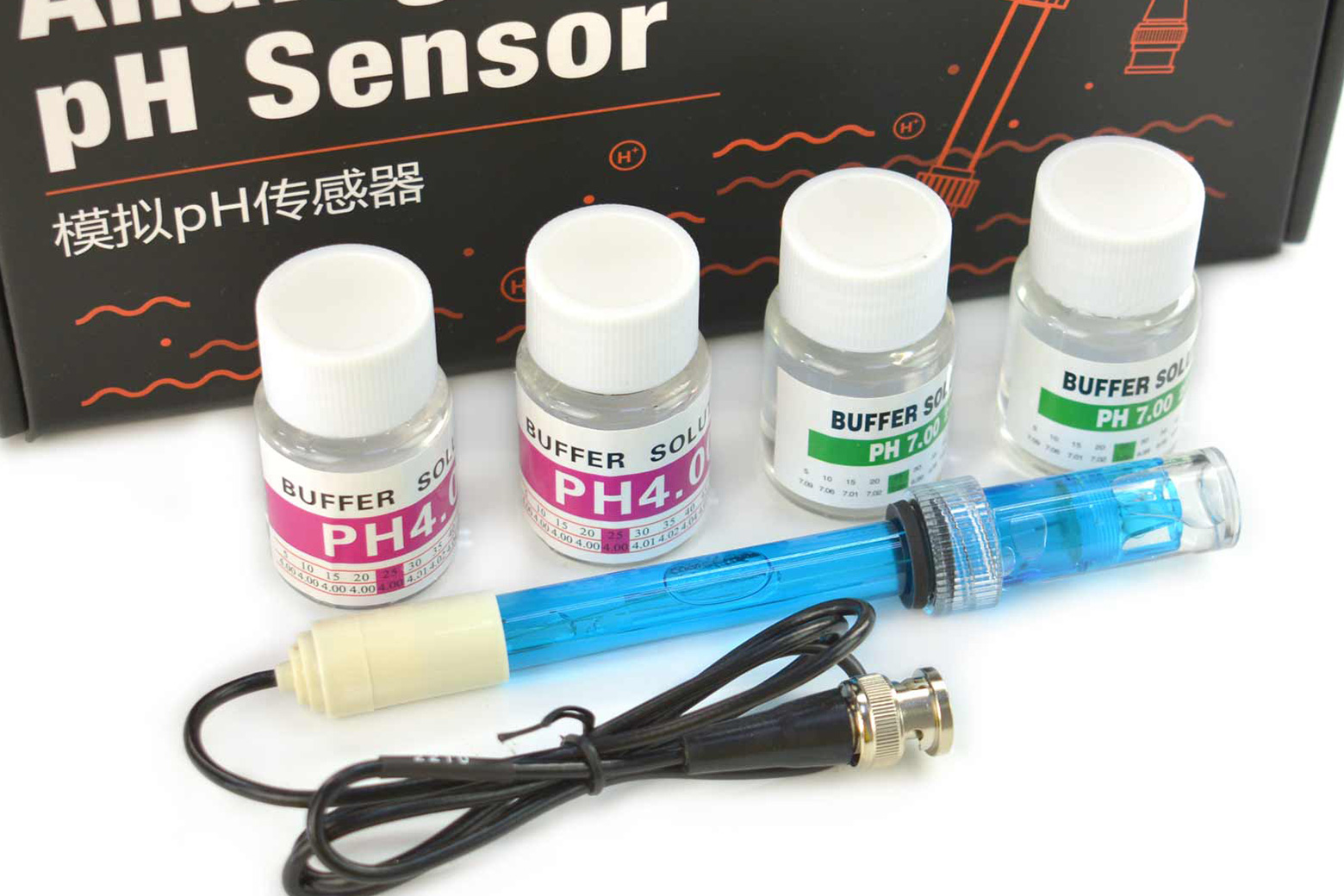
If you grow in water, these probes are how you see what the plant is drinking. pH and EC together tell you almost everything about a nutrient solution: how available the nutrients are, and how strong the feed is. Dissolved oxygen and ORP fill in the rest for water culture and sanitation. They are the most rewarding sensors a hydroponic grower owns, and the most demanding.
What they measure.
Each probe reads one property of the solution. pH is acidity, and it sets how easily a plant can take up each nutrient; drift too far and nutrients lock out even when they are present. EC (electrical conductivity), often shown as TDS (total dissolved solids), is how much dissolved salt is in the water, which stands in for nutrient strength. Dissolved oxygen is the air in the water that roots need in deep water culture. ORP (oxidation-reduction potential) tracks how oxidizing the water is, used to manage sanitation. Where fish share the water, as in aquaponics and aquaculture, ammonia, nitrite and nitrate probes follow the nitrogen cycle that keeps them alive. Temperature affects all of them, so a good setup compensates for it.
The four readings.
These are not competing choices; they answer different questions. Most growers start with pH and EC and add the others only if the system calls for them.
| Reading | pH | EC / TDS | Dissolved O₂ | ORP |
|---|---|---|---|---|
| Tells you | Acidity (0–14) | Dissolved salts, nutrient strength | Oxygen in the water | Oxidation / sanitation level |
| Why it matters | Drives nutrient uptake | How strong the feed is | Root health in water culture | Cleanliness, ozone control |
| Calibration | Often, with buffer fluids | With a standard solution | Membrane or optical | With a standard solution |
| Consumable? | Probe wears out | Probe lasts longer | Membrane caps wear | Probe wears out |
| Temp matters | Yes, compensate | Yes, compensate | Yes | Yes |
| Typical use | Every hydro setup | Feeding and fertigation | Deep water culture, aquaculture | Sanitation systems |
Atlas Scientific is the common choice for embedding these in a project (their EZO circuits speak I²C or serial to a microcontroller); DFRobot Gravity probes are a cheaper analog route, and DFRobot also sells an industrial RS-485 Modbus line (pH, EC, ORP, turbidity, optical dissolved oxygen, ammonium) that runs on 12 to 24 volts with the electronics sealed in the probe. For the deep dive on each reading, see the pH, EC, dissolved oxygen, ORP, and ammonia, nitrite and nitrate pages.
The upkeep is the point.
Set the right expectation before you buy. Water-chemistry probes are the highest-maintenance sensors in this whole library. A pH probe must be calibrated against buffer solutions on a schedule, it drifts as it ages, it fouls in dirty water, and it eventually wears out and needs replacing, sometimes within a year. EC probes are sturdier but still want calibration against a known standard. So budget for calibration fluids and replacement probes from the start, store probes wet (never dry), and read Trust Your Gauge before you let any of these run a doser. The reading is only as good as the last calibration.
Where they fit, and where they don’t.
Where they fit
- Hydroponics and fertigation: pH and EC are essential.
- Deep water culture, where dissolved oxygen drives root health.
- Dialing in and logging a nutrient recipe over time.
- Sanitation control, with ORP.
Where they don’t
- Set-and-forget use. They need calibration and care.
- Soil growing, mostly; this is a water-system toolkit.
- Running a doser on an uncalibrated or aging probe.
- Leaving a probe dry between uses; it ruins many of them.
Where to start.
Buy the calibration solutions with the probe, not after. A pH probe without buffer fluid is a guess.
Resources.
These open in a new tab:
Atlas Scientific (probes + circuits) DFRobot Gravity (analog) Open Agriculture Technology: the Chemistry reference
Frequently asked questions.
What sensors do I need for hydroponics?
Start with pH and EC. pH tells you whether the plant can take up nutrients, and EC tells you how strong the solution is. Add a dissolved-oxygen probe for deep water culture, and ORP only if you are managing sanitation. Buy calibration fluids with the probes.
What is the difference between EC and TDS?
They measure the same thing two ways. EC is the electrical conductivity of the solution; TDS is total dissolved solids, an estimate of salt content derived from EC by a conversion factor. Both stand in for how strong the nutrient feed is. EC is the more direct number.
How often do I calibrate a pH sensor?
Regularly, against buffer solutions, because pH probes drift as they age and foul. Many growers calibrate weekly to monthly depending on use, and store the probe wet. A probe also wears out over time and eventually needs replacing, so budget for that.
Are cheap pH sensors any good?
They can work, but the probe matters more than the electronics, and cheap probes drift and die faster. Whatever you buy, the reading is only as good as the last calibration, so calibration fluids and the discipline to use them matter more than the price of the board.
Why does water temperature matter for pH and EC readings?
pH, EC, and dissolved oxygen readings all change with water temperature even when the chemistry has not changed, so an accurate setup measures temperature too and compensates for it. Many probe systems include or expect a temperature input for exactly this reason.