

An ORP sensor reads oxidation-reduction potential in millivolts, a single number for how strongly the water tends to oxidize, which in practice tracks how sanitizing it is. It is the specialist of the water-chemistry set: most growers never need it, but if you treat water with ozone, chlorine, or another sanitizer, it is how you keep that dose under control.
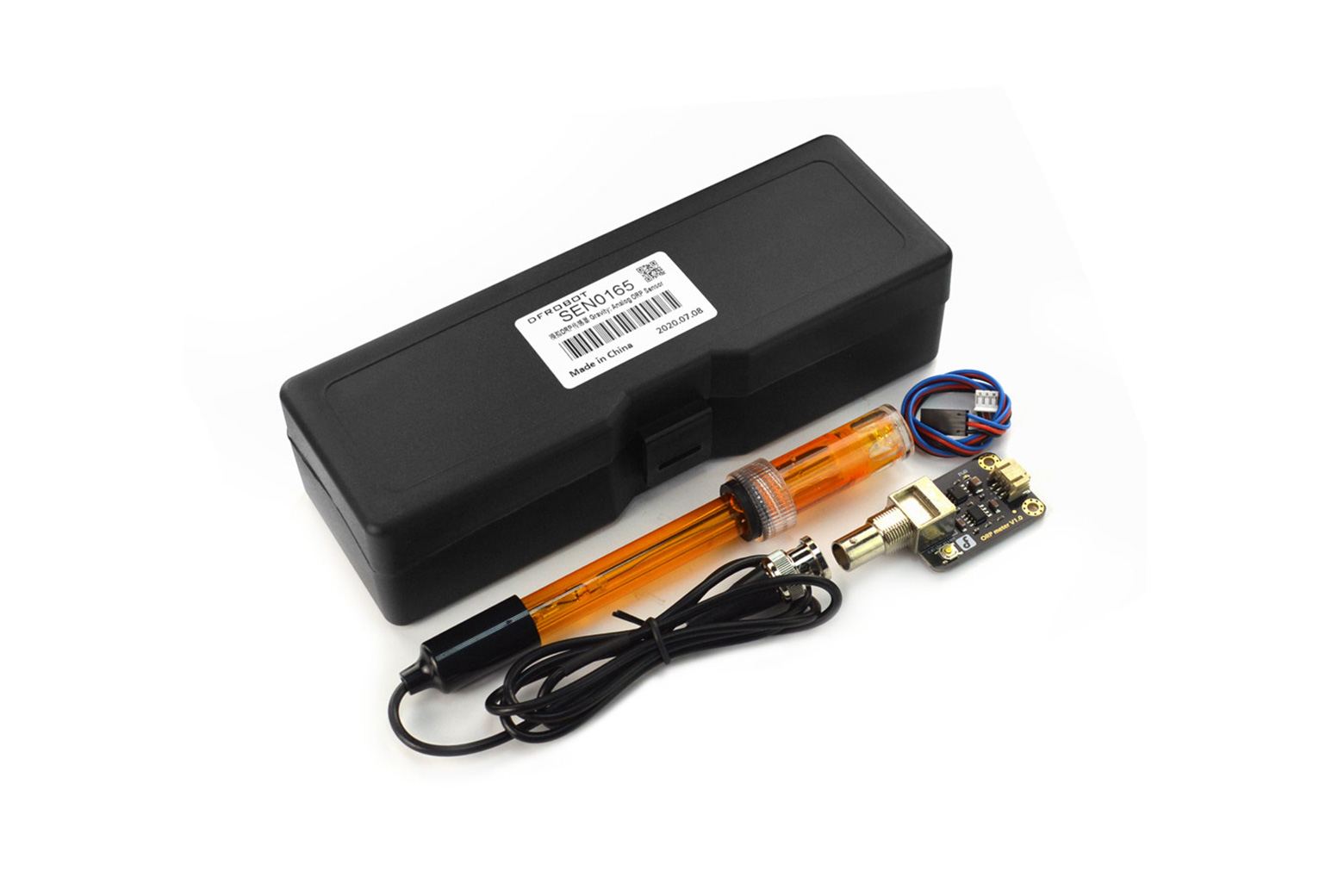
What it is.
Like a pH probe, an ORP probe is an electrode that produces a small voltage, but instead of acidity it reads the balance of oxidizing and reducing agents in the water, reported in millivolts (positive means oxidizing). A board turns that into a number for your microcontroller; the Atlas Scientific EZO-ORP circuit reports it over I²C or serial. It is calibrated against an ORP standard solution.
What it is good for.
ORP is the standard way to manage water sanitation. A given ORP level corresponds to an effective sanitizing power, so ozone, chlorine, and similar systems are often controlled to an ORP setpoint rather than a chemical dose, because ORP measures the effect directly. For a grower that means cleaner irrigation water, fewer pathogens in a recirculating system, and a dosing loop you can automate. Outside sanitation, most growing does not need it, which is why it is the last probe people add.
Key facts.
Where it fits, and where it doesn’t.
Where it fits
- Ozone or chlorine water-sanitation control.
- Recirculating systems where pathogens are a risk.
- Dosing a sanitizer to an ORP setpoint.
- Reading with ESPHome via an Atlas EZO circuit.
Where it doesn’t
Resources & where to buy.
ESPHome: Atlas EZO Atlas Scientific ORP Where to buy Water & chemistry overview
Frequently asked questions.
What does an ORP sensor measure?
Oxidation-reduction potential, in millivolts: how strongly the water tends to oxidize. In practice it tracks how sanitizing the water is, which is why it is used to control ozone and chlorine treatment.
What is the difference between ORP and pH?
They are different readings from similar-looking probes. pH measures acidity, which governs nutrient uptake. ORP measures oxidizing power, which tracks sanitation. A grower uses pH everywhere in water culture and ORP only when treating water for cleanliness.
Do I need an ORP sensor for hydroponics?
Usually not. ORP is for managing water sanitation with ozone or chlorine, common in larger recirculating or aquaponic systems. Everyday hydroponics runs on pH and EC; ORP is the last probe most growers consider, if at all.
How is ORP used to control sanitation?
A given ORP level corresponds to an effective sanitizing power, so systems dose ozone or chlorine to hold an ORP setpoint rather than to a chemical concentration. Because ORP measures the effect directly, it is a reliable target for an automated dosing loop.