

An EC sensor measures the electrical conductivity of a solution, which rises with the amount of dissolved salt in it, so it tells you how strong your nutrient mix is. Paired with a pH sensor, it is the other half of the picture every hydroponic grower needs: pH says whether nutrients are available, EC says how much is there.
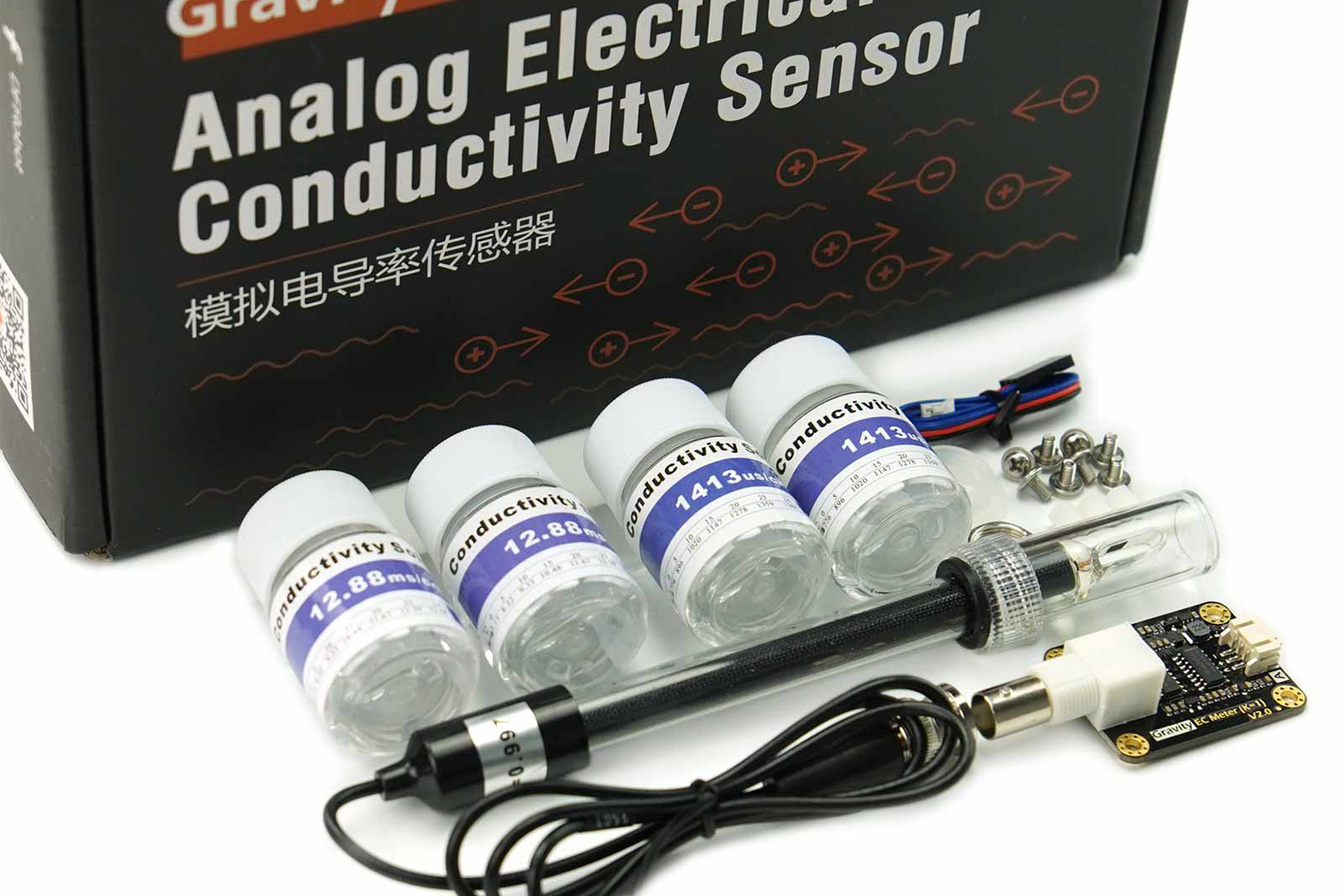
What it is.
A bare EC probe is a pair of electrodes; the more dissolved nutrient salt in the water, the better it conducts, and the board turns that conductivity into a number. Unlike a pH probe, an EC probe has no fragile glass bulb, so it is sturdier and lasts longer, though it still wants calibration and a clean surface. It does not tell you which nutrients are present, only the total strength, which is exactly what you watch when feeding a crop.
EC, TDS, and PPM.
These are three ways of saying the same measurement. EC (electrical conductivity, in milliSiemens per centimeter) is the direct reading. TDS (total dissolved solids) and PPM (parts per million) are estimates of salt content derived from EC by a conversion factor, and that factor differs between meters (the common 500 and 700 scales disagree), which is why two PPM meters can read differently on the same water. EC is the honest, direct number; if you trade nutrient recipes, share EC to avoid the PPM confusion.
Two grades.
As with pH, the split is the electronics. A cheap analog EC board (such as a DFRobot Gravity) outputs a voltage your microcontroller reads; it is inexpensive and fine for watching the trend. The embedded-grade Atlas Scientific EZO-EC circuit does temperature compensation and calibration on a dedicated chip and reports a clean value over I²C or serial, which is the easier path for a permanent, trustworthy build. Whichever you choose, EC must be temperature compensated, because conductivity rises with water temperature even when the nutrients have not changed.
Key facts.
Where it fits, and where it doesn’t.
Where it fits
- Hydroponics and fertigation, alongside pH.
- Watching and dialing in nutrient strength.
- Driving a doser, once calibrated.
- Reading with an ESP32 (analog) or ESPHome (Atlas EZO).
Where it doesn’t
- Telling you which nutrients are present; only the total.
- Readings without temperature compensation.
- A reliable PPM number to share; share EC instead.
- Soil growing, mostly; this is a water-system tool.
Resources & where to buy.
ESPHome: Atlas EZO Atlas Scientific EC DFRobot Gravity EC Water & chemistry overview
Frequently asked questions.
What does an EC sensor measure?
The electrical conductivity of a solution, which rises with the amount of dissolved nutrient salt. It tells you how strong your feed is, not which nutrients are present. In hydroponics it is paired with a pH sensor as the two essential readings.
What is the difference between EC, TDS, and PPM?
EC is the direct conductivity reading. TDS and PPM are estimates of dissolved solids derived from EC by a conversion factor, and that factor differs between meters (the 500 and 700 scales), so two PPM meters can disagree on the same water. EC is the honest, direct number to share.
Does an EC sensor need temperature compensation?
Yes. Conductivity rises with water temperature even when the nutrient content has not changed, so an accurate EC reading must be temperature compensated. Embedded-grade circuits like the Atlas EZO-EC handle this; with an analog board you add a temperature reading and compensate in code.
Is an EC probe as fragile as a pH probe?
No, it is sturdier. An EC probe is a pair of electrodes with no fragile glass bulb, so it lasts longer and is more forgiving than a pH probe. It still benefits from calibration with a standard solution and a clean surface.
Can I read an EC sensor with ESPHome?
Yes, most directly with an Atlas Scientific EZO-EC circuit through ESPHome's EZO component over I2C. A cheap analog EC board can be read on an ESP32 analog pin with calibration and temperature compensation in your config or code.