
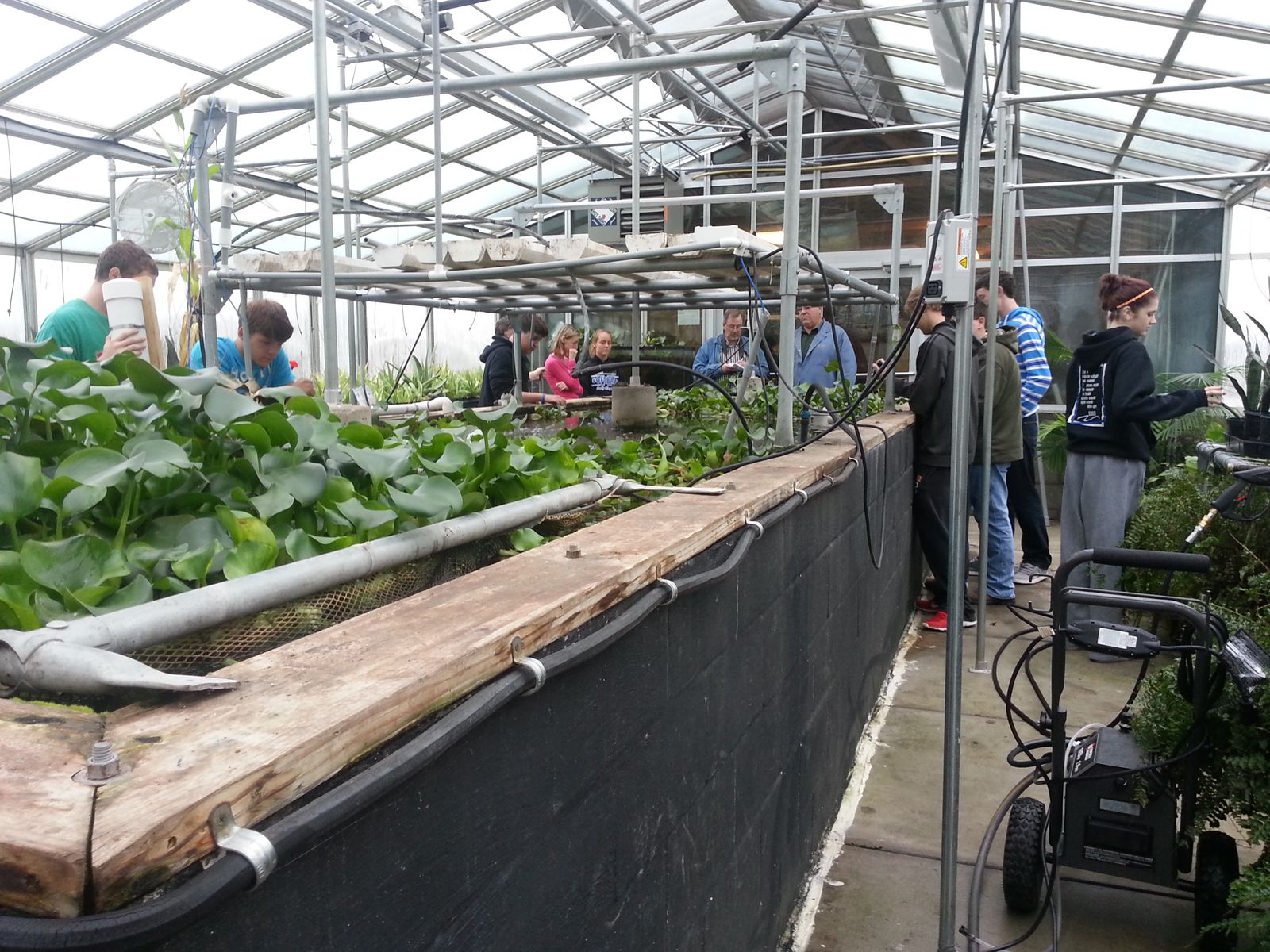
An Innovation Center is a working farm where the appropriate-technology approach runs in real production, open for growers to visit and learn from. Three are in development now; each will be named here when it is ready to receive visitors.
What an Innovation Center is.
An Innovation Center is a working agricultural operation, owned and run by members of the collective, where appropriate technology is deployed, maintained, improved, and documented, and where other growers are welcome to visit, learn, and take that knowledge back to their own operations.
Several things make this definition distinct. An Innovation Center is a real operation, not a model farm. The crops grown there are sold. The equipment runs because it has to run. The monitoring systems exist because the grower depends on them. Visitors see what actually works, not what looks good in a brochure. When something fails, the failure is visible, and the lesson learned is part of what the visitor takes home.
An Innovation Center is also a teaching place, but teaching in a specific way. Not lectures, not formal curriculum, not credentialed programs. Teaching in the way experienced farmers have always taught each other: by showing, by answering questions, by walking through problems, by explaining what has been tried and what has worked. Growers teach growers. Farmers teach farmers. The Innovation Center provides the setting where that teaching can happen with real examples on hand.
An Innovation Center is independent of Open Agriculture Technology. The collective does not own the centers, does not operate them, and does not control what happens at them. The collective recognizes them as centers because the operations meet criteria the collective has agreed matter: real deployment of the appropriate-technology approach, openness to visitors, commitment to sharing knowledge. The relationship is voluntary on both sides. A center joins the network by choice and can leave by choice. Open Agriculture Technology lists the centers in the network; the centers themselves remain fully independent operations.
The tiered model.
Not every member of the collective runs an Innovation Center. Not every operation that contributes to the collective needs to be one. A tiered model describes how operations relate to the Innovation Center concept, from the flagship centers that anchor the network to the workshops and community members who participate in other ways.
Tier 1: Innovation Centers.
The flagship operations. Working farms where the full collective approach is deployed: Hort Assistant monitoring, appropriate sensors, open-source controls, grower-owned data, the principles from the fundamentals lessons applied in practice. Tier 1 centers host visits, provide learning opportunities, and often support surrounding growers informally. These are the operations a grower visits when they want to see a complete working example.
Tier 2: Education Partners.
Universities, colleges, vocational programs, and training organizations that have adopted the Open Agriculture Technology approach for their educational work. Education partners use the site's content in their curriculum, train students on the collective's approaches, and in some cases operate teaching farms that follow Tier 1 patterns. Education partners extend the reach of the collective by preparing the next generation of growers and extension workers to understand appropriate agricultural technology.
Tier 3: Workshop Hosts.
Growers, organizations, or facilities that host workshops, field days, or training events using Open Agriculture Technology materials and approaches. Workshop hosts may or may not run full Innovation Centers themselves. What they provide is the physical venue and organizational support for hands-on learning events: a greenhouse for an installation workshop, a classroom for a configuration session, a facility for a multi-day intensive. Workshop hosts are important for reach; they bring collective knowledge to geographic areas and communities that might not otherwise encounter it.
Tier 4: Community Members.
Individual growers who have adopted the approach, use the collective's resources, and contribute back in whatever ways work for them: shared configurations, documented experiences, answered questions in forums, hosted informal visitors. Community members are the broadest tier and the heart of the collective. Most growers who engage with Open Agriculture Technology are community members, and most of the learning that happens through the collective happens at this level: grower to grower, one operation at a time.
The tiers describe different ways of participating, not different levels of importance. A Tier 4 community member who shares a working LoRa configuration that ten other growers adopt has contributed as much to the collective as a Tier 1 center hosting visitors. The tiers exist to describe the network structure, not to rank the participants.
Where this stands today.
Three operations are currently being worked toward becoming the first centers: real working operations deploying the approach described across this site, being brought to the point where they can host visitors well. Different operations, different growing contexts, so the first centers can show the approach in more than one setting. Each will be named here when it opens its gate.
If the concept below describes something your operation could be, get in touch. The network grows from operations raising a hand, and the conversation can start well before an operation is ready.
How visiting will work.
When centers open, visits will be arranged in advance. The centers are working operations, not public attractions, so scheduled visits ensure the grower gets useful time with the right people and that the operation's work is not disrupted. The model:
Reach out with a specific interest. A grower contacts the collective describing what they want to learn from a visit. General curiosity is fine; specific questions are better. "I am planning to set up monitoring for a small greenhouse and want to see a working installation" is the kind of specificity that makes a visit productive.
Match to the right center. Different centers will have different strengths: a CEA operation for greenhouse-focused questions, a field-scale operation for rural and long-range questions. The collective directs the visitor to the center that best matches their interest.
Schedule the visit. The center and the visitor agree on a date and time. Visits will typically run two to four hours: enough for walking the facilities, examining specific installations, and discussing the visitor's situation.
Come prepared, bring questions. The best visits will be the ones where the visitor has read the relevant fundamentals beforehand and arrives with questions about their own operation: photos of a setup, a specific problem, a planned deployment.
Visit for learning, not sales. Innovation Centers will not be selling anything. Nobody at a center earns commission on what the visitor does next. The purpose is knowledge transfer, in the way experienced farmers have always taught each other.
How an operation can become an Innovation Center.
Operations interested in joining the Innovation Center network can apply through the collective. There is no fee for joining and no financial commitment required. What is required is meeting the criteria that make a center genuinely useful to visiting growers.
A real working operation.
Innovation Centers are working farms, not demonstration plots. The operation must be generating real production: crops grown for sale, livestock managed for market, or equivalent. Operations that exist primarily for display or research do not fit the Innovation Center model; they may fit the Education Partner model better.
Appropriate-technology deployment.
The center must have deployed the collective approach in practice: Hort Assistant or equivalent open-source monitoring, grower-owned data, the principles covered in the fundamentals. The specific deployment does not need to be comprehensive across the whole operation, but substantial enough that visitors see working examples of the approach.
Openness to visitors.
The operator must be willing to host visits, answer questions, and explain what they have deployed and why. This is a meaningful time commitment, even at a modest number of visits per year, and not every operation is structured to absorb it. Operations that want to join should be honest about their capacity.
Commitment to sharing knowledge.
Innovation Centers participate in the collective's broader knowledge-sharing mission: contributing configurations that work, documenting experiences, helping refine the shared body of knowledge. This is not heavy work, but it is more than zero. Operations that want to be centers but do not want to contribute back may not be a good fit.
The application process.
Operations interested in joining submit an application through the Contact page describing the operation, the appropriate-technology deployment, and the capacity for hosting visits. The collective reviews the application, typically including a visit to the operation itself, and extends an invitation to join the network if the fit is good. Joining is not selective in a competitive sense (any operation meeting the criteria is welcome), but the review process ensures the operation understands what being a center entails and is prepared for it.
What Innovation Centers are not.
A few clarifications that matter because the term is used loosely elsewhere:
Innovation Centers are not demonstration farms paid for by equipment vendors. No vendor sponsorship influences what is shown. The centers deploy what works for the operation, from whatever source makes sense.
Innovation Centers are not certification programs. Visiting a center does not certify the visitor in anything. Operating a center does not certify the operation in anything. The network is about knowledge transfer, not credentialing.
Innovation Centers are not franchises. Each center is an independent operation. There is no branded signage, no standardized layout, no operational requirements beyond the general criteria. What unifies the centers is the approach, not the look.
Innovation Centers are not pay-for-access. Visits are free (or nominal, covering practical costs like a shared meal or materials). The collective does not extract revenue from Innovation Center activities.
Innovation Centers are not vendor showcases. The operations use what works: components from many sources, integrated through open platforms. Visitors leave with understanding of principles and configurations, not with specific products they are expected to buy.
How the network grows.
The network starts with the three centers now in development and grows from there. Over time it should include centers in more geographic regions, covering more crops and more operational contexts. A small field-scale grain operation, a vineyard, a nursery, a greenhouse operation: the collective's approach is broad enough to apply across all of these, and the network should eventually reflect that breadth.
Growth happens through operations stepping forward to join, not through the collective recruiting. Growers who have deployed the approach, who see value in sharing what they have built, and who want to participate in a larger mission are the people who make the network grow. The collective welcomes additions and provides the lightweight coordination that makes the network visible to visiting growers, but the centers themselves are the foundation.
For growers reading this page and wondering whether their operation could become a center: probably yes, if you are deploying the approach and willing to host occasional visitors. The path is described above. Reach out through the Contact page when you are ready to discuss.
Frequently asked questions.
What is an Innovation Center?
An Innovation Center is a working agricultural operation, run by members of the Open Agriculture Technology collective, where the appropriate-technology approach is deployed in practice, and where other growers are welcome to visit, learn, and take knowledge back to their own operations. Innovation Centers are real farms doing real work, not demonstration plots or vendor showrooms.
Who runs Innovation Centers?
Innovation Centers are independent operations run by their owner-operators, who are also members of the Open Agriculture Technology collective. The collective recognizes the centers and coordinates the network, but does not own or operate them. Each center remains a fully independent operation.
Which Innovation Centers exist right now?
None are open yet. Innovation Centers are a concept the collective is building toward, and three operations are currently being developed toward becoming the first centers. They will be named on this page when they are ready to receive visitors.
How will I visit an Innovation Center?
When centers open: contact the collective through the Contact page describing what you want to learn from a visit, and the collective will direct you to the center that best matches your interests and help coordinate scheduling. Visits will typically be two to four hours, arranged in advance, and free of charge.
How much will an Innovation Center visit cost?
Visits will be free or nominal: perhaps covering a shared meal or printed materials if those are provided. The centers will not be selling anything. The visit is a knowledge-transfer activity, not a commercial one.
Will I be able to just drop in at an Innovation Center?
Generally no. These will be working operations, and visits will be arranged in advance to ensure the grower gets useful time with the right people and the operation's work is not disrupted. A scheduled visit is dramatically more valuable than a drop-in.
Do Innovation Centers sell products?
No. The centers exist to share knowledge, not to sell products. Some members of the collective offer paid consulting and installation services independently, but this is separate from the Innovation Center function.
How do I become an Innovation Center?
Contact the collective through the Contact page. Describe the operation, the appropriate-technology approach deployed, and your capacity for hosting visits. The collective will review, typically including a visit to the operation, and extend an invitation if the fit is good. The criteria are: a real working operation, meaningful appropriate-technology deployment, openness to visitors, and commitment to sharing knowledge.
Is there a fee to become an Innovation Center?
No. There is no financial requirement to join. The commitment is of time (hosting occasional visits, contributing knowledge back to the collective), not of money.
What is the difference between an Innovation Center and an Education Partner?
Innovation Centers are working farms. Education Partners are universities, colleges, and training organizations that use Open Agriculture Technology materials in their curriculum. Both are part of the network but play different roles.
What is a Workshop Host?
A Workshop Host provides the physical venue and organizational support for hands-on learning events using Open Agriculture Technology materials: a greenhouse for an installation workshop, a classroom for a training session, a facility for a multi-day intensive. Workshop hosts may or may not be Innovation Centers themselves.
Do I need to be an Innovation Center to use the collective's materials?
No. The site's content is freely available to any grower who wants to use it. Innovation Centers, Education Partners, and Workshop Hosts are specific roles within the collective network, but the collective's resources are open to everyone: grower, farmer, extension agent, student, researcher, or curious reader.
Will Innovation Centers all be in the United States?
The first centers in development are in the United States, but the collective's approach is global and the network will grow internationally as qualifying operations in other countries join. The knowledge on Open Agriculture Technology is useful to growers anywhere, and the Innovation Center model can work in any agricultural context.
Can a commercial operation be an Innovation Center?
Yes. The centers are commercial operations (they have to be, because they are real working farms, and real working farms have to support themselves). What distinguishes a center from an ordinary commercial operation is the commitment to the appropriate-technology approach and to sharing knowledge with visiting growers.
What do I get from visiting an Innovation Center that I cannot get from reading the website?
The website explains concepts; the center shows them deployed in practice. A grower reading about Hort Assistant understands the architecture; a grower visiting a center sees the actual hub computer, the actual sensor installations, the actual dashboards, and can ask specific questions about what works and what does not. Some learning happens best through direct observation and conversation, and that is what visits provide.