
Technology serves the grower; it is never the headline. The mission is practical: the right tool in the right place makes you more efficient, more productive, and more certain about what your operation is doing. This door holds the whole technology side of growing: projects you can flash from your browser tonight, the hardware and principles behind them, and the standards that keep every reading yours.
Once you can see the system, the tools earn their place. The discipline is fit: the right tool for the need, the scale, the budget, the skills on hand, and the people who will actually run it. A twenty-five-dollar sensor and a full control system can each be the right answer. The wrong one is the tool that impresses in the demo and then sits in a drawer.
Start with a need
The fastest way in is to answer a question you already have: is the walk-in staying cold, what is the greenhouse doing overnight. Each solution pairs a config (the building blocks, arranged) with a free sketch you flash from this site, in your browser: no code, no soldering. Readings land somewhere you own. The code behind every one is open, and the workshop teaches you how to change it when you are ready.
Collect · Have · Use, spelled out
Strip the jargon and a growing system does five things: it senses what is happening, moves the reading to where you can use it, stores it so the season becomes a record, lets you act on it by hand or automatically, and helps you decide what to do next. That is the same Collect·Have·Use loop, built in hardware.
The building blocks
Start with the Fundamentals: the field from first principles, in plain language: power, communications, sensors, controls, data, and AI. Learn these once and every device makes sense.
Watch it, and act on it
Monitoring is eyes on the operation when you are not there; control is acting on what you measure: from a smart plug and a rule to coordinated equipment driven to a recipe.
Choosing and reading the sensors
A reading is only as good as the sensor behind it: how to pick one that earns its keep, and how to read the signal it hands back, whether that is a plain changing voltage or a Modbus register. A camera counts as a sensor too, once it is treated like one: an image captured with discipline is a measurement, and a phone with a printed reference card is a real instrument.
The platforms
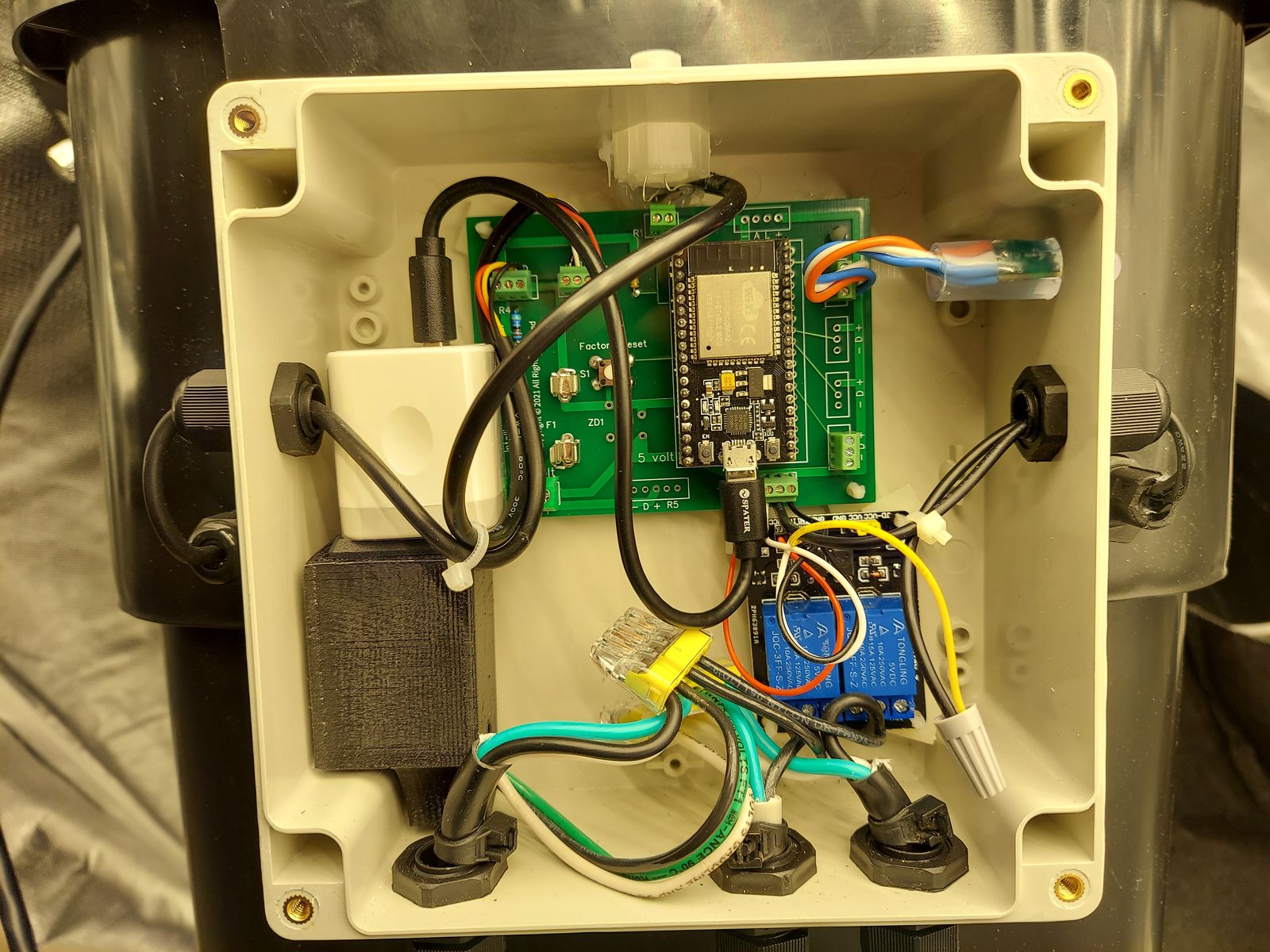
Three bodies of work sit on top of the blocks. The Open Agriculture Technology ESP32 gateway is the native hardware path and the bulk of the hands-on build work here: commodity ESP32 boards you flash from your browser tonight, each one a ready-to-run sensor gateway that speaks oat-ods out of the box. From a single wired probe to a BLE listener harvesting a room full of wireless sensors. This is what Open Agriculture Technology builds on. Hort Assistant is the walk-up path for the grower already running Home Assistant: 60-plus pages of guides for configuring that open-source platform into a full grow-monitoring hub. SCADA for CEA is the industrial-discipline version for the grower who runs every dial: instrumentation, alarms, cascade detection, and a historian.
The data standard
So a reading survives any one vendor leaving, it needs a shape that outlives the device that made it. The oat-ods standard gives every reading one message, and the recipe standard gives every grow plan one shape. Both work with what you already run, and the whole spec is published for builders.
Perspectives
How our approach lines up with the methods you may already know, appropriate technology applied to an idea, not just a tool. The first looks at DMAIC, the factory floor's improvement loop, and the part of it that fits a grower.