

Holding a nutrient solution at the right pH and strength by hand is endless fiddling: test, add a splash of pH down, stir, test again. Dosing is how you hand that chore to the machine. Small pumps meter precise amounts of nutrient and pH adjuster into the reservoir, and a pH/EC controller reads the probes and doses to hold your setpoints. It is the action end of fertigation, where feeding the plant meets controlling the water.
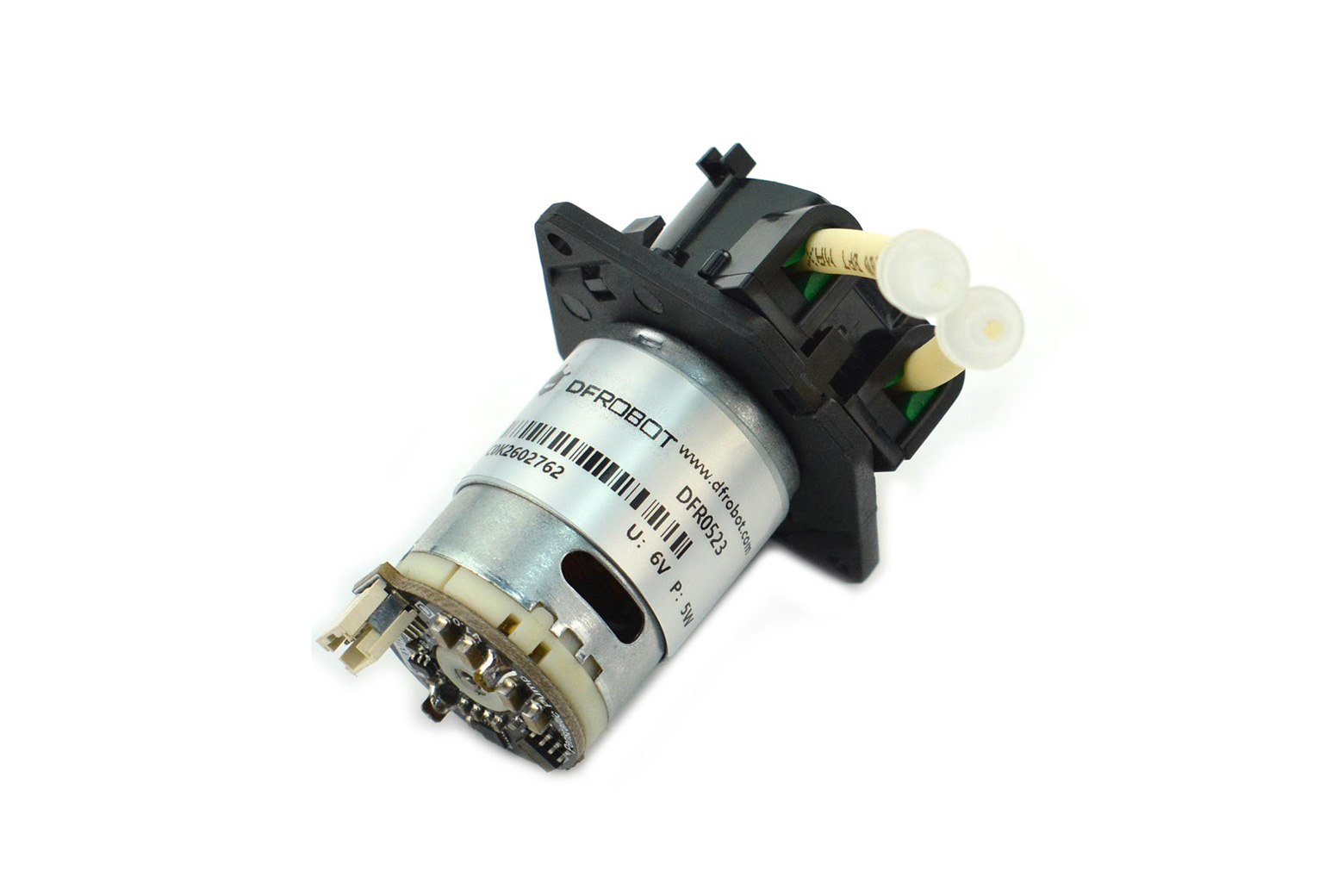
What dosing is.
Dosing means metering a precise, usually small, volume of a liquid into a reservoir or a line: a few milliliters of pH down to bring acidity into range, a measured shot of nutrient concentrate to lift the strength, some cal-mag on a schedule. The tool for it is the peristaltic pump, which squeezes a flexible tube to move liquid, so the only thing the liquid touches is the tube, never the pump. That keeps the doses clean, lets one design handle aggressive acids and bases, and makes the dose easy to meter by run time.
The liquid-handling parts.
Four ways to move liquid in a grow system, only one of which is built for precise dosing. The tinted column is the dosing pump; the others move or gate water but do not meter a careful dose.
| Spec | PeristalticOur pick | Diaphragm | Solenoid valve | Venturi injector |
|---|---|---|---|---|
| Does | Meters precise small doses | Moves and pressurizes liquid | Opens or closes a water line | Draws nutrient in by flow |
| Precise dose | Yes | No | No, on/off | Rough |
| Powered | Yes, a motor | Yes, a motor | Yes, a coil | No, passive |
| Liquid touches | Only the tube | The pump head | The valve body | The venturi |
| Best for | Nutrient and pH dosing | Transfer and pressure | Filling and irrigation valves | Inline feeding, no power |
For the deep dive on the dosing pump itself, see the peristaltic pump. A motor driver or a relay switches a pump on and off, and a pH/EC controller decides when and how much. A diaphragm pump and a solenoid valve handle transfer and on/off water, but they do not meter a careful dose.
The control loop.
Automatic dosing is a loop, and the shape of it matters. The controller reads the pH and EC probes, compares them to your setpoints with a small dead band so it does not chase noise, and if a reading is out of range it runs a pump for a brief dose. Then it waits for the reservoir to circulate and mix, and only then measures again. Dose a little, mix, re-measure, repeat. The one thing you never do is dose continuously toward a target, because the solution lags the probe and you will sail right past it.
Why small doses and calibration.
Two habits keep auto-dosing from becoming auto-disaster. Small doses with a mix-and-wait between them prevent overshoot: a pH crash or an over-strong solution stresses or kills plants fast, and it is far easier to add a little more than to undo too much. And calibration is not optional: pH and EC probes drift, and a controller trusting a drifted probe will happily dose your reservoir to ruin. Calibrate the probes on a schedule with fresh buffer solution, set sane per-cycle dose limits, and the automation stays a help rather than a hazard.
Where it fits, and where it doesn’t.
Where it fits
- Recirculating hydroponic reservoirs.
- Holding pH and EC steady on a sensitive crop.
- Scheduled dosing of nutrients, pH adjuster, or cal-mag.
- Taking the daily test-and-tweak chore off your hands.
Where it doesn’t
- Soil growing, where feeding is broadcast, not dosed.
- Small or stable setups, where hand dosing is fine and safer to learn on.
- Any system whose probes are not kept calibrated.
- Large-volume transfer; that is a diaphragm pump.
Resources.
The deep dives and the parts they build on:
Peristaltic pump pH/EC controller pH & EC probes Actuators & Control
Frequently asked questions.
What is dosing in a grow system?
Dosing is metering a precise, usually small, volume of a liquid into a reservoir: a few milliliters of pH down, a shot of nutrient concentrate, some cal-mag. The tool is a peristaltic pump, which squeezes a tube so the liquid only touches the tube, and a controller decides when and how much to dose to hold your pH and strength targets.
Why is a peristaltic pump used for dosing?
Because the liquid only ever touches the inside of a flexible tube, never the pump mechanism, so doses stay clean, one design handles aggressive acids and bases, and the pump is self-priming and safe to run dry. The dose is easy to meter by run time, which is exactly what dosing needs. Diaphragm pumps and solenoid valves move or gate water but cannot meter a careful dose.
How does automatic pH and EC dosing work?
As a loop: read the pH and EC probes, compare to setpoints with a small dead band, and if out of range run a dosing pump briefly. Then wait for the reservoir to mix and measure again before deciding to dose more. Dose a little, mix, re-measure, repeat. The key is never to dose continuously toward a target, since the solution lags the probe and you would overshoot.
Is automatic dosing safe?
It is, with two habits. Use small doses with a mix-and-wait between them so you never overshoot, since a pH crash or an over-strong solution harms plants fast. And keep the probes calibrated, because a controller trusting a drifted probe will dose to ruin. With sane per-cycle limits and regular calibration, auto-dosing is a help; without them it is a hazard.