

A pH/EC controller holds a nutrient solution where you want it, on its own. It reads the pH and EC probes, and when a reading drifts out of range it runs a dosing pump to bring it back: acid or base for pH, nutrient concentrate for strength. It is the closed loop that turns the daily test-and-tweak ritual of a hydroponic reservoir into something that minds itself, as long as you keep its probes honest.
What it is.
Not one part but a small system. At its core a controller continuously compares the reservoir’s pH (how acidic) and EC (how strong, its electrical conductivity) against setpoints you choose for the crop, and acts to close the gap. You can buy it as a finished appliance or build it from parts, but either way it is the same idea: measure, decide, dose, repeat.
The parts of one.
Three pieces make a controller. The probes, a pH probe and an EC probe, are the senses. The dosing pumps, usually several peristaltic pumps, one each for pH down, nutrient part A and B, and maybe cal-mag, are the hands. And the controller in the middle, an appliance or a microcontroller, holds the logic and the setpoints. Switch the pumps with a driver or relay, and the system is complete.
How the loop works.
The controller runs the dose-mix-measure loop. It reads the probes, compares them to the setpoints with a small dead band so it ignores normal wobble, and if a value is out of range it runs the matching pump for a brief, small dose. Then it waits for the reservoir to circulate and mix before it measures again. pH is usually held by dosing acid; strength by dosing nutrient (or topping with plain water to bring EC down). The discipline is always the same: nudge a little, let it settle, check, and never chase the target in one go.
Commercial vs DIY.
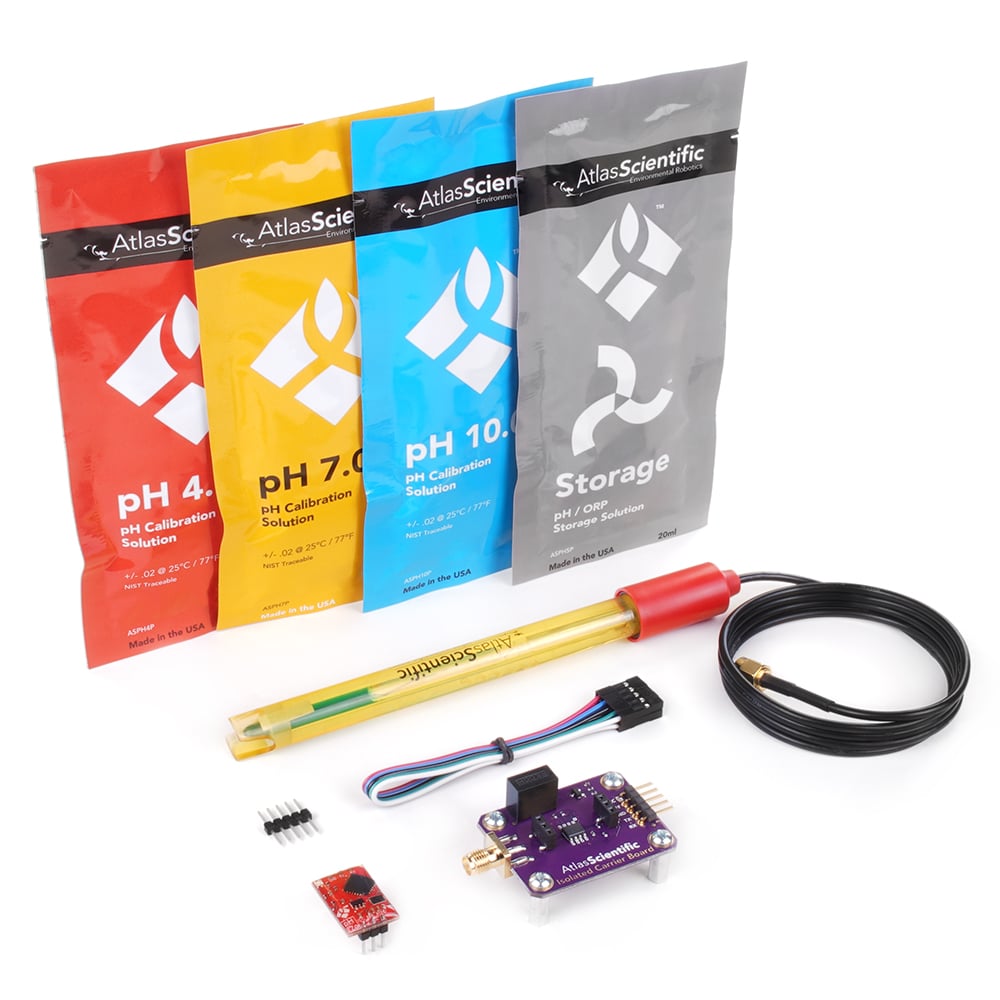
Two honest paths. A commercial controller (the well-known grow-shop units) is plug-and-play, tested, and reliable, at a real price and inside a closed system you do not own. A do-it-yourself controller, built from open probe circuits like the Atlas Scientific EZO line, peristaltic pumps, and an ESP32 feeding Home Assistant, costs less, keeps the data and the logic yours, and bends to your setup, in exchange for the work of building and trusting it. For a grower who wants to own their system, the DIY path fits the rest of this site; for someone who just wants it handled, the appliance is fair.
Calibration is the whole game.
Read this twice before you automate. A controller does exactly what its probes tell it, and pH and EC probes drift as they age and foul. A drifted pH probe reading high will make the controller dose acid it does not need, and it will keep dosing, crashing the pH and taking the crop with it. The automation does not know it is wrong; it only knows the number. So calibrate the probes on a schedule with fresh buffer solution, set hard per-cycle dose limits and alarms so a bad reading cannot run a pump forever, and watch it until you trust it. An auto-doser with calibrated probes is a quiet helper; one with a neglected probe is a slow accident. See Trust Your Gauge before you let it run.
Key facts.
Where it fits, and where it doesn’t.
Where it fits
- Recirculating hydroponics that drift between feeds.
- Sensitive or high-value crops that need steady pH and EC.
- Larger reservoirs where hand-dosing is a daily chore.
- A grower who will keep the probes calibrated.
Where it doesn’t
- Soil growing; feeding there is not dosed to a setpoint.
- Small or stable setups; hand dosing is fine and safer to learn on.
- Anyone who will not calibrate; it will dose to disaster.
- A set-and-forget you never check.
Resources & where to buy.
Atlas Scientific (EZO probes & pumps) The dosing pump pH & EC probes Trust Your Gauge
Frequently asked questions.
What does a pH/EC controller do?
It holds a nutrient solution at the pH and strength you choose, automatically. It reads pH and EC probes, and when a reading drifts out of range it runs a dosing pump to correct it: acid or base for pH, nutrient concentrate for strength. It turns the daily test-and-adjust ritual of a hydroponic reservoir into a loop that minds itself, provided the probes stay calibrated.
What parts make up a pH/EC controller?
Three: the probes (a pH probe and an EC probe) that sense the solution, the dosing pumps (usually several peristaltic pumps for pH down, nutrient parts, and cal-mag) that act, and a controller in the middle, an appliance or a microcontroller, that holds the setpoints and the logic. A driver or relay switches the pumps. You can buy it finished or build it from these parts.
Should I buy a commercial controller or build my own?
A commercial unit is plug-and-play and reliable, at a real price and inside a closed system. A DIY controller, built from open probe circuits like Atlas Scientific EZO, peristaltic pumps, and an ESP32 feeding Home Assistant, costs less, keeps the data and logic yours, and adapts to your setup, in exchange for the work of building and trusting it. The DIY path fits an own-your-system grower; the appliance suits someone who just wants it handled.
Why is calibration so important for a pH/EC controller?
Because the controller does exactly what its probes say, and probes drift as they age and foul. A pH probe reading falsely high makes the controller dose acid it does not need, and it keeps dosing, crashing the pH and harming the crop. It cannot tell it is wrong. Calibrate the probes on a schedule with fresh buffer, set per-cycle dose limits and alarms, and watch it until you trust it.
How does it control EC versus pH?
pH is held by dosing an acid (pH down) or sometimes a base (pH up) to keep acidity in range. EC, the solution’s strength, is raised by dosing nutrient concentrate and lowered by adding plain water to dilute. With a two-part nutrient that is often three or four pumps in all. The same dose-mix-measure loop governs both, just with different pumps and setpoints.