

A peristaltic pump moves liquid by squeezing a flexible tube with rollers, walking the liquid along like toothpaste. The clever part is what it means: the liquid only ever touches the inside of the tube, never the pump itself. That keeps doses clean, lets one pump handle aggressive acids and nutrients, and makes the dose easy to meter by how long you run it. It is the standard pump for dosing a reservoir.
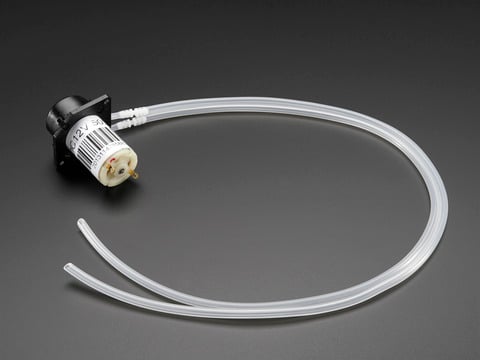
What it is.
A small motor turns a rotor with rollers that press a loop of flexible tube against the pump housing. As the rollers go round they pinch the tube and push the trapped liquid forward, drawing more in behind. Run a DC motor version from a motor driver or switch it with a relay; a stepper or servo-controlled version meters by steps for tighter precision. Either way it is a simple actuator a microcontroller can run.
Why peristaltic for dosing.
Four things make it the right pump for metering. Clean: the liquid touches only the tube, so there is no cross-contamination and you can dedicate one tube per liquid. Tough: because the mechanism never meets the liquid, the same pump handles acids, bases, and concentrated nutrients that would eat an ordinary pump. Self-priming and dry-safe: it pulls liquid up from a bottle and does not mind running empty. And meterable: the volume is proportional to run time, so dosing is just a matter of running the pump for the right number of seconds.
Driving and calibrating it.
Dosing by time only works if you know the rate, so calibrate. Run the pump for a measured number of seconds into a graduated cylinder, read the volume, and divide to get millilitres per second. Now a dose is just “run for this many seconds.” A controller switches the pump through a driver or relay for that time. Keep doses small and let the reservoir mix between them, the same loop the pH/EC controller uses, and you can place a precise amount every time.
The tube is a consumable.
The one thing to plan for: the tube wears out. Every roller pass flexes and squeezes it, so over weeks and months it loses springiness, the rate drifts, and eventually it can crack or leak. Treat the tube as a replaceable part: recalibrate the millilitres per second every so often, and swap the tube on a schedule before it fails, especially with aggressive liquids. Match the tube material to what you are pumping, as standard silicone is fine for nutrients but harsh chemicals may need a chemically compatible tube.
Key facts.
Where it fits, and where it doesn’t.
Where it fits
- Dosing nutrient concentrate, pH up or down, cal-mag.
- Any precise, repeatable small liquid dose.
- Pumping acids and bases that would harm other pumps.
- The dosing end of a pH/EC controller.
Where it doesn’t
- Moving large volumes; it is slow. Use a diaphragm pump.
- High pressure or long lifts.
- A liquid that attacks the tube material.
- Set-and-forget; the tube wears and needs recalibration.
Resources & where to buy.
Adafruit peristaltic pump DFRobot digital peristaltic pump pH/EC controller Dosing overview
Frequently asked questions.
What is a peristaltic pump used for?
Metering precise small doses of liquid, like nutrient concentrate, pH up or down, or cal-mag, into a reservoir. It squeezes a flexible tube with rollers so the liquid touches only the tube, never the pump, which keeps doses clean and lets it handle acids and bases. The dose is set by run time, which makes it the standard pump for automatic dosing.
How do I calibrate a peristaltic dosing pump?
Run it for a measured number of seconds into a graduated cylinder, read the volume, and divide to get millilitres per second. A dose then becomes simply running the pump for the right number of seconds. Recalibrate every so often, because the tube wears and the rate drifts over time.
Why does the dose drift over time?
The tube is a consumable. Every roller pass flexes and squeezes it, so it slowly loses springiness and the millilitres-per-second rate changes, and eventually the tube can crack or leak. Recalibrate periodically and replace the tube on a schedule before it fails, especially with aggressive liquids, and match the tube material to what you are pumping.
Can a peristaltic pump handle pH down or other chemicals?
Yes, which is a big reason it is used for dosing. Because the liquid only contacts the tube and never the pump mechanism, the same pump moves acids, bases, and concentrated nutrients that would corrode an ordinary pump. Just match the tube material to the chemical, since standard silicone suits nutrients but some harsh chemicals need a more resistant tube.