
LoRa: the Long-Range Radio (915 MHz)
The radio this aisle rides on: miles of reach and battery-years, bought by trading away everything a reading does not need.
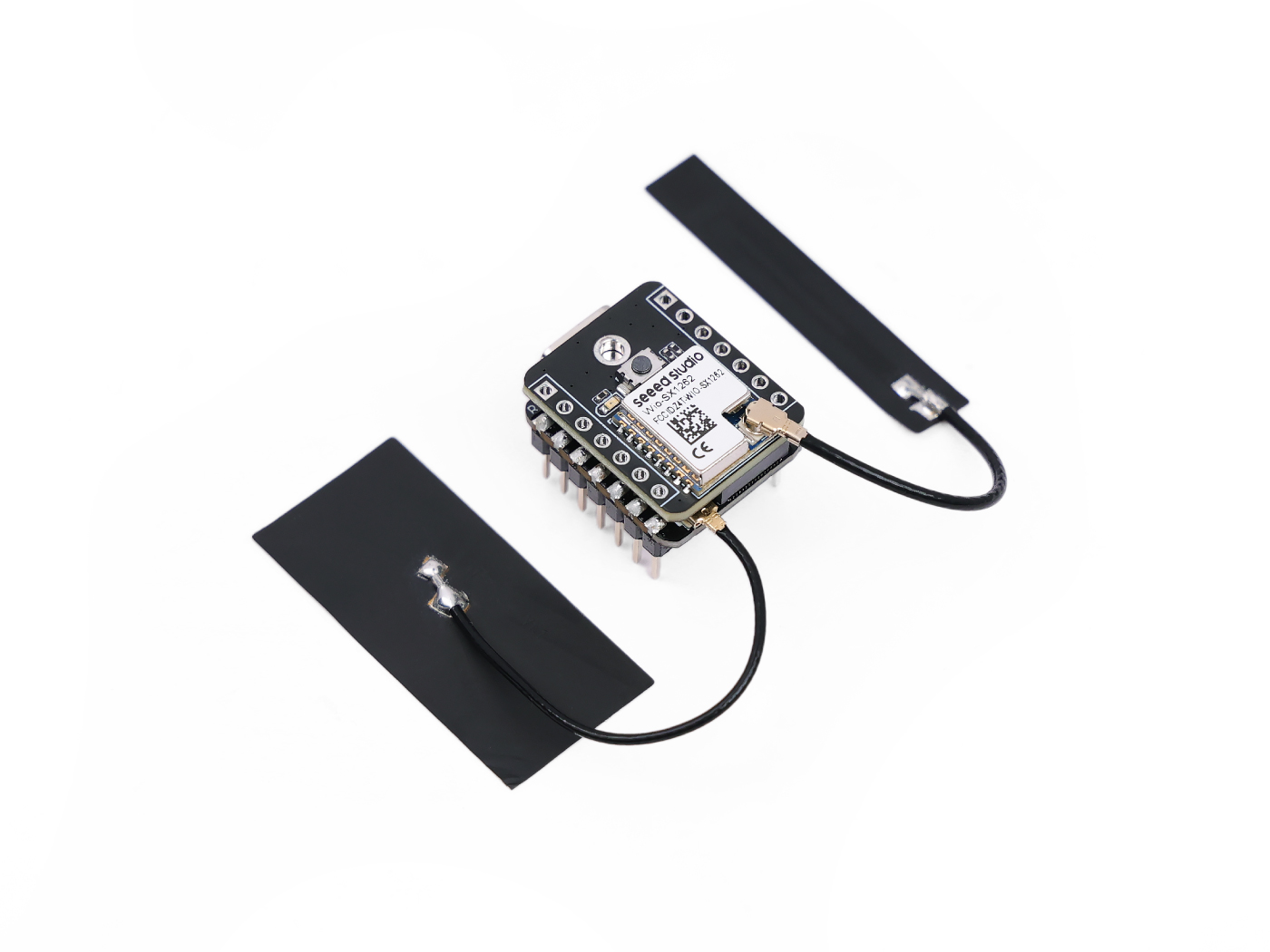
The technology
The radio this whole aisle rides on: LoRa trades speed for distance, carrying tiny messages for miles on the license-free 915 MHz band while the transmitter sleeps between words — which is how a field sensor runs a season or more on batteries. It is not a network and it will never carry a camera; it is the postcard radio, and for a reading from the back forty it has no equal.
| The trade | Tiny messages sent slowly reach much farther than fast ones: LoRa spends its bandwidth on distance |
|---|---|
| The band | 915 MHz in North America (868 MHz in Europe), license-free: no permit, no fee, no carrier |
| Reach | A few kilometers in open country is typical, more with good antennas and line of sight; terrain and foliage cost less than they cost Wi-Fi |
| Battery life | The radio sleeps between readings and speaks for fractions of a second: months to years per set |
| The payload | A reading, a level, a position — postcards. Never video, files, or a network connection |
| Two arrangements | Point-to-point (a node and a bridge you own — the OAT build path) or LoRaWAN (gateways and a network server — the turnkey path) |
How it works
Every radio makes the same bargain between speed, distance, and power; LoRa simply makes it all the way in one direction. By sending tiny messages very slowly on the license-free 915 MHz band, a transmitter you could power from a coin cell reaches for miles — and because it sleeps between readings, waking for fractions of a second, the batteries are measured in seasons. The cost is everything else: no video, no browsing, no network. Postcards only.
For this aisle’s work that cost is no cost at all. A soil reading is a postcard. A tank level is a postcard. A gate that opened at 3 a.m. is a postcard. The far half of a farm speaks entirely in postcards, and LoRa is the mail carrier that walks any distance.
It comes in two arrangements. Point-to-point — one field node, one bridge at the house, no server anywhere — is the simple shape OAT’s own builds use, and the pair is on our bench now. LoRaWAN adds gateways and a network server to manage fleets, which is how the turnkey field sensors on this aisle’s shelf work out of the box. The guide behind this listing explains both, and the aisle’s editorial says plainly when each is the honest pick.
Questions folks ask
How do I monitor a field with no Wi-Fi and no power?
A LoRa radio node: a battery-powered board that reads its sensor, wakes its radio for a fraction of a second to send the reading miles toward the house, and goes back to sleep. No trench, no solar array for a simple reading, no cell plan — the license-free radio and the batteries do all of it.
How far can LoRa actually reach on a farm?
Plan on a few kilometers in open country with decent antenna placement — more with good antennas and clear line of sight — and real readings still arriving through rolling terrain and treelines that would stop Wi-Fi cold. Height is the cheapest range upgrade: a bridge antenna on the barn roof beats one in a window.
How long do LoRa sensors run on batteries?
Months to years, honestly: the radio is silent almost all the time, waking to send a few dozen bytes and sleeping again. Turnkey field sensors routinely ship with factory batteries rated for multiple years at typical reporting rates.
What is the difference between LoRa and LoRaWAN?
LoRa is the radio itself. LoRaWAN is an arrangement of it: gateways and a network server managing fleets of devices, which is how the turnkey field sensors work. A point-to-point pair — one node, one bridge, no server — is the same radio arranged simply, and it is the shape OAT's own builds use.
Do I need a license to use LoRa?
No. The 915 MHz band is license-free in North America; the equipment is certified, and there is no permit, fee, or carrier involved. You own the whole path.