
LoRa Mesh Radio (915 MHz)
LoRa radio in a mesh: off-grid text for the whole crew on the license-free 915 MHz band, with Meshtastic — the well-known open firmware — running it.
The technology
LoRa is a long-range, low-power radio that trades speed for distance: tiny messages, sent slowly on the license-free 915 MHz band, carry for miles on almost no power. Put LoRa radios in a mesh — every node relaying for the others — and you get off-grid text between vehicles, buildings, and hands, with no tower, no SIM, and no bill. Meshtastic, the well-known open-source firmware, is what runs it; the kits come pre-loaded.
| The radio | LoRa: long-range, low-power, on the license-free 915 MHz band (North America) — tiny messages traded for miles of reach |
|---|---|
| The mesh | No tower, no hub: every node relays for the others, so coverage grows with each radio and no single node can take the network down |
| The firmware | Meshtastic: the well-known open-source project that turns these radios into a private text mesh |
| LoRa vs LoRaWAN | Same radio, different arrangement: LoRaWAN adds a network server for fleets of sensors (the Long-Range aisle's turnkey shelf); the mesh here needs none of that |
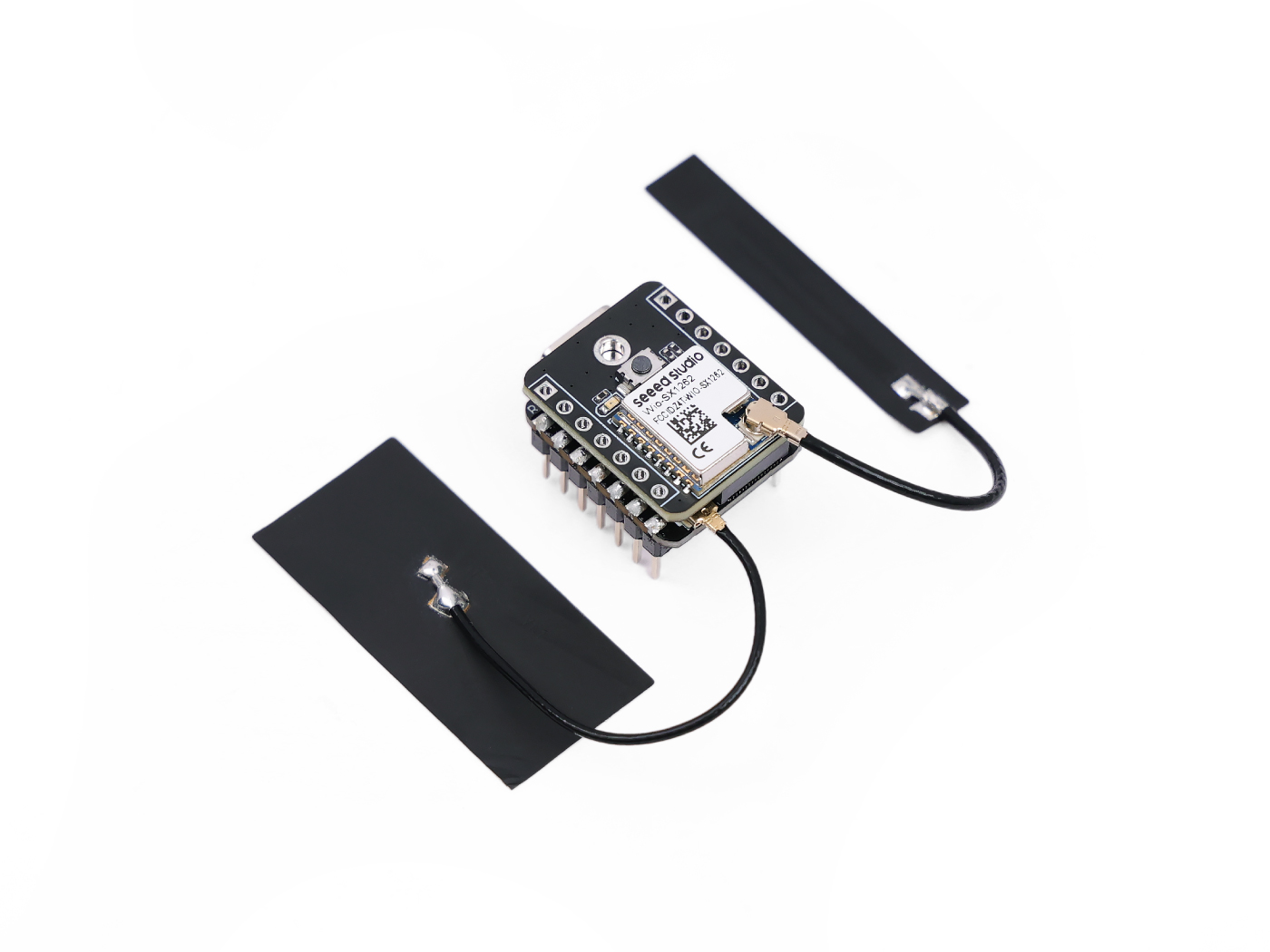
| A node | A XIAO ESP32S3 + Wio-SX1262 kit, sold pre-loaded with Meshtastic: power it and it works |
| Range | Two to five kilometers node-to-node in open country; the mesh reaches farther than any one radio |
| Your phone | Pairs to a node over Bluetooth; you text from the free Meshtastic app |
How it works
LoRa is a long-range, low-power radio that trades speed for distance: tiny messages, sent slowly on the license-free 915 MHz band, carry for miles on almost no power. It is the same radio technology that moves sensor readings in the Long-Range aisle; here it carries text. (LoRaWAN is the networked flavor of the same radio, built for fleets of sensors and a network server — the mesh below needs none of that.)
The mesh is what makes it a crew tool: every node relays for the others, so there is no tower, no hub, and no single point of failure — the network is whatever your nodes make it, and a radio on the barn roof extends everyone’s reach. Each person’s node pairs to their phone over Bluetooth, and they text from the free app.
Meshtastic, the open-source project that made this famous, is the firmware on every node; the kits in this listing come pre-loaded. Power one on and it is working.
About $30 per node. Prices vary.
Questions folks ask
What is LoRa, in one breath?
A long-range, low-power radio technology: it sends tiny messages slowly on the license-free 915 MHz band (in North America; Europe uses 868 MHz), and that trade — speed for distance — is how a few-dollar radio reaches for miles on batteries. The same technology carries sensor readings in the Long-Range aisle; here it carries the crew's text.
What makes a mesh network different?
No tower and no hub: every radio relays for the others, so the network is whatever your nodes make it. Coverage grows with each node you add — one on a barn roof or a hilltop relays for everyone — and losing a node just reroutes the messages around it.
How can a farm crew text where there is no cell service?
LoRa mesh radios: small nodes that pass text device to device, no tower or SIM involved. Each person carries a node paired to their phone; messages hop through whichever nodes are in range until they arrive. A pair costs about what a tank of gas does, and there is no monthly anything.
What is Meshtastic?
The open-source firmware that made LoRa mesh messaging famous: it turns cheap LoRa radios into a private text mesh you run yourself. You type on your phone; the radio sends it long-range; every other radio relays it along. No internet, no infrastructure, no account.
How far will a node reach?
Two to five kilometers between nodes in open country is routine, less through buildings and terrain. The mesh is the real answer to range: every radio you add extends everyone's reach.