

A cellular modem puts a node straight onto the same network your phone uses, so it can report from almost anywhere people live, with no gateway to build and no Wi-Fi to reach. For the far corner of a property, a remote well, or a sensor that travels with a trailer or a herd, it is often the only thing that works. The trade is a SIM card and a monthly fee, which is why it suits a few remote devices rather than a whole field of them.
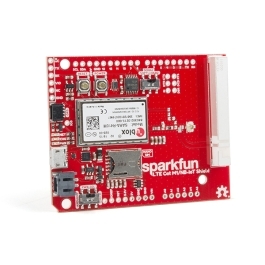
What it is.
A modem module, often built on a SIMCom SIM7000 or SIM7080, or a Quectel BG95, on a small board with a SIM slot and an antenna connector. It talks to a microcontroller over a serial link with simple AT commands, so an ESP32 or a Pico can send a reading to a server over the cell network. You supply a SIM and a data plan; the modem handles the connection.
LTE-M and NB-IoT.
For sensors you want the low-power flavors of cellular, not the full phone kind. LTE-M and NB-IoT are cellular standards built for the internet of things: low power, small data, good building and ground penetration, and cheaper plans than regular LTE. They are perfect for a node that sends a short reading now and then. Plain 4G LTE modems exist too, for when you need more bandwidth, like a remote camera, but they cost more in both power and data. Pick LTE-M or NB-IoT for sensors, 4G only when you truly need the speed.
The honest cost.
This is the deciding factor at any scale. Every cellular device needs its own SIM and its own monthly fee, so the cost grows with each node you add. One or two remote devices, fine. Twenty of them, and the yearly bill quickly pays for a LoRa gateway and a pile of nodes that cost nothing per month to run. So the rule is simple: reach for cellular when a spot is beyond LoRa and a gateway is impractical, or for something mobile, and lean on LoRa once you have many fixed sensors.
The power draw.
A cellular modem is hungrier than LoRa or Bluetooth, and it pulls sharp current spikes each time it connects, enough to brown out a weak supply. A field cellular node usually wants a solid supply or a solar and battery setup sized for those spikes, plus a good capacitor across the modem’s power. It will not sip a coin cell for years the way a LoRa node can. Plan the power before you deploy, or expect mysterious resets.
Key facts.
Where it fits, and where it doesn’t.
Where it fits
- A remote site beyond LoRa, where a gateway is impractical.
- A mobile sensor on a trailer, vehicle, or herd.
- A single critical alert path that must not depend on local kit.
- A few devices where the monthly fee is acceptable.
Where it doesn’t
- Many fixed sensors; the monthly fees pile up. Use LoRa.
- Coin-cell, run-for-years power; cellular is hungry.
- A spot with no carrier coverage.
- High bandwidth on a budget; that is costly on cellular.
Resources & where to buy.
SparkFun LTE-M / NB-IoT shield Adafruit cellular guide LoRa (the low-cost alternative) Cellular overview
Frequently asked questions.
What is a cellular modem used for in agriculture?
It puts a sensor node on the cell network so it can report from anywhere with coverage, with no gateway or Wi-Fi needed. That suits a remote site beyond LoRa range, a mobile sensor on a trailer or with livestock, or a critical alert path. It needs a SIM and a monthly data plan, so it fits a few remote devices rather than many.
What is the difference between LTE-M, NB-IoT, and 4G?
LTE-M and NB-IoT are low-power cellular standards built for the internet of things: small data, low power, good penetration, and cheaper plans. They are the right choice for sensors. Plain 4G LTE carries far more data but costs more power and money, so use it only when you genuinely need the bandwidth, such as a remote camera.
Why not use cellular for every sensor?
Cost. Each cellular device needs its own SIM and monthly fee, so the bill grows with every node. A couple of remote devices is fine, but a couple of dozen quickly costs more than a LoRa gateway plus nodes that run for free. Use cellular for the few spots LoRa cannot reach, and LoRa for the many fixed sensors.
Why does my cellular node keep resetting?
Usually power. A cellular modem pulls sharp current spikes when it connects, enough to brown out a weak supply, and it draws far more than a LoRa or Bluetooth node overall. Give it a solid supply or a solar-and-battery setup sized for the spikes, with a good capacitor across the modem’s power, and the resets stop.