
Sometimes a sensor sits where there is no Wi-Fi to join and no LoRa gateway within range. Cellular solves that by giving the node its own connection to the mobile network, the same towers your phone uses, so it can report from anywhere with coverage and no local infrastructure at all. The price of that freedom is a SIM and a data plan, an ongoing cost the other options do not have.
What it is.
A cellular modem gives a sensor node a direct line to the internet over the phone network. No router to join, no gateway to own, no line of sight: if a phone gets a signal there, the node can too. That makes it the answer for a truly stranded sensor, a tank in a far pasture, a pump on leased ground, a trailer that moves. The catch is that every node carries a SIM, and every SIM costs something each month, so cellular is the tool you reach for when location, not budget, is the constraint.
Pick the right tier.
Not all cellular is the same, and using the wrong tier wastes power and money. The tinted column is the one built for sensors.
| Spec | LTE-M / NB-IoTIoT pick | 4G LTE | 5G |
|---|---|---|---|
| Data rate | Low | High | Very high |
| Power | Low (for cellular) | Higher | Highest |
| Plan cost | Cheap IoT plans | Standard data plan | Premium |
| Coverage | Wide, good in buildings | Wide | Patchy, urban |
| Best for | Remote sensors | Cameras, gateways | Rarely needed on a farm |
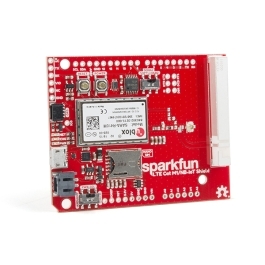
LTE-M and NB-IoT are the low-power, low-data flavors of cellular made for the Internet of Things: cheap plans, good building penetration, and far less power than full 4G. For a sensor that sends a few numbers, they are the right choice. Save full 4G LTE for a camera or a gateway that moves real data, and skip 5G on a farm unless you have a specific high-bandwidth need. For the hardware deep dive, see the cellular modem.
Module and SIM.
Two pieces. The modem is a module or board paired with a microcontroller: common ones are the SIMCom SIM7000/SIM7080 and Quectel BG95 families, sold on tidy boards (LilyGO, Botletics) or as an all-in-one like the Blues Notecard that hides most of the fuss. The SIM and plan is the part people forget: a regular phone SIM works but is poor value, so most builders use an IoT SIM from a provider like Hologram, Soracom, 1NCE, or Blues, which sell cheap low-volume, often multi-carrier data made for devices.
Cellular or LoRa.
For a remote, low-data sensor the real choice is usually cellular versus LoRa, and it comes down to infrastructure and fees. LoRa has no airtime cost, but you need a gateway within range, which you own or share. Cellular needs no gateway at all, but every node pays a SIM fee forever. So: a cluster of sensors near a gateway you can place favors LoRa; a lone sensor far from everything favors cellular. Both want solar and a battery, since cellular in particular is power-hungry when it transmits.
Where it fits, and where it doesn’t.
Where it fits
- A lone sensor far from Wi-Fi and any LoRa gateway.
- Leased or remote ground where you cannot build infrastructure.
- A node that moves between sites.
- Low-data reporting, on LTE-M or NB-IoT.
Where it doesn’t
Resources.
These open in a new tab:
Blues (Notecard cellular) Hologram (IoT SIMs) 1NCE (low-cost IoT data) The no-fee alternative: LoRa
Frequently asked questions.
When should I use cellular for a sensor?
When the sensor sits where there is no Wi-Fi to join and no LoRa gateway within range, or where it moves between sites. Cellular gives the node its own internet over the mobile network with no local infrastructure, at the cost of a SIM and a recurring data fee.
What is the difference between LTE-M, NB-IoT, and 4G?
LTE-M and NB-IoT are low-power, low-data flavors of cellular built for the Internet of Things, with cheap plans and good coverage; they are the right pick for a sensor sending a few numbers. Full 4G LTE carries far more data at higher power and cost, suited to cameras or gateways. 5G is rarely needed on a farm.
Do I need a SIM card for a cellular sensor?
Yes. Besides the modem, every cellular node needs a SIM and a data plan. Most builders use an IoT SIM from a provider like Hologram, Soracom, 1NCE, or Blues, which sell cheap low-volume, often multi-carrier data made for devices, rather than a regular phone plan.
Is cellular or LoRa better for a remote sensor?
LoRa if you can place a gateway within range, since its airtime is free; cellular if the node is truly alone, since it needs no gateway but pays a SIM fee per node forever. A cluster near a gateway favors LoRa; a lone, far sensor favors cellular.
Does a cellular sensor use a lot of power?
It can, especially while transmitting, more than LoRa. Use a low-power tier like LTE-M or NB-IoT, have the node sleep between sends, and power it with a battery and a solar panel sized for the load. Otherwise a cellular node can drain quickly.