
Govee H5075 Bluetooth Thermo-Hygrometer
A solution for greenhouse monitoring using the Govee H5075 Bluetooth thermo-hygrometer and an ESP32 gateway board.
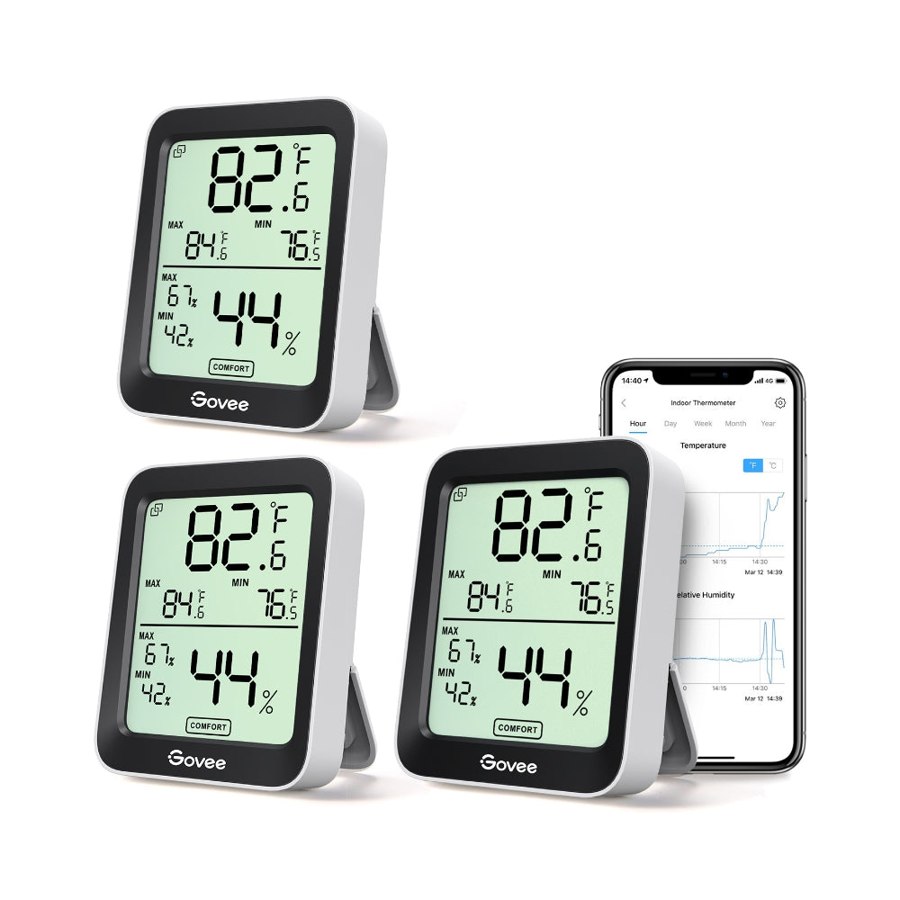
The sensor
The everyday Govee puck: temperature and humidity from one palm-size battery sensor. Measures to about ±0.3 °C and ±3 % RH, broadcasts a fresh reading every few seconds, and runs about a year on its batteries. Hang one at canopy height in the zone you care about; a single listening board hears every puck in range.
| Measures | Temperature (H5108, wired freezer probe); temperature and humidity (H5075-class pucks) |
|---|---|
| Temperature accuracy | About ±0.3 °C (±0.54 °F) per Govee's published spec |
| Humidity accuracy | About ±3 % RH on puck models; the H5108 does not read humidity |
| Radio | Bluetooth broadcast, roughly 30 ft in the open; no pairing, no app required. A puck sealed inside a metal-walled box is a radio inside a metal box and may not be heard: the H5108 keeps its radio outside and sends only the probe in. |
| Broadcast rate | A reading every few seconds |
| Power | AAA batteries, roughly a year per set |
What you’ll need
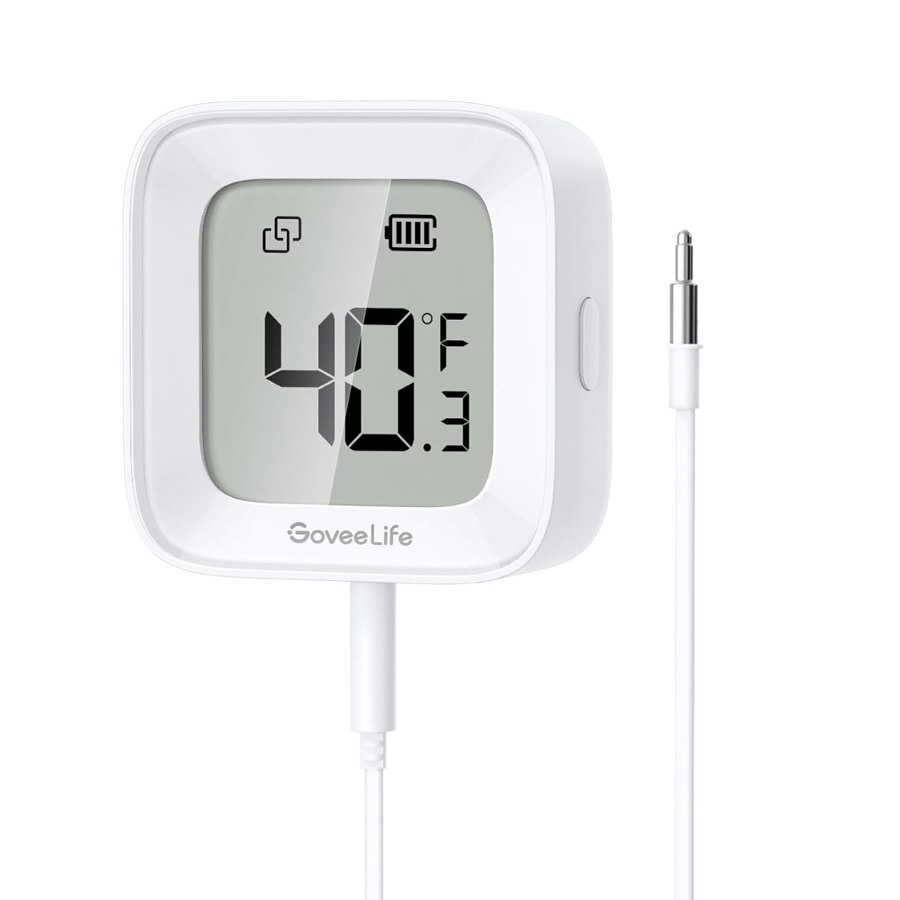
1 × Govee Bluetooth thermometer
Hangs at canopy height in the zone you care about and broadcasts temperature and humidity every few seconds. Add a puck per zone; they all share the one board.
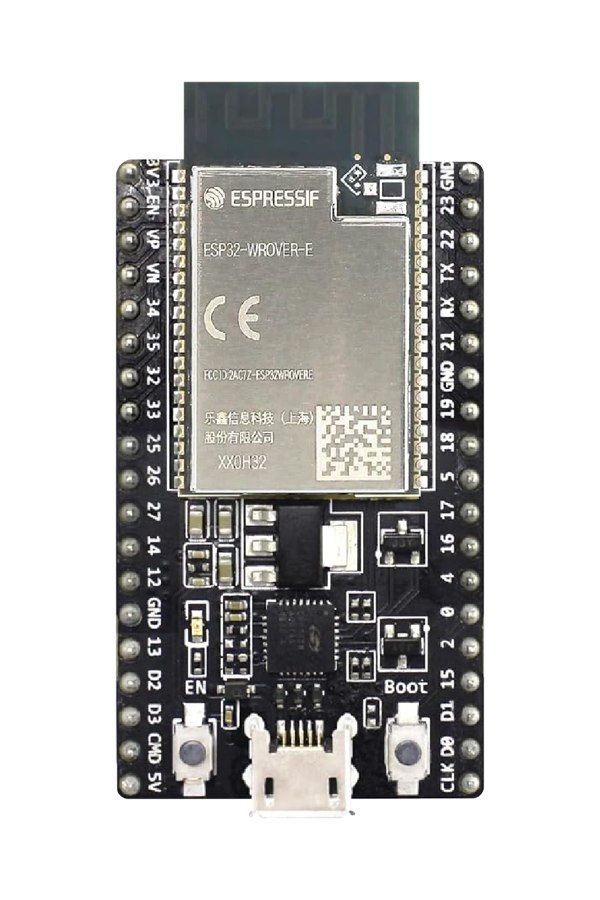
1 × An ESP32 board
Runs the BLE Sensor Listener. Hears every puck in Bluetooth range and pushes each labeled reading to the endpoint you own.
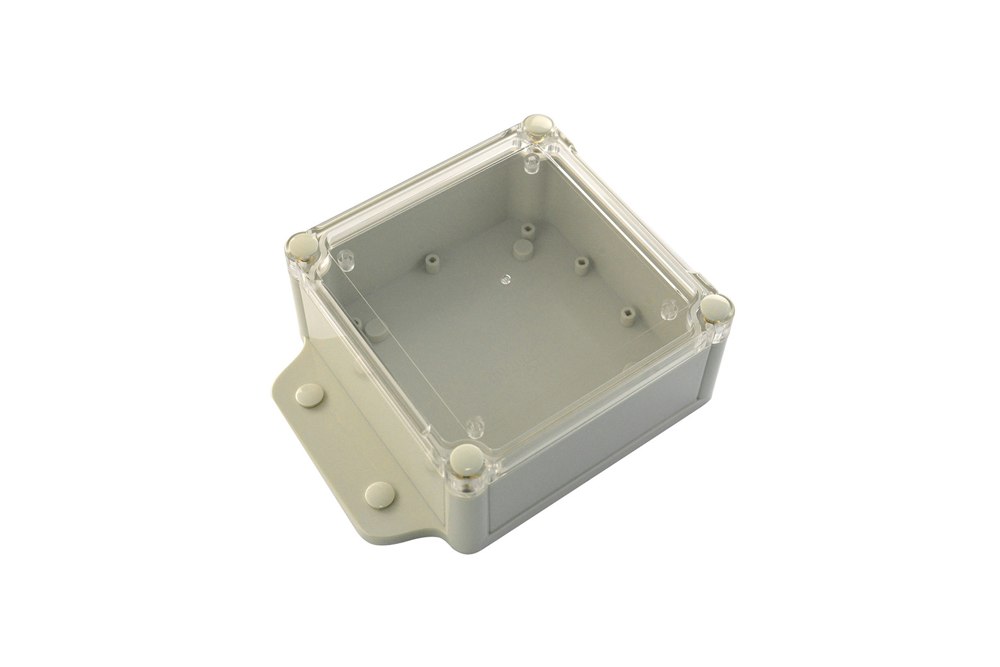
1 × IP65 sealed project box
Keeps the board dry if it lives in the damp of the greenhouse itself.
The gateway runs on any ESP32 board: classic, C6, or C3. All three run the same firmware and do the same job; you pick yours when you flash.
How it works
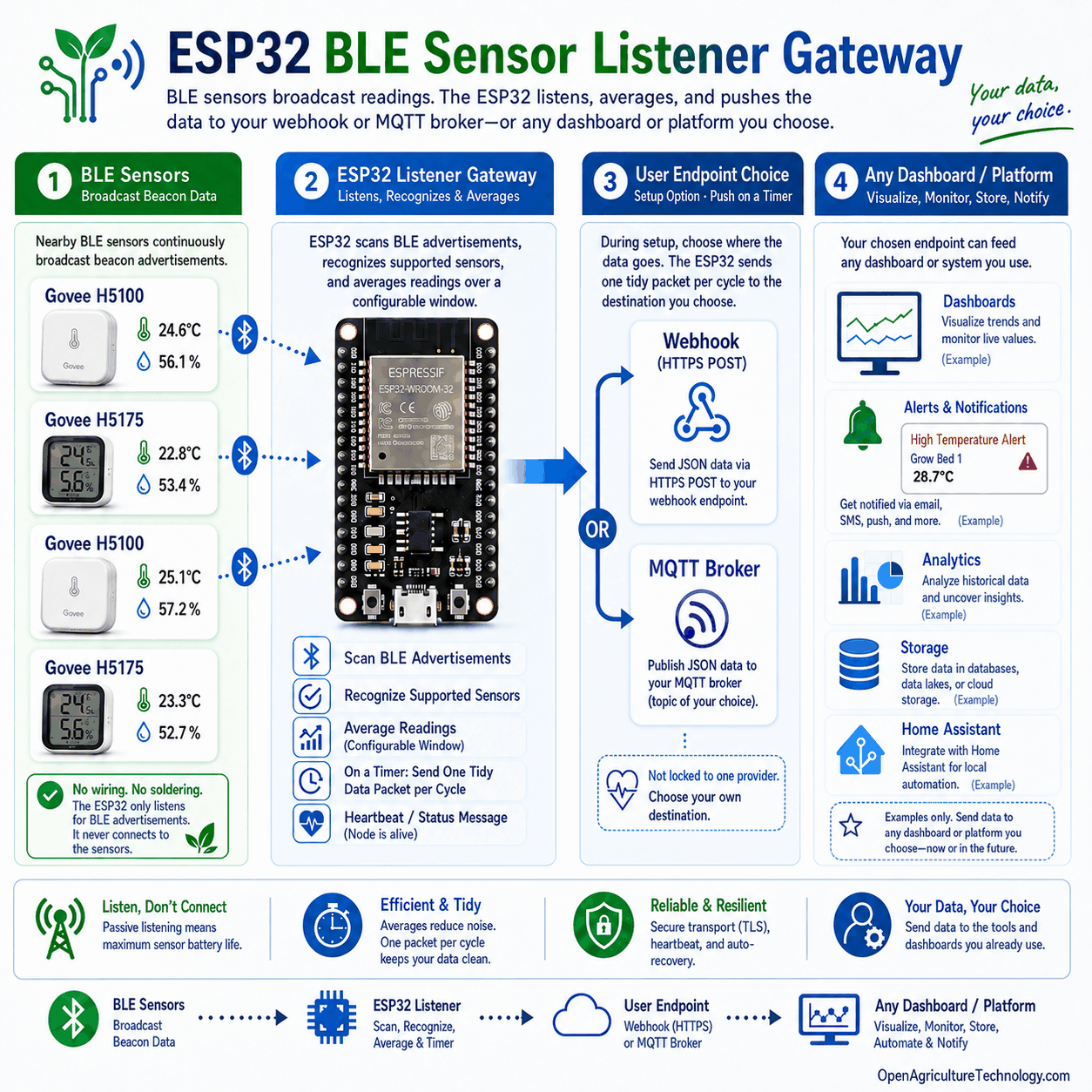
The puck broadcasts each reading over Bluetooth. The gateway board, running the open-source BLE Sensor Listener, hears every broadcast and pushes it to the endpoint you choose: your webhook, your MQTT broker, or the Test Bench. Add a puck per zone and the one board carries them all, each reading labeled by zone. The record lives where you put it; nothing passes through anyone else’s cloud, and there is no subscription.
About $25 in parts. Prices vary.
Questions folks ask
What is the cheapest way to monitor greenhouse temperature and humidity?
A Bluetooth temperature and humidity sensor (around $10 to $20) and a few-dollar ESP32 board running the BLE Sensor Listener sketch, for roughly $25 in parts. The board hears the sensor and pushes the reading to an endpoint you choose, with no hub required to start.
Can I monitor more than one greenhouse zone with one gateway?
Yes. A single BLE Sensor Listener can hear several nearby Bluetooth sensors at once, so one gateway covers several zones as long as each sensor is within Bluetooth range (roughly 30 to 100 feet, less through greenhouse structure). Name each sensor by zone during setup.
Do I need Home Assistant to start monitoring a greenhouse?
No. This build pushes straight from the sensor to an endpoint you choose. Home Assistant is a natural place to graduate to later if you want dashboards and automations across many zones, but it is not required to get a working greenhouse monitor today.
Where should the sensor hang in a greenhouse?
At canopy height in the zone you care about, out of direct sun and away from walls. A sensor on a wall reads the wall, and one in direct sun reads the sun; hanging at the height of the plants reads what the plants experience.
What is VPD, and does this build measure it?
VPD (vapor pressure deficit) is the number that predicts plant stress better than temperature or humidity alone, and it is computed from exactly the two readings this build supplies. The puck measures; the endpoint you point it at does the arithmetic and shows VPD alongside the raw numbers.
Will greenhouse humidity damage the sensor?
The puck is built for humid indoor air and lives happily in a greenhouse; just keep it out of drip lines and direct spray. The board is the part to protect: if it lives in the greenhouse rather than a dry spot nearby, it goes in the sealed box.
Do I need the Govee app or a Govee account?
No. The board hears the sensor's broadcast directly. No app, no account, no cloud between the sensor and your record.
What happens when the internet goes down?
The sensor keeps broadcasting and the board keeps listening. If your endpoint lives on your own network, an internet outage does not interrupt the record at all; if the endpoint is remote, readings land again the moment it is reachable.
Supporting pages
- The Greenhouse Monitoring aisle
- ESP32 boards: the full guide
- Getting your data to an endpoint
- Vapor pressure deficit: what the two readings mean together
- Climate control in Home Assistant
- The BLE Sensor Listener: source, device list, troubleshooting
- For developers: the oat-ods data schema
- For developers: the test endpoint reference