

A lighting controller decides when the grow lights are on and how bright they run. Unlike the climate loops, its main input is not a sensor but a clock: plants read day length, so the schedule is the lever that holds vegetative growth or flips a crop into flower. Add a PAR sensor and it can close a second loop on brightness, dimming the lights to hit a daily light target. It switches or dims the fixtures through a relay, a contactor, or a dimming signal.
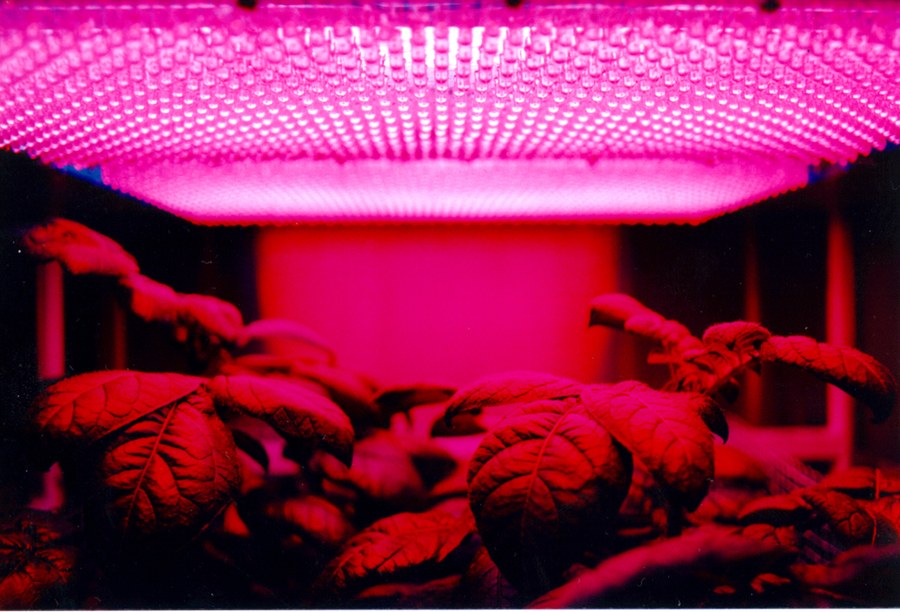
What it is.
At its simplest a lighting controller is a reliable timer: a clock that switches the lights on and off at set times. The capable version adds dimming, so it also sets how bright the lights run and can ramp them through the day. The controller can be a plug-in digital timer, a horticultural lighting controller, or a microcontroller running the schedule and the dimming logic. The plants do not care which one runs it; they care that the schedule is exact and never slips.
Photoperiod or intensity.
There are two separate jobs here, and most serious setups want both. Side by side:
| Spec | Photoperiod (the schedule) | Intensity (the dimmer) |
|---|---|---|
| Controls | When the lights are on | How bright they run |
| Driven by | A reliable clock | A target, often a daily light integral |
| How it acts | Switch on and off at set times | Dim the driver up and down |
| Hardware | A relay or a lighting contactor | A 0-10V or PWM dimming signal |
| Why it matters | Day length triggers flowering and stages | Right light per day, no waste or burn |
Photoperiod is the schedule that sets the length of the day, and it is what triggers growth stages: many crops hold in vegetative growth under a long day (often 18 hours on) and flower under a short one (often 12 on, 12 off), while day-neutral plants do not care. Intensity is how much light those hours deliver, which decides whether the plants get too little, just enough, or so much they bleach. One controller can run both: the right hours at the right brightness.
The dark period is sacred.
For any crop whose flowering depends on day length, the uninterrupted dark period is the signal, and breaking it confuses the plant. A controller that loses time on a power blip, a timer that drifts, or a light leak from a hallway or a status LED can cut the dark short and stall or revert flowering. So pick a controller that keeps accurate time (a real-time clock or a network time source), seal the room against light leaks, and if you must go in during the dark hours, use a dim green light rather than white. Reliability is not a nicety here; it is the whole job.
Intensity, DLI, and dimming.
Light is not only on or off. What a plant collects in a day is the daily light integral (DLI), the total photons that land on a square meter over the whole photoperiod, and it is simply the brightness (PPFD) multiplied by the hours of light. Leafy greens want a modest DLI; fruiting and flowering crops want much more. A controller with a PAR sensor can measure PPFD, add it up through the day, and dim the lights to land on a DLI target without wasting energy or scorching the canopy. Most horticultural LED drivers dim on a 0-10V signal (a low voltage sets the brightness), and some use PWM; a non-dimmable fixture is just on or off through a relay.
Sunrise ramps and daylight harvesting.
Dimming opens up two useful tricks. A sunrise and sunset ramp eases the lights up at the start of the day and down at the end instead of slamming them full on, which is gentler on the plants and spreads the heat and power draw. Daylight harvesting is for greenhouses: a light sensor watches the natural light, and the controller adds supplemental light only when the sun falls short of the target, then backs off when the sky brightens. Both turn the controller from a blunt timer into something that spends light where it is actually needed.
Switching big light loads.
Grow lights can be a heavy electrical load, and lighting drivers draw a large inrush of current the instant they switch on, well above their running draw. A small relay can pit or weld its contacts under that surge, which is why banks of lights are switched through a lighting contactor rated for the job, with the controller driving the contactor coil. A welded contact is the same hazard here as anywhere: lights stuck on break the dark period and add heat with nothing to stop them. Size the switch above the inrush, not just the running current.
Key facts.
Where it fits, and where it doesn’t.
Where it fits
- Holding veg or flipping a crop into flower.
- Dimming LEDs to a DLI target with a PAR sensor.
- Sunrise and sunset ramps to ease heat and shock.
- Greenhouse supplemental light that follows the sun.
Where it doesn’t
- Dimming a fixture that is not dimmable.
- A light-sensitive crop on a drifting, unreliable timer.
- Big light banks on an undersized relay.
- A leaky room where stray light spoils the dark period.
Resources.
The sensor that closes the loop, the switch it uses, and the brain that runs it:
PAR / quantum sensor Lighting contactor Light sensors Home Assistant
Frequently asked questions.
What does a lighting controller do?
It decides when the grow lights are on and how bright they run. The schedule, or photoperiod, sets the length of the day, which holds plants in vegetative growth or flips them into flower. The intensity, set by dimming, decides how much light those hours deliver. A simple controller is just a reliable timer; a capable one also dims the lights and can target a daily light total with a PAR sensor.
Why does the dark period matter so much?
Because for crops whose flowering depends on day length, the uninterrupted dark period is the signal that triggers it. A timer that drifts, a controller that loses time on a power blip, or a light leak from a hallway or a status LED can cut the dark short and stall or revert flowering. Use a controller that keeps accurate time, seal the room against light leaks, and use a dim green light if you must enter during the dark hours.
What is DLI and how do you control it with grow lights?
DLI, the daily light integral, is the total light a plant receives in a day across a square meter, equal to the brightness (PPFD) multiplied by the hours of light. Leafy greens want a modest DLI and fruiting crops want much more. A controller with a PAR sensor measures PPFD, adds it up through the day, and dims the lights to land on the DLI target without wasting energy or burning the canopy.
How do controllers dim grow lights?
Most horticultural LED drivers accept a 0-10V dimming signal, where a low control voltage sets the brightness from off to full. Some drivers use PWM instead. A controller outputs that signal to set intensity, ramp a sunrise and sunset, or hold a DLI target. A fixture that is not dimmable can only be switched fully on or off through a relay or contactor.
Why switch grow lights through a contactor?
Because lighting drivers draw a large inrush of current the instant they switch on, far above their running draw, and a small relay can pit or weld its contacts under that surge. A lighting contactor is rated to handle the inrush of a bank of fixtures, with the controller driving its coil. Size the switch above the inrush, not just the running current, since a welded contact leaves the lights stuck on and breaks the dark period.