
Light is the energy that runs photosynthesis, so measuring it well matters more here than in most rooms. The catch is that the cheap, common light sensors measure brightness the way a human eye sees it, which is not the same as the light a plant can use. Knowing that one difference saves you from buying the wrong number.
What they measure.
Light sensors turn incoming light into a number. The cheap ones report lux, a measure of how bright a scene looks to a person. Plant-focused ones report PAR, photosynthetically active radiation: the light between 400 and 700 nanometers that drives photosynthesis, counted as PPFD (photosynthetic photon flux density, in micromoles per square meter per second). A third kind reports the spectrum, the light split into color bands, which tells you the shape of a grow light rather than just its strength.
Lux is not PAR.
This is the one that trips people up. A lux meter is tuned to the human eye, which is most sensitive to green light, the very color plants reflect and use least. So a lux reading can look bright while the light a plant actually uses is low, or the reverse, depending on the light’s color. There are rough lux-to-PPFD conversion factors, but they only hold for one specific light source, so they are unreliable across sunlight, white LEDs, and purple grow lights. If a number is going to drive a crop decision, measure PAR directly with a quantum sensor. If you just want to know “is the light on, and roughly how strong,” a lux sensor is cheap and fine.
DLI: light per day.
A single PAR reading is a snapshot. What a plant responds to over time is the daily light integral (DLI): the total photosynthetic light it receives in a day, in moles per square meter. DLI is PPFD added up over all the daylight hours, and it is the number growers compare crops and seasons against. A sensor that reads honest PPFD, logged through the day, gives you DLI; a lux sensor cannot, because it is not counting the right photons.
Compare the sensors.
Three kinds, from a few dollars to a few hundred. There is no single right answer, only a budget-versus-accuracy choice, so the prose under the table is the real guide.
| Spec | Lux sensor | Spectral sensor | Quantum (PAR) |
|---|---|---|---|
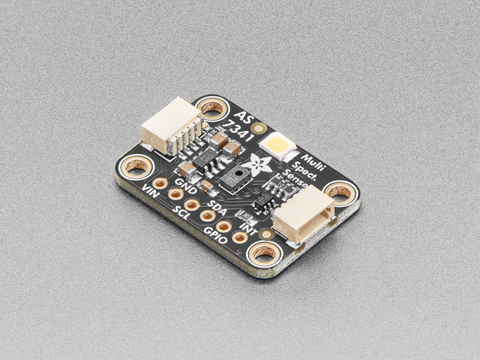
| Examples | BH1750, VEML7700, TSL2591 | AS7341, AS7265x | Apogee SQ, LI-COR |
| Measures | Brightness to the eye | Light split into color bands | Photons plants use (400–700 nm) |
| Units | Lux | Counts per band | PPFD (µmol/m²/s) |
| Right for plants? | A rough proxy only | Spectrum, not calibrated PAR | Yes, the correct unit |
| Interface | I²C | I²C | Analog / SDI-12 |
| Cost | A few dollars | About $15–25 | A few hundred dollars |
| Best for | Trend, on/off, shade | Checking a grow light’s spectrum | Accurate light and DLI |
For most growers: a cheap lux sensor for the trend and for on/off control, a spectral sensor like the AS7341 if you want to see a grow light’s color mix, and a quantum (PAR) sensor when an accurate PPFD or DLI has to drive the lighting plan. The quantum sensor is the only one that measures the right thing in the right unit. For the deep dive on the cheap lux option, see the BH1750 page, or for the spectral option the AS7341 page. For logging bright, outdoor light where a basic lux sensor saturates, see the TSL2591 page.
Where they fit, and where they don’t.
Where they fit
- Tracking whether a grow light is on and roughly how bright (lux).
- Mapping shade and light across a space over the day.
- Checking a grow light’s spectrum (spectral sensor).
- Accurate PPFD and DLI for a lighting plan (quantum sensor).
Where they don’t
- Reading plant light accurately from a lux sensor. Wrong unit.
- Converting lux to PPFD across different light sources reliably.
- Cheap sensors in direct sun without a diffuser; they saturate.
- Spectral sensors as a stand-in for a calibrated PAR reading.
Resources.
These open in a new tab:
Apogee: quantum (PAR) sensors Adafruit AS7341 guide Adafruit VEML7700 (lux) Open Agriculture Technology: the Light reference
Frequently asked questions.
What is the difference between lux and PAR?
Lux measures brightness as the human eye sees it, weighted toward green light. PAR measures the light a plant can use for photosynthesis, between 400 and 700 nanometers, counted as PPFD. For plant decisions, PAR is the right number; lux is only a rough proxy.
Can I convert lux to PPFD?
Only roughly, and only for one specific light source. The conversion factor differs between sunlight, white LEDs, and purple grow lights, so a single factor is unreliable across them. If the number matters, measure PAR directly with a quantum sensor.
What is DLI?
DLI, the daily light integral, is the total photosynthetic light a plant gets in a day, in moles per square meter. It is PPFD added up over the daylight hours, and it is the number growers use to compare crops and seasons. You need a PAR sensor logged through the day to get it.
Do I need an expensive PAR sensor?
Not always. If you only need to know a light is on and roughly how strong, a few-dollar lux sensor is fine. Spend on a quantum (PAR) sensor when an accurate PPFD or DLI has to drive your lighting plan, where the right unit and calibration are worth the cost.
What does a spectral sensor like the AS7341 do?
It splits incoming light into several color bands, so you can see the shape of a light’s spectrum rather than just its strength. It is useful for checking what a grow light actually emits, but it is not a calibrated PAR sensor.