

A contactor is a relay grown up for heavy work. It is an electrically operated switch built to turn big loads on and off: a well pump, an irrigation booster, a large heater, a bank of fans, loads far beyond the ten or fifteen amps an ordinary relay handles. Like a relay, a coil pulls its contacts closed, but everything about it is heavier, and built to survive switching big motors over and over for years.
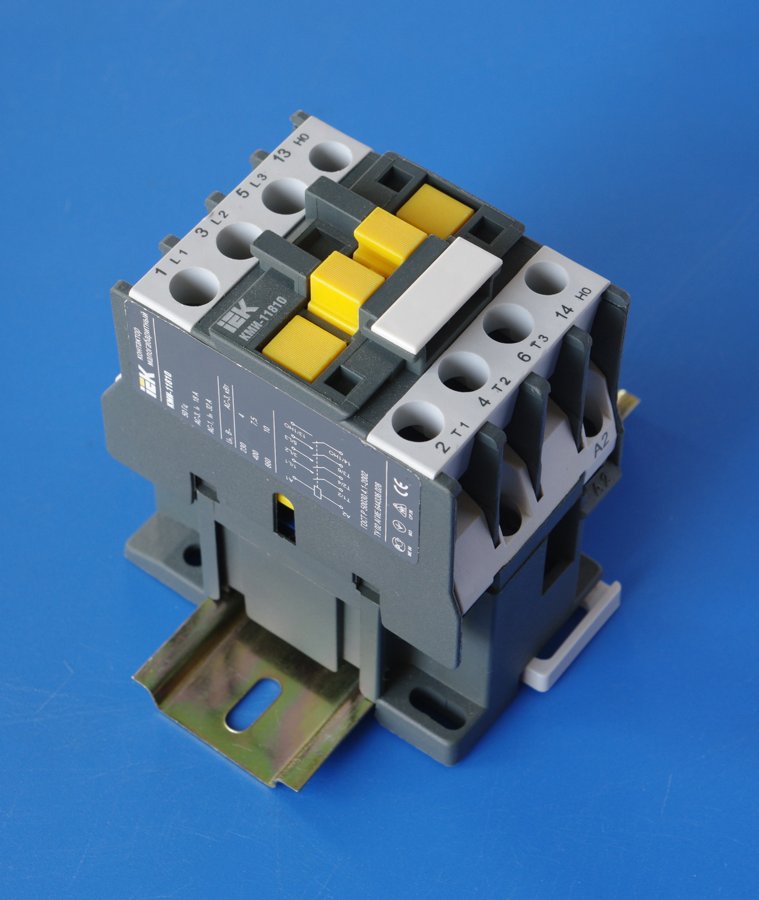
What it is.
Mechanically it is the same idea as a relay: energize a coil, an electromagnet pulls a set of contacts together, and the load circuit closes. What makes it a contactor is the scale. The contacts are large and built to handle the inrush of a starting motor and the arc of breaking a big inductive load, the body dissipates the heat of carrying tens of amps continuously, and it is rated for a great many switching operations. It usually clips onto a DIN rail in an electrical panel, with chunky screw terminals for the load.
The low-voltage coil trick.
This is the part that connects a contactor to everything else on this site. The coil that pulls the contactor in can run on a low control voltage, often 24 volts, while the contacts it closes switch high-current mains. So you never switch a big load with your controller directly. Instead the controller switches a small relay or solid-state relay, that relay energizes the contactor’s coil, and the contactor does the heavy switching. A few milliamps of logic ends up commanding horsepower, with each stage handling only what it safely can.
Motor starters and overloads.
For a motor, a contactor rarely goes in alone. Pair it with an overload relay that watches the motor’s current and trips if it draws too much for too long, from a jammed pump or a failing bearing, and the two together make a motor starter that switches the motor and protects it. Many contactors also carry auxiliary contacts, small extra contacts that move with the main ones, which you can read back to confirm the contactor actually closed or to wire an interlock. For a real pump install, the starter, not a bare contactor, is what you want.
Sizing and ratings.
Pick a contactor by the load, not by guesswork. Match the coil voltage to your control supply (24 volt coils are common and convenient). Choose the number of poles for the circuit: one or two for a single-phase load, three for a three-phase motor. And size the current rating above the load’s full-load amps with margin, using the right duty category, AC-3 for motor loads, which accounts for inrush, rather than AC-1 for plain resistive loads. Undersizing a contactor on a motor is how contacts weld shut, so err generous.
A serious word on power.
This is the heaviest hardware on the site, and it is genuinely dangerous. A contactor switches voltages and currents that injure and kill, and wiring a pump motor or a mains heater is licensed-electrician territory in most places, for good reason. Use parts rated and certified for the job, proper enclosures, fusing or breakers ahead of the contactor, and correct conductors. If you are not qualified for mains and motor wiring, design the low-voltage control side yourself and have the power side done by someone who is. There is no shame in it, and there is real harm in getting it wrong.
Key facts.
Where it fits, and where it doesn’t.
Where it fits
- Switching a well or irrigation pump motor.
- A large heater, fan bank, or compressor.
- Any load beyond what a relay safely carries.
- Commanded by a small relay from your controller.
Where it doesn’t
- Small loads; a relay is right and far cheaper.
- Driving its coil straight from a GPIO; use a small relay.
- Varying a motor’s speed; that is a VFD or a driver.
- Mains and motor wiring you are not qualified to do.
Resources.
The relay family and the small relay that drives a contactor coil:
Relays & contactors overview Relay module (drives the coil) Motor drivers (for variable speed) Actuators & Control
Frequently asked questions.
What is the difference between a relay and a contactor?
They work the same way, a coil pulls contacts closed, but a contactor is built for far heavier loads: tens of amps, the inrush of starting motors, the arc of breaking big inductive loads, and continuous duty over many operations. A relay suits small loads up to ten or fifteen amps; a contactor switches pumps, large heaters, and motors. Use the smallest part that safely carries the load.
Can I control a contactor with an ESP32 or Raspberry Pi?
Yes, but not directly. The controller switches a small relay or solid-state relay, and that relay energizes the contactor’s coil, which can run on a low control voltage like 24 volts while the contacts switch mains. So the chain is controller to small relay to contactor coil to big load, with each stage handling only what it safely can. You never wire a big load or even the coil straight to a GPIO.
What is a motor starter?
A contactor paired with an overload relay. The contactor switches the motor on and off, and the overload relay watches the motor’s current and trips if it draws too much for too long, from a jam or a failing bearing, protecting the motor from burning out. For any real pump or motor install, the starter, not a bare contactor, is what you want.
How do I size a contactor?
Match the coil voltage to your control supply, choose the poles for the circuit (three for a three-phase motor), and size the current rating above the load’s full-load amps with margin, using the right duty category: AC-3 for motor loads, which accounts for inrush, not AC-1 for resistive loads. Undersizing a contactor on a motor leads to welded contacts, so err generous.
Is wiring a contactor a DIY job?
The low-voltage control side, yes. The power side, switching mains and motors, is licensed-electrician territory in most places, and for good reason: the voltages and currents injure and kill. Use rated, certified parts in a proper enclosure with fusing ahead of the contactor. If you are not qualified for mains and motor wiring, design the control logic yourself and have the power wiring done by someone who is.