

There are four ways into growing mushrooms: a kit, ready-to-fruit blocks, spawn that you mix into your own substrate, and a culture that you grow out yourself. Each step back from the kit gives you more control over the grow and asks for more cleanliness, more equipment and more time. UF/IFAS Extension compares buying spawn to buying seed for a garden, and ATTRA calls oyster mushrooms the most accessible way in: fast, forgiving and productive.
The four ways in
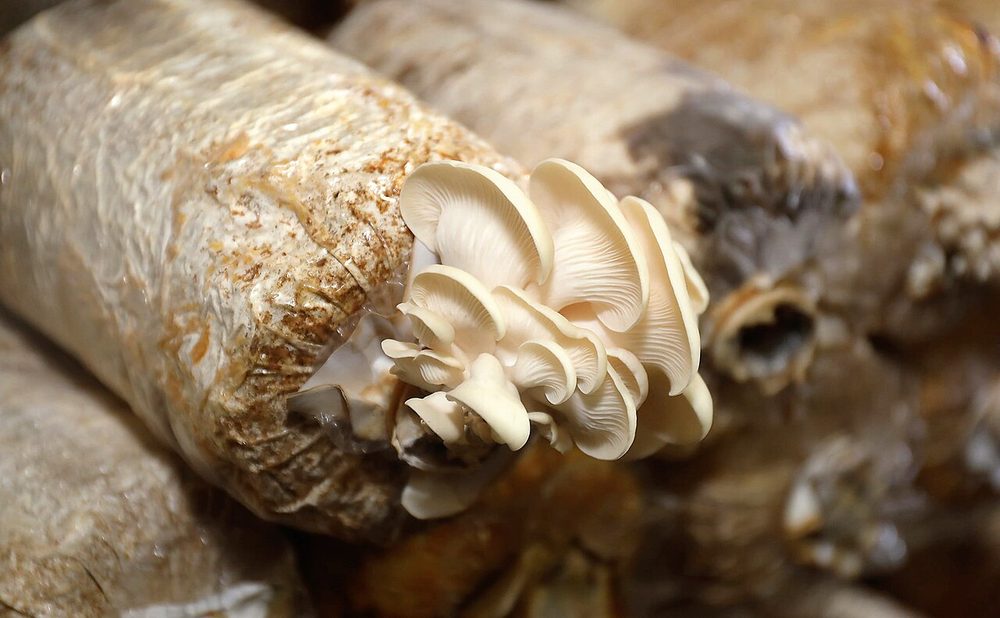
UF/IFAS Extension sets out three ways to grow oyster mushrooms at home: buy a kit that is already colonized, buy spawn and put it into a substrate yourself, or make your own spawn as well. The Cornell Small Farms farm book adds the farm-scale version of a kit: ready-to-fruit blocks, bought in quantity from a supplier and put straight into a fruiting room. The table puts the four in order of effort.
| Way in | What you do | Time before the first mushrooms | Source |
|---|---|---|---|
| A kit | Set an already colonized block up in a humid, lit place and let it fruit. | Only the fruiting step: for oyster, UC Cooperative Extension gives 7 to 14 days for pins to form. | UF/IFAS; UC |
| Ready-to-fruit blocks | The same, by the case: blocks come from a supplier and go into a fruiting room. | The same as a kit; the supplier has done the incubation, which Cornell's farm book puts at 3 to 4 weeks for most species. | Cornell and Fungi Ally farm book |
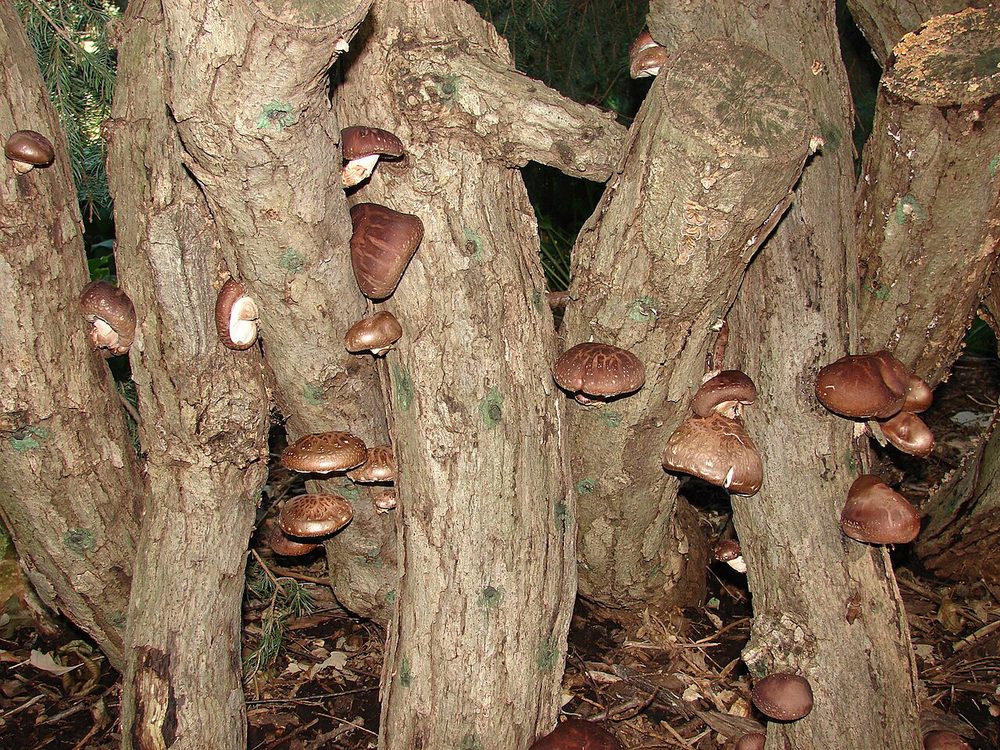
| Spawn into your own substrate | Buy spawn, prepare straw, sawdust or logs, mix or plug the spawn in, and incubate. | About 25 days from the start of incubation for oyster on straw in bags (UF/IFAS); about a year for shiitake on logs (University of Vermont and Cornell). | UF/IFAS; UVM and Cornell |
| Your own culture | Grow the mushroom on agar from a piece of a fresh mushroom, then on grain, to make your own spawn. | Add the spawn's own growing time; UF/IFAS gives about 10 to 20 days for oyster grain spawn to colonize. | UF/IFAS |
The ways are not exclusive. Cornell's farm book notes that a grower might buy blocks while learning the production routine, or buy them to try a new mushroom or test whether a room suits it, before making blocks on site.
What each asks of you
A kit. UF/IFAS: one simply sets the kit up somewhere suitable for fruiting. What it needs from you is the fruiting room's conditions: humidity, fresh air, light and the right temperature, which the fruiting page covers. A kit is the fastest way to see whether your space can fruit mushrooms at all.
Ready-to-fruit blocks. Cornell's farm book weighs buying blocks against making them. Buying in cuts labor and infrastructure, but needs more cash up front, brings shipping and logistics, and ties you to a supplier's supply. Making blocks costs more labor and infrastructure but gives control over the materials and timing, and can bring the cost per block down over time. A grower buying blocks needs cold storage: the farm book suggests room for twice the mushrooms grown plus 3 to 4 weeks of blocks. In its 2020 study of five small farms in the eastern United States, neither way was the clear winner on profit; labor costs ran much higher where blocks were made on site, and material costs higher where they were bought. One New York farm in the study bought 313 blocks a week for $1,402.50, which works out to about $4.48 a block (our arithmetic, for one farm in 2020).
Spawn into your own substrate. For oyster on straw, UF/IFAS's home method needs straw, a large pot or tub for a water bath held at 165°F for 1 to 2 hours, spawn at 5 to 10% of the substrate, plastic bags about 10 to 12 by 20 to 24 inches, and a clean, dark, humid place for the bags to colonize. Counting from the day the bags go in to incubate, they are white through after two to three weeks, start to fruit at about three weeks, and carry grown clusters of mushrooms at about 25 days in the guide's photographs. ATTRA describes the same idea in five-gallon buckets or totes of pasteurized straw, and notes that indoor methods can give a harvest within three to five weeks. Logs ask for patience instead of gear: the University of Vermont and Cornell guide gives about a year in the shade before shiitake logs fruit, and then fruiting twice a year for three to four years. The substrate recipe tool scales the published recipes to your bags.
Your own culture. This is a laboratory step. UF/IFAS's guide to making oyster spawn lists Petri plates or small jars, an agar or gelatin medium, tweezers, an alcohol lamp or burner, 70% alcohol, and a pressure cooker or autoclave (it suggests 30 minutes at 15 psi to sterilize the medium), with the work done in a still-air chamber or under a laminar flow hood. Agromisa's minimum list for a spawn unit is the same in outline: a sterilizer, a sterile place to work, laboratory equipment and an incubation room. Cornell calls grain spawn “not a beginner substrate” because it contaminates so easily. The grain spawn tool gives the published grain recipes for those ready to try.
Start with a kit or blocks if
- You want to learn fruiting first, before the steps that need heat and clean work.
- You want to test whether your room can hold fruiting conditions before you invest.
- You want to try a mushroom before making it yourself, as Cornell's farm book suggests.
- You have a place to fruit mushrooms but none to prepare and heat substrate.
Start with spawn instead if
- You have straw, hardwood logs or a shady corner, and a pot that will hold 165°F.
- You want to control what the mushroom grows on and when.
- You plan to grow the same mushroom many times; Cornell's farm book says making your own can bring the cost per block down over time.
- You can wait: weeks for straw, about a year for logs.
These two lists are our summary of the sources above, not a list from any one of them.
Which mushroom first
Oyster, on ATTRA's advice. ATTRA's 2026 guide calls oyster mushrooms widely considered the most accessible entry point: fast-growing, forgiving and highly productive. They grow on a broad range of farm and forestry leftovers, including straw and hardwood sawdust, and they tolerate pasteurization rather than needing full sterilization, which spares a beginner the pressure equipment. Oyster comes in kinds for different temperatures: ATTRA names blue for cool weather, pink for warm and golden for in between. UF/IFAS's home guide is written for oyster for the same reasons. One caution from ATTRA: oysters can release large amounts of spores while they fruit, which may irritate the lungs in a closed room; the fruiting page has more.
Shiitake on logs, if you have shade and patience. The University of Vermont and Cornell guide describes drilling fresh-cut hardwood logs, plugging in spawn, and leaving them about a year in forest shade. ATTRA adds that strains differ by the temperature they fruit at, and suggests starting with two or three strains and keeping notes.
Lion's mane, once you can sterilize. ATTRA says lion's mane is best grown indoors on supplemented hardwood sawdust, which needs sterilizing rather than pasteurizing.
Match the mushroom to your temperatures. Agromisa's first two questions for a new grower are which mushroom fits your market and fruiting temperatures, and whether you can buy or make spawn for it; without spawn, it says, you cannot grow. Cornell's guide suggests changing the oyster you grow with the season. ATTRA's fruiting temperatures by mushroom are on the fruiting page.
What clean means at each level
The mushroom has to colonize its food before other fungi or bacteria do (Agromisa). How hard that is depends on how much you do yourself:
- Kit or block. The cleanest work, inoculating, was done by the supplier. Your part is the fruiting room and its hygiene, covered on the keeping it clean page.
- Pasteurized straw. ATTRA calls pasteurized substrates more forgiving. UF/IFAS asks for a clean desk and room from draining the straw to closing the bags, and for inoculating as soon as the straw has drained and cooled. ATTRA suggests a simple still-air box or a very calm, clean room for consistent results.
- Sterilized sawdust. ATTRA says sterilized substrates demand cleaner technique. Cornell's farm book works in front of a HEPA filter rated 99.99% at 0.3 micron.
- Your own culture and grain spawn. Agromisa calls a clean environment absolutely essential to spawn production. The farm book's rule: a little contamination going into bulk substrate can be lived with, but contaminated spawn is thrown away.
Spawn, spores and store-bought mushrooms
Spawn is not spores. Spawn is a carrier, usually grain, sawdust or wooden plugs, that the mushroom has already grown through (ATTRA). Cornell lists the same three forms and says most growers buy spawn from a supplier, as a vegetable grower buys seed. Agromisa explains why growers do not start from spores: they are tiny and hard to handle, their offspring may differ from the parent, and they germinate slowly, while green molds germinate and spread faster. Spawn gives the mushroom a head start.
Starting from a mushroom you bought. It can be done, and it is the fourth way in. UF/IFAS's spawn guide does exactly that for oyster: pull a fresh mushroom's cap apart, place tiny pieces of the clean inner tissue on agar, and grow the mycelium into a pure culture. It recommends buying the oyster mushrooms from the market, so you know they are an edible kind suited to growing. The work needs the laboratory-style setup above, and Cornell warns that cloning in a makeshift lab sometimes works but is not always successful.
Before and after this step
Sources
- Liao, H.-L., C.-M. Hsu, K. Hameed and V. T. Cotter. 2018, revised 2025. D.I.Y. FunGuide: Grow Your Own Oyster Mushrooms at Home (SL448). UF/IFAS Extension. The three ways in, the straw method and its gear, the timeline from incubation to harvest.
- Liao, H.-L., C.-M. Hsu, K. Hameed and V. T. Cotter. 2018, revised 2022. Isolation of Mother Cultures and Preparation of Spawn for Oyster Mushroom Cultivation (SL449). UF/IFAS Extension. Cloning from a market mushroom, the equipment list, sterilizing media, grain spawn colonization time.
- Crosby, W. (Fungi Ally) and S. Gabriel (Cornell Small Farms Program). 2021. Specialty Mushroom Farm Book. Northeast SARE. Choosing ready-to-fruit blocks or making them, incubation time, cold storage, the five-farm study, HEPA filters, contaminated spawn.
- Cornell Small Farms Program. Methods of Commercial Mushroom Cultivation in the Northeastern United States: 2. Seven Stages of Cultivation. Spawn forms and buying spawn, grain and agar, cloning, seasonal strains.
- Soto-Velez, G. 2026. Mushroom Cultivation (IP677). ATTRA, National Center for Appropriate Technology. Systems for beginners (p. 5), beginner mushrooms (pp. 7 to 9), spawn and substrate cleaning (p. 10), clean handling (p. 11).
- University of Vermont Extension and Cornell University. Best Management Practices for Log-Based Shiitake Cultivation in the Northeastern United States. The log timeline (p. 7).
- Oei, P., with B. van Nieuwenhuijzen. 2005. Small-scale mushroom cultivation (Agrodok 40). Agromisa Foundation and CTA. The first questions for a new grower (p. 6), why spawn and not spores (p. 9), the spawn unit and clean environments (pp. 20 and 22).
- University of California Cooperative Extension. 2011. Cultivating Mushrooms on Small Farms (slides). Days for oyster pins to form (p. 29).
Frequently asked questions.
What is the easiest mushroom to grow at home?
Oyster mushrooms, for most people. ATTRA calls them the most accessible entry point: fast-growing, forgiving and highly productive, and able to grow on pasteurized straw rather than sterilized sawdust, so no pressure equipment is needed. UF/IFAS Extension's home growing guide is written for oyster for the same reasons.
Is a mushroom grow kit worth it?
It is the quickest way to learn fruiting and to find out whether your space can hold the humidity, fresh air and light mushrooms need, because the supplier has already done the inoculating and incubating. Cornell's farm book suggests the same logic for farms: buy blocks while learning, or to test a room or a new mushroom, before making your own. Making your own costs more labor but can lower the cost per block over time.
Can I grow mushrooms from store-bought mushrooms?
Yes, by tissue culture, which is the hardest way in. UF/IFAS Extension's spawn guide places tiny pieces of the inner tissue of a fresh oyster mushroom on agar to grow a pure culture, and recommends buying the mushrooms at a market so you know they are an edible kind suited to growing. It needs a laboratory-style workspace and a pressure cooker, and Cornell Small Farms warns that cloning in a makeshift lab does not always succeed.
What is the difference between spawn and spores?
Spawn is grain, sawdust or wooden plugs that the mushroom has already grown through; spores are the microscopic cells a mushroom releases to reproduce. Agromisa explains that growers use spawn because spores are hard to handle, may grow into something unlike the parent, and germinate slowly while green molds spread faster. Spawn gives the mushroom a head start over them.
How long does it take to grow mushrooms?
It depends on the way in. Oyster mushrooms on straw in bags carry grown mushrooms about 25 days after the bags start to incubate (UF/IFAS Extension). A kit or ready-to-fruit block skips the incubation; UC Cooperative Extension gives 7 to 14 days for oyster pins to form once fruiting starts. Shiitake on logs takes about a year before the first mushrooms (University of Vermont and Cornell).
What equipment do I need to start growing mushrooms?
For a kit, only a humid, lit place for it to fruit. For oyster on straw, UF/IFAS Extension's method uses a large pot or tub for a 165 F water bath, spawn, plastic bags and a clean, dark place for the bags. Making your own spawn adds a pressure cooker or autoclave, agar, and a still-air chamber or laminar flow hood (UF/IFAS spawn guide).
Should I buy ready-to-fruit blocks or make my own?
Cornell's farm book found no clear winner on profit in a 2020 study of small Northeast farms. Buying blocks cuts labor and infrastructure but needs more cash, shipping and cold storage, and depends on a supplier. Making blocks takes more labor and equipment but gives control over materials and timing and can lower the cost per block over time. Some growers do both.
Can I grow shiitake at home?
Yes, most simply on hardwood logs outdoors. The University of Vermont and Cornell guide describes drilling fresh-cut logs, plugging in spawn and leaving them in shade for about a year, after which they fruit twice a year for three to four years. Shiitake can also be grown indoors on supplemented sawdust blocks, which need sterilizing (ATTRA).