

Not every sensor should be on Wi-Fi. The low-power mesh protocols, Zigbee chief among them, run a battery sensor for years, do not clog your Wi-Fi, and relay through each other to cover a building. They are the quiet workhorses of a home-automation setup, and because they are all local, they fit Open Agriculture Technology’s own-your-data approach without a fight. The catch is that each needs a small hub to translate it.
What they are.
These are radio standards built for small, battery-powered devices: a door sensor, a leak detector, a temperature puck, a switch. Two traits set them apart from Wi-Fi gadgets. They sip so little power that a coin cell lasts years, and they form a mesh: mains-powered devices relay for battery ones, so the network grows its own range as you add devices. They also keep your Wi-Fi clear, since a hundred sensors do not each need a Wi-Fi slot.
Matter is not a radio.
This causes a lot of confusion, so it is worth stating plainly. Zigbee, Z-Wave, and Thread are radios: ways for devices to talk. Matter is not. Matter is an agreement layer that sits on top, so devices from different brands work together and show up in any app that speaks it. Matter runs over Wi-Fi or over Thread (the low-power radio), which is why Thread and Matter are mentioned in the same breath: Thread carries the bits, Matter agrees on what they mean. You buy a Zigbee or Z-Wave or Thread device; Matter is the promise that it plays nicely with the rest.
Compare the protocols.
The three radios, side by side. The tinted column is the practical default for most people starting out.
| Spec | ZigbeePractical pick | Z-Wave | Thread |
|---|---|---|---|
| Radio | 2.4 GHz mesh | Sub-GHz mesh | 2.4 GHz IP mesh |
| You need | A coordinator dongle | A Z-Wave controller | A Thread border router |
| Device range | Huge and cheap | Smaller, pricier | Growing |
| Battery life | Years | Years | Years |
| Local control | Yes | Yes | Yes |
| Best for | The practical default | Less radio congestion | The future, Matter’s transport |
Zigbee shares the 2.4 GHz band with Wi-Fi, so keep their channels apart if you run many of both. Z-Wave’s sub-gigahertz band is less crowded and often more reliable through walls, at a higher price and a smaller device catalog. Thread is newer and tied to the Matter rollout. For a popular, cheap example of the sensors that live on a Zigbee mesh, see the Aqara sensors page.
You need a hub.
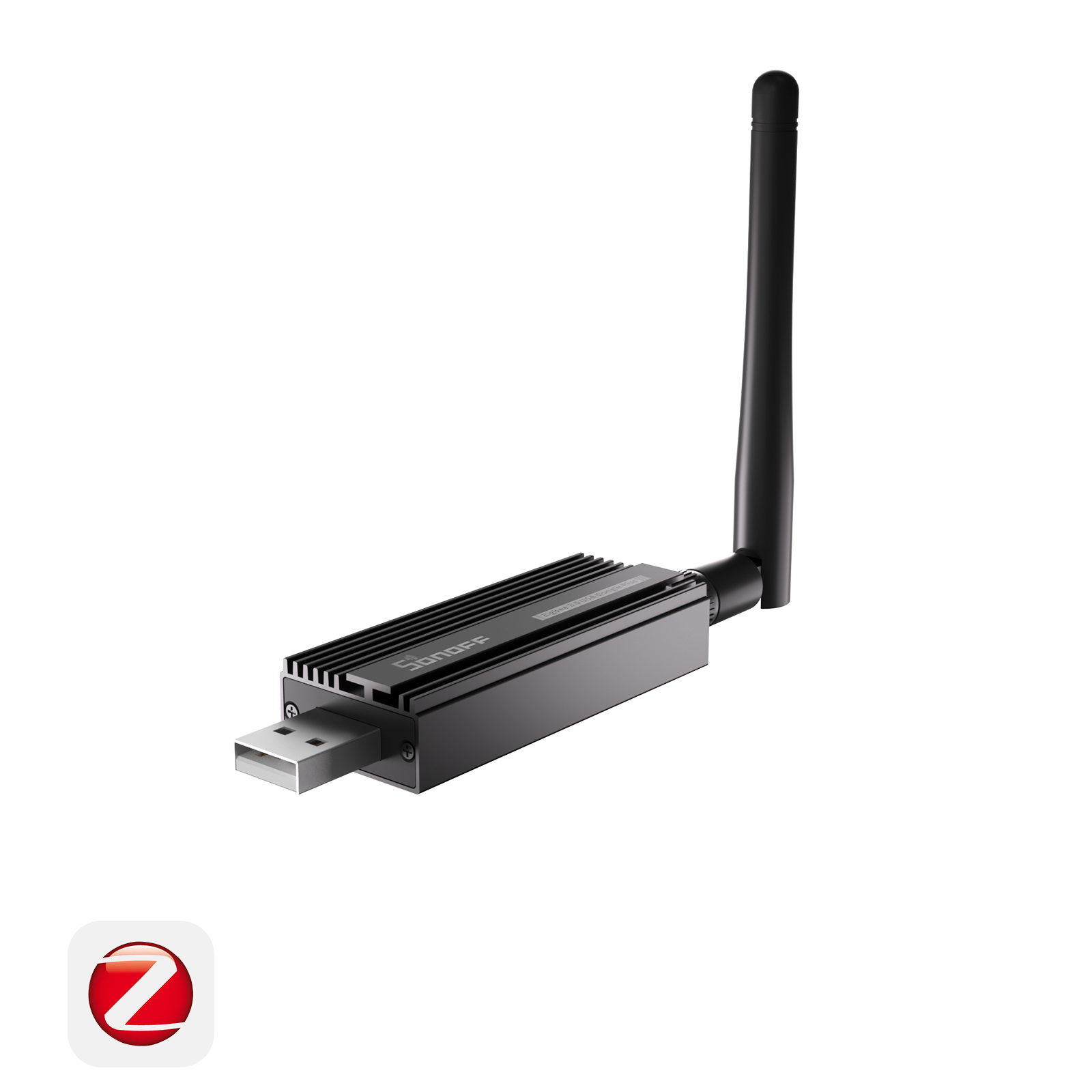
Unlike a Wi-Fi plug, a mesh device cannot talk to your network on its own; something has to translate. For Zigbee that is a coordinator, usually a small USB dongle (a Sonoff Zigbee dongle, a ConBee) plugged into the computer running Home Assistant, with Zigbee2MQTT or the built-in ZHA doing the talking. Z-Wave wants a Z-Wave controller and Z-Wave JS; Thread wants a border router (many modern hubs include one). The upside of a Raspberry Pi running Home Assistant is that one box plus a dongle or two becomes the hub for all of it, locally, with no vendor cloud.
Where they fit, and where they don’t.
Where they fit
- Lots of small battery sensors that must last years.
- Keeping a crowded Wi-Fi network clear of sensor traffic.
- Local, cloud-free automation through a hub you own.
- Off-the-shelf door, leak, motion, and climate sensors.
Where they don’t
Resources.
These open in a new tab:
Home Assistant: Zigbee (ZHA) Zigbee2MQTT Matter (CSA) Thread Group
Frequently asked questions.
What is the difference between Zigbee, Z-Wave, and Thread?
All three are low-power mesh radios for small devices. Zigbee is cheap, mature, and uses 2.4 GHz with a huge device range. Z-Wave uses a less-crowded sub-gigahertz band and is often more reliable through walls, but costs more with fewer devices. Thread is newer, 2.4 GHz, and is the radio Matter runs over.
Is Matter a replacement for Zigbee?
No. Matter is not a radio; it is an interoperability layer that lets devices from different brands work together. It runs over Wi-Fi or over Thread. Zigbee and Z-Wave are separate radios that still need their own coordinators, though hubs increasingly bridge them into a Matter setup.
Do I need a hub for Zigbee?
Yes. A Zigbee device cannot reach your network on its own. You need a coordinator, usually a small USB dongle plugged into the computer running Home Assistant, with Zigbee2MQTT or the built-in ZHA integration to manage the devices.
Are Zigbee and Z-Wave local, or do they use the cloud?
They are local. With a coordinator and Home Assistant, the devices talk to your own hub with no vendor cloud, which keeps them working offline and keeps the setup yours. That local nature is a big reason they fit an own-your-data approach.
Should I use Zigbee devices or build with an ESP32?
For off-the-shelf battery sensors and switches, Zigbee plus a hub is the low-effort path with years of battery life. For custom sensors you design and program, an ESP32 is easier and more flexible. Many setups use both, all reporting to one Home Assistant.