

The Sonoff Zigbee 3.0 USB Dongle Plus is the cheap, popular way to give a home a Zigbee coordinator: the radio that runs your Zigbee network. You plug it into the computer running Home Assistant, and from there your Zigbee sensors and switches join a mesh you control locally, with no vendor cloud.
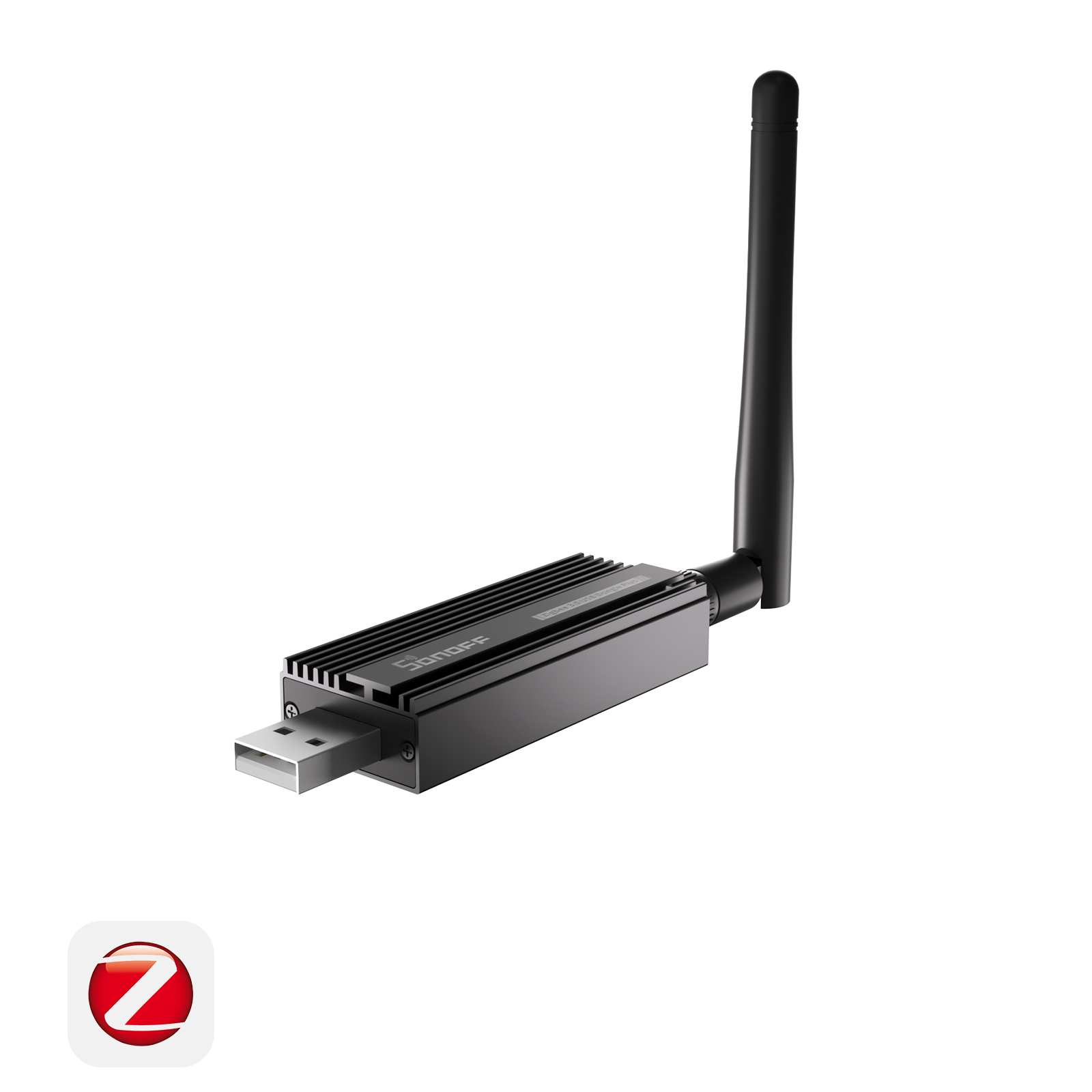
What it is.
It is a USB stick with a Zigbee radio and an antenna. On its own it does nothing; plugged into your hub and paired with software, it becomes the coordinator that forms and manages a Zigbee network. Every Zigbee bulb, plug, and sensor in the house then talks to it (directly or relayed through mains-powered devices), and the software presents them to Home Assistant. It is the single most common starting point for a local Zigbee setup because it is inexpensive and well supported.
Why a coordinator.
Unlike a Wi-Fi plug, a Zigbee device cannot reach your network by itself, it speaks a low-power mesh radio, not Wi-Fi. Something has to translate, and that is the coordinator. One dongle runs the whole network: add devices and they join the mesh, with mains-powered ones extending its range. Because the coordinator lives on your hub, the entire Zigbee network is local and keeps working without internet, which is exactly the own-your-data setup Open Agriculture Technology favors.
Model E or P.
The dongle comes in two flavors, and the letter matters. The Plus E uses a Silicon Labs chip (EFR32MG21); the Plus P uses a Texas Instruments chip (CC2652P). Both work, but software support differs: the TI-based P has long been the safe default for both ZHA and Zigbee2MQTT, while the E is well supported now but historically lagged on firmware. If you want the least fuss, the P is the conservative pick; check current support for your software before buying either.
Key facts.
Where it fits, and where it doesn’t.
Where it fits
- Starting a local Zigbee network for Home Assistant.
- Running many cheap battery Zigbee sensors and switches.
- Keeping smart devices off the cloud, on your own hub.
- ZHA or Zigbee2MQTT setups.
Where it doesn’t
- Z-Wave or Thread; those need their own controllers.
- A setup with no always-on hub to plug it into.
- Right beside the hub’s USB 3 ports, which cause interference (use an extension).
- Custom DIY sensors; an ESP32 is easier to program.
Resources & where to buy.
Sonoff Zigbee Dongle Home Assistant: ZHA Zigbee2MQTT Zigbee & Matter overview
Frequently asked questions.
What is a Zigbee coordinator dongle for?
It is the radio that forms and runs a Zigbee network. Zigbee devices cannot reach your network on their own, so you plug a coordinator like the Sonoff dongle into your Home Assistant host, and your Zigbee sensors and switches join a local mesh through it.
What is the difference between the Sonoff Dongle Plus E and P?
The Plus E uses a Silicon Labs chip and the Plus P uses a Texas Instruments chip. Both work with ZHA and Zigbee2MQTT, but the TI-based P has long been the safe default, while the E is well supported now after earlier firmware lag. Check current software support before buying.
Does the Sonoff Zigbee dongle use the cloud?
No. It runs entirely locally on your hub with ZHA or Zigbee2MQTT, so your whole Zigbee network keeps working without internet and nothing is forced to a vendor cloud. That local nature is a big reason it fits an own-your-data setup.
Why use a USB extension cable with a Zigbee dongle?
USB 3 ports and drives emit interference at 2.4 GHz that can swamp a Zigbee radio plugged in right beside them, hurting range and reliability. A short USB extension cable that moves the dongle away from the host fixes this common problem.