

A lithium battery is what holds a field node’s charge between sunny spells, and the chemistry you pick shapes how long the node lives and how it behaves in heat and cold. Three are worth knowing: the flat LiPo pouches common in hobby gear, the cylindrical 18650 cells that pack a lot of capacity, and LiFePO4, the tough, long-lived chemistry that suits an outdoor node best. Paired with a solar charger, the right battery is the difference between a node that runs for years and one you are forever tending.
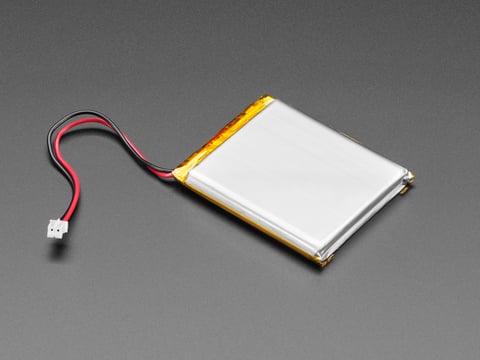
What they are.
Rechargeable cells that store energy for a node to draw on when the panel is not producing, at night or under cloud. All lithium cells need protection and respect, but they reward it with years of service in a small, light package. The job is matching the chemistry and the capacity to the node: how much it draws, how long it must ride through bad weather, and how rough the conditions are where it sits.
Compare the chemistries.
The three a grower meets, side by side. The tinted column is the one we lean on for outdoor nodes, because it lasts longest and tolerates the weather best, even though it stores a little less per gram.
| Spec | LiPo | 18650 Li-ion | LiFePO4Our pick |
|---|---|---|---|
| Shape | Flat pouch | Cylindrical cell | Cell or pack |
| Voltage | 3.7 V nominal | 3.7 V nominal | 3.2 V nominal |
| Energy density | High | High | Lower |
| Cycle life | Hundreds | Hundreds | Thousands |
| Temperature | Narrow | Narrow | Wider, more tolerant |
| Safety | Care needed | Care needed | Safest of the three |
| Best for | Compact, light nodes | Rugged, high-capacity nodes | Outdoor nodes that must last |
LiFePO4 runs at a lower 3.2 volts and stores a bit less per gram, so a pack is larger for the same capacity, but it shrugs off heat and cold and lasts thousands of cycles where LiPo and 18650 manage hundreds. For a node baking on a fence post all summer, that trade is worth it. For something small and light you tuck in an enclosure, a LiPo or 18650 is fine.
Protection and a BMS.
This is not optional with lithium. A cell must be protected against overcharge, over-discharge, over-current, and short circuit, any of which can ruin it or, at worst, start a fire. Small single cells often come as protected cells with the circuit built in; a multi-cell pack needs a battery management system (BMS) that watches and balances the cells. A good charge controller handles the charging side, but never run a bare, unprotected lithium cell in a node you leave alone.
The freezing-charge trap.
The one that catches outdoor growers. Standard lithium cells (LiPo and 18650) must not be charged below freezing: doing so plates metallic lithium inside the cell, permanently damaging it and creating a hazard. Discharging in the cold is usually fine; charging is not. This is a real problem for a solar node that sees frosty mornings. LiFePO4 tolerates a wider range and is the safer choice for cold climates, and some charge controllers add a low-temperature cutoff. If your node will charge in winter, plan for this or pick LiFePO4.
Where they fit, and where they don’t.
Where they fit
- Storing charge for a solar field node.
- LiFePO4 for outdoor nodes that face heat and cold.
- 18650 for rugged, high-capacity builds.
- LiPo for compact, light enclosures.
Where they don’t
Resources & where to buy.
Adafruit lithium battery The charger Regulators (the clean rail) Solar & batteries overview
Frequently asked questions.
Which lithium battery is best for a field node?
For an outdoor node that must last, LiFePO4: it tolerates heat and cold and lasts thousands of cycles, though it stores a little less per gram, so the pack is larger. For a compact, light node in an enclosure, a LiPo or an 18650 Li-ion cell is fine. Match the chemistry to the conditions and the capacity to how long the node must ride through bad weather.
What is a BMS and do I need one?
A battery management system protects and balances the cells in a lithium pack, guarding against overcharge, over-discharge, over-current, and short circuit. A single small cell often comes as a protected cell with the circuit built in; a multi-cell pack needs a BMS. Either way, never run a bare, unprotected lithium cell in a node you leave alone.
Can I charge a lithium battery in freezing weather?
Not a standard one. LiPo and 18650 cells must not be charged below freezing, because it plates metallic lithium inside and permanently damages the cell. Discharging in the cold is usually fine; charging is not. LiFePO4 tolerates a wider range, and some charge controllers add a low-temperature cutoff. For a node that charges in winter, plan for this or choose LiFePO4.
What is the difference between LiPo, 18650, and LiFePO4?
LiPo is a flat pouch cell, compact and light. An 18650 is a cylindrical Li-ion cell with high capacity and a rugged metal can. Both run at 3.7 volts and last hundreds of cycles. LiFePO4 runs at 3.2 volts, stores a bit less per gram, but is the safest, lasts thousands of cycles, and tolerates heat and cold best, which makes it the pick for outdoor nodes.