
Endpoints & Control
Every other aisle in this book collects. This one is where the readings land and become use: the glance, the alert, the operation, the audit. And OAT’s side of the deal is simple — every sensor and gateway here pushes plain, documented readings that work with any endpoint: the one you have, or the one you’re building.
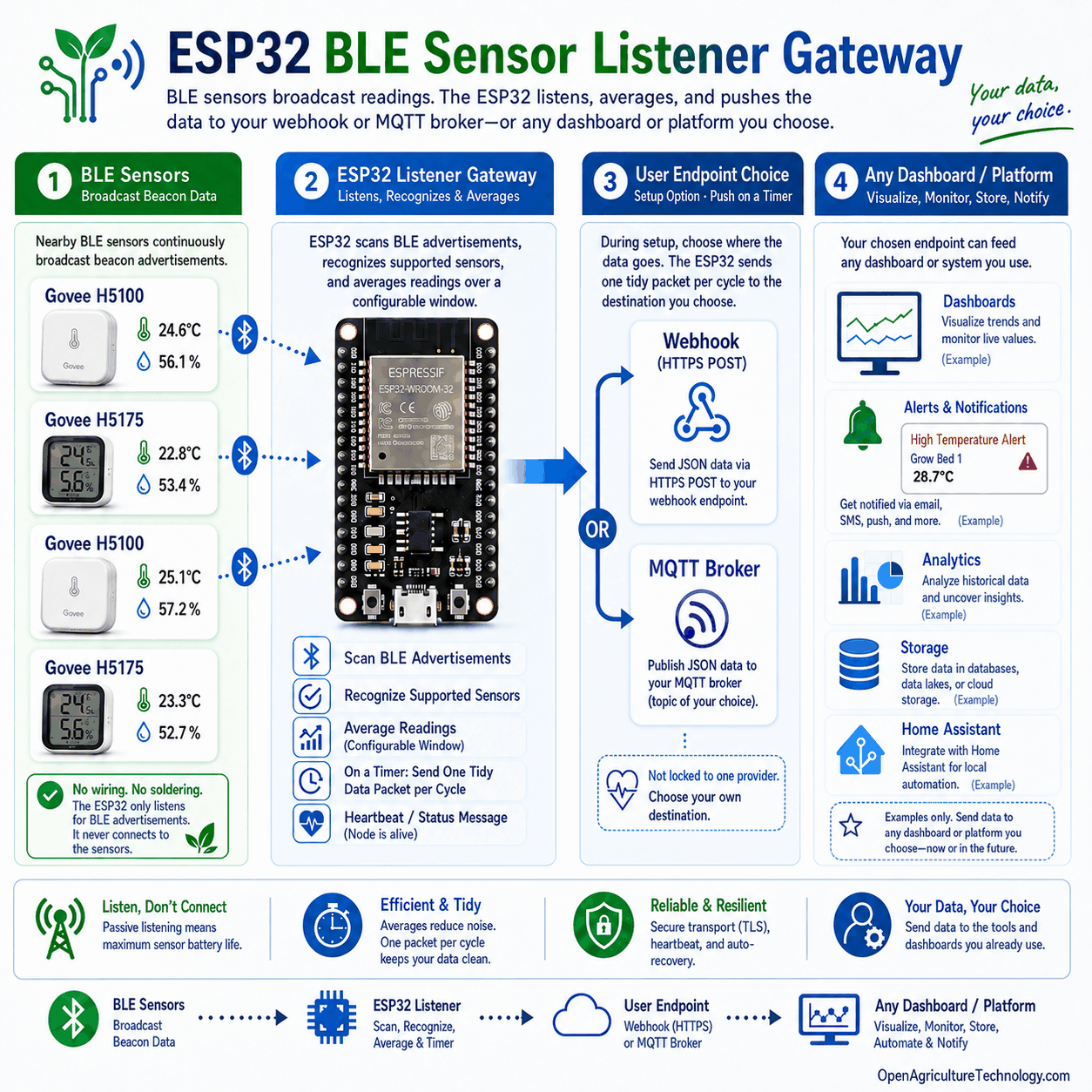
The Test Bench: a Live Endpoint, Free
The demonstration endpoint this site already runs: point your first build at it and watch readings land, live, before you own any endpoint at all. The zeroth rung of the ladder — nothing to install, nothing to sign up for, and when you stand up your own endpoint you just change one address.
Home Assistant, on Any Computer You Have
The open-source platform, pointed at the farm: dashboards, alerts that text you, automations that act, and history for every sensor in this book. It runs on whatever computer you have — a retired laptop, a mini PC, a desktop in the corner, a Raspberry Pi, or Docker on a server you already run. Our Home Assistant wing — sixty-three pages deep — is the delivery content; this listing is its front door.
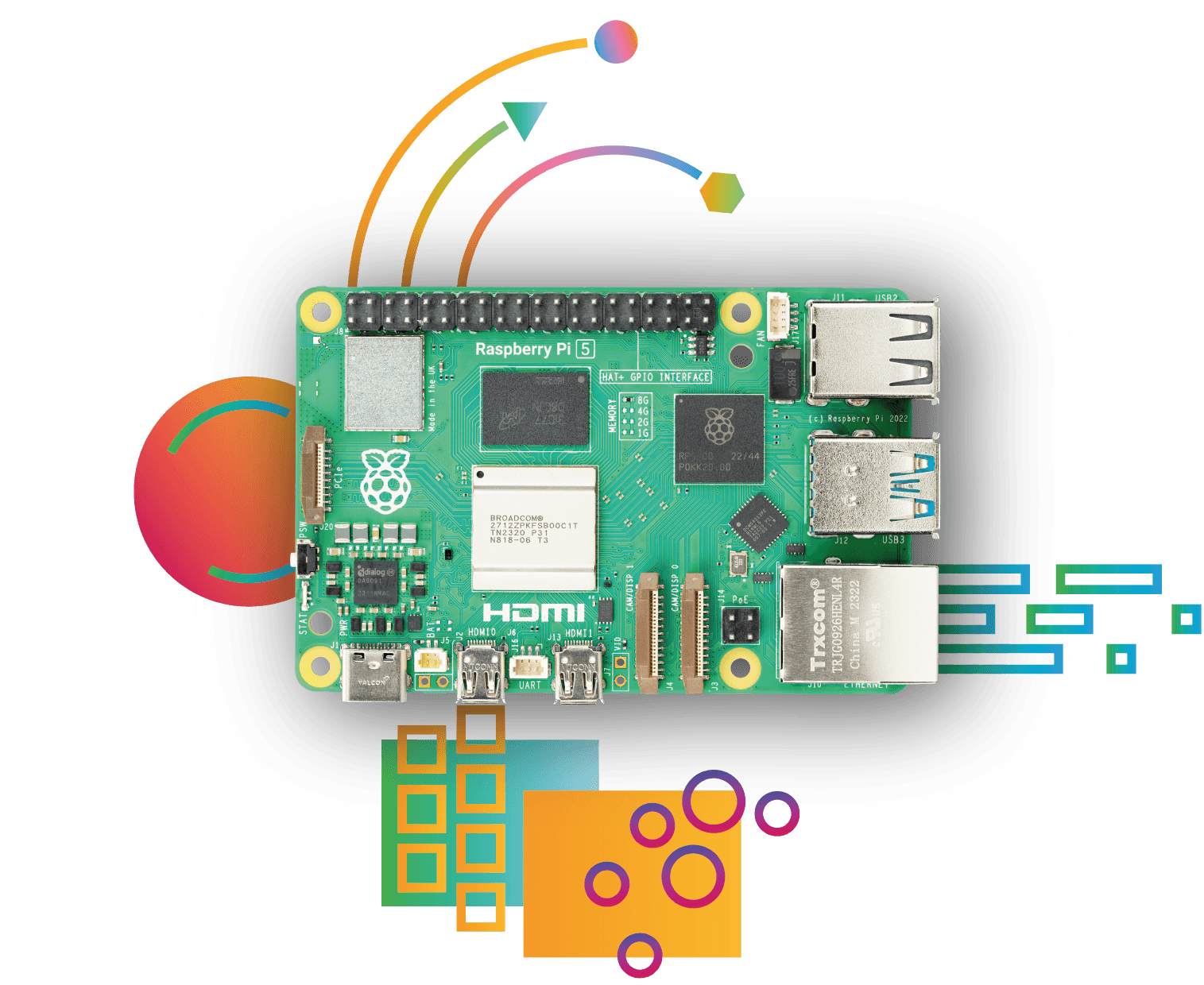
The Endpoint Server: Pi, Laptop, or Mini PC
The small computer that runs the whole back half: Home Assistant, the MQTT broker, and the record, on a shelf. Pictured is the Raspberry Pi — the clean dedicated pick — but the retired laptop in the closet does the same job for free, with a built-in screen and a battery that rides out power cuts. When the heavier jobs come — a camera hub, a LoRaWAN server — it is the same shelf, working harder.
The Cloud Endpoint
No computer at home stays on? Land the readings in the cloud: a hosted dashboard or broker service, or the same open stack on a few-dollar rented server. Every board in this store pushes plain webhook or MQTT — exactly what the hosted services accept — and switching later is one address on a setup page.
What an endpoint can do
An endpoint is not one thing — it is however much use you want made of the readings. The jobs stack, and different endpoints do different subsets of them:
| The job | What it looks like | Endpoints that do it |
|---|---|---|
| See it now | A number by the cooler door; tiles on the kitchen counter; a page you open from town | A display · a dashboard · the cloud |
| Chart it | The week’s curve, the season’s trend, two zones side by side | Dashboards, local or cloud |
| Alert | The 2 a.m. text when the walk-in drifts; a beep at the line | A display’s beeper · any dashboard with rules |
| Act | Fan on at 90, heat tape below 34, valve closed when the tank is full | Automation platforms · the Rule-Driven Relay |
| Remember | Readings joined to the planting, the lot, the season — the operational record | A farm operating system · an ERP |
| Prove | The export a buyer asks for; the auditor’s question answered from the record | Any record you own · traceability systems |
The Endpoint Ladder
Collect · Have · Use is the shape of everything OAT builds. The sensors and nodes in the aisles before this one collect; the endpoint is where you have the record and use it. And because every build in this book pushes the same clean readings to one address, the ladder below is climbable: start on any rung, move up when the operation asks for it, and the sensors never change — only the address they push to.
| Rung | The endpoint | What use looks like |
|---|---|---|
| 0 | The Test Bench — our live demo endpoint | Watch your first readings land before you own anything |
| 1 | A display on the counter or by the cooler door Coming | The number at the point of need; a beep at the line |
| 2 | Home Assistant on any computer you have | Dashboards, texts, automations, history — the workhorse rung |
| 3 | The cloud: a hosted service or a rented server | Readable from anywhere, nothing at home to keep alive |
| 4 | A farm operating system: the operation’s whole record Coming | Readings joined to fields, plantings, harvests, and tasks |
| 5 | The business system: an ERP with traceability Coming | Sensor records joined to lots and shipments; the audit answered from a record you already keep |
The rungs are not stages you owe anyone: a cooler and a one-number display is a complete, honest system, and so is an ERP with a season of sensor history behind every lot. Pick the rung the operation needs. Control — readings that act — is its own thread, and it starts at the Rule-Driven Relay on the bench below.
Any endpoint — including the one you’re building
OAT sensors and gateways speak the two plainest protocols on the internet: webhook (an HTTP POST) and MQTT. No proprietary cloud, no SDK, no account with anyone. Each reading is one clean, documented record — what was measured, the value, the unit, which sensor, when (the oat-ods schema). If a system can accept a web request or subscribe to a topic — and nearly everything can — OAT builds already work with it:
| If your endpoint is… | OAT plugs in by… |
|---|---|
| Home Assistant | Native webhook or MQTT — readings appear as entities, no code |
| Node-RED | An inbound http or mqtt node; wire the readings anywhere from there |
| A Grafana / InfluxDB / Timescale stack | MQTT via Telegraf, or a small HTTP ingest — the usual plumbing |
| A commercial platform that accepts webhooks | Point the board’s one address at it |
| A spreadsheet habit | A small script turns each POST into a row — honest and underrated |
| The app or platform you are writing | One route that parses JSON and inserts a row. Build against the same contract our Test Bench runs. |
This is deliberate. The boards never learn a vendor’s API — they learn one address, which is why switching endpoints is a one-line edit on a setup page, and why nothing you build from this book can be orphaned by a company folding or a service changing its terms. If you are building an endpoint — a farm platform, a product, a class project — the schema and test endpoint above are public and stable. Build against them, and every sensor in this book is already yours.
On the bench
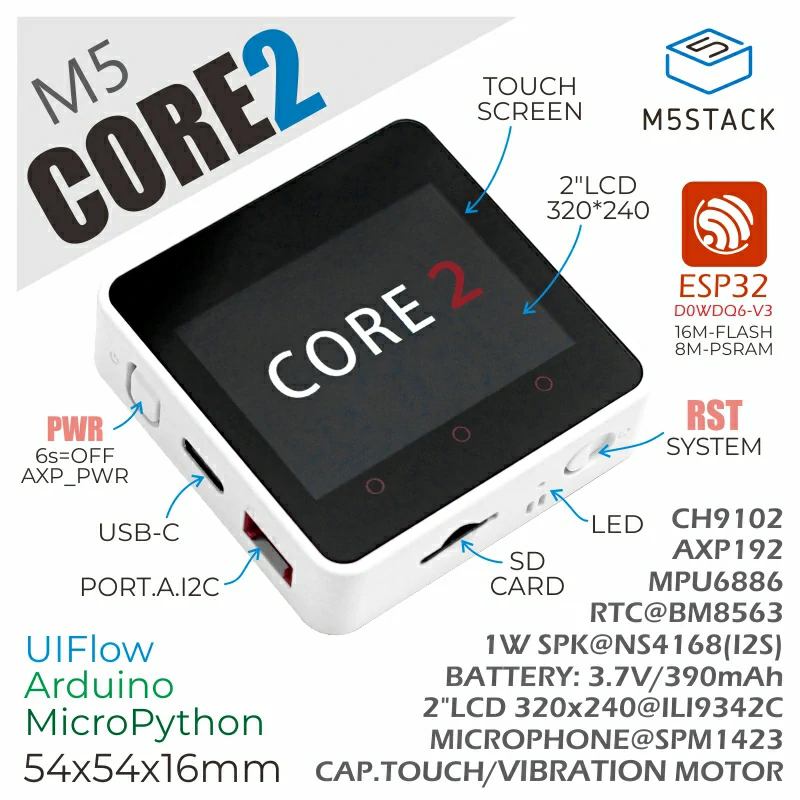
M5Stack Core2 Farm Display Coming
A cased touchscreen that IS the endpoint: it receives readings over your network, shows them as tiles, beeps when one crosses a line, and logs the record to its own memory card. No server, no cloud, no monthly anything — the record lives on a card you can hold.
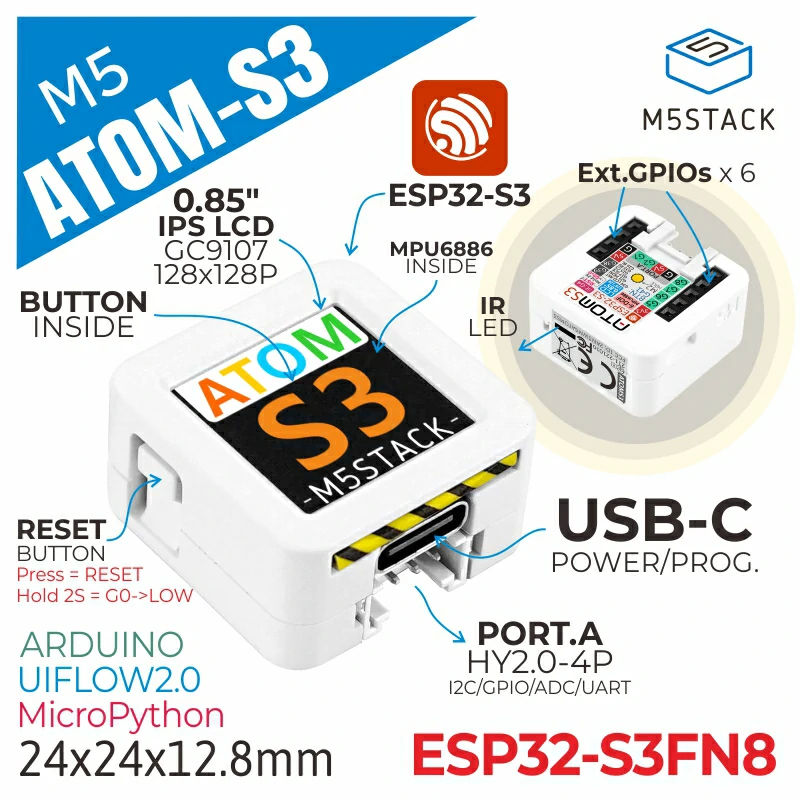
M5Stack AtomS3 One-Number Display Coming
An inch-square screen that shows one reading and holds one line: the cooler by its door, the brooder over its lamp. Green until it isn't, a beep when it crosses, and nothing else to learn — the same firmware as the big display, wearing its smallest face.
The Farm Operating System
One system holding the operation's whole record — fields, plantings, animals, inputs, harvests, tasks — with sensor readings joined to the records they explain: the cooler log beside the harvest lot, the soil curve beside the planting. Open platforms wear this shape today; none has earned this shelf yet. When we have built the wiring and proven it, the listing opens with a name on it.
The Operations ERP, Traceability Included
The top rung: a full business system — an ERP — where the temperature record this store builds joins lots, harvests, and shipments, the shape FSMA-style traceability asks for. The cooler that logged every hour of the season becomes the answer to an auditor's question. The sensors are the easy part; the joining is the work, and it is on our bench. Regulated compliance (vaccine storage, PMO dairy) belongs to calibrated, certified systems; this rung supports food-safety programs, it does not certify them.
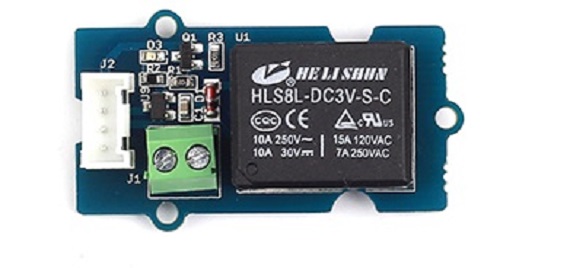
The Rule-Driven Relay Coming
The first rung of control: a threshold and a switch. Below 34 in the cold frame, the heat tape goes on; above 90 in the coop, the fan. Fail-safe defaults spelled out plainly — what the switch does when the network drops is decided by you, before it ever happens.