

A rain gauge measures how much rain has fallen, and the kind you wire to a system is the tipping-bucket. Rain funnels onto a tiny see-saw that holds a set amount of water; when it fills, it tips, dumps, and sends a pulse. Count the pulses and you have the rainfall, the same trick a flow sensor uses. For a grower it answers the most useful weather question of all: how much water did the sky already deliver, so you do not irrigate on top of it.
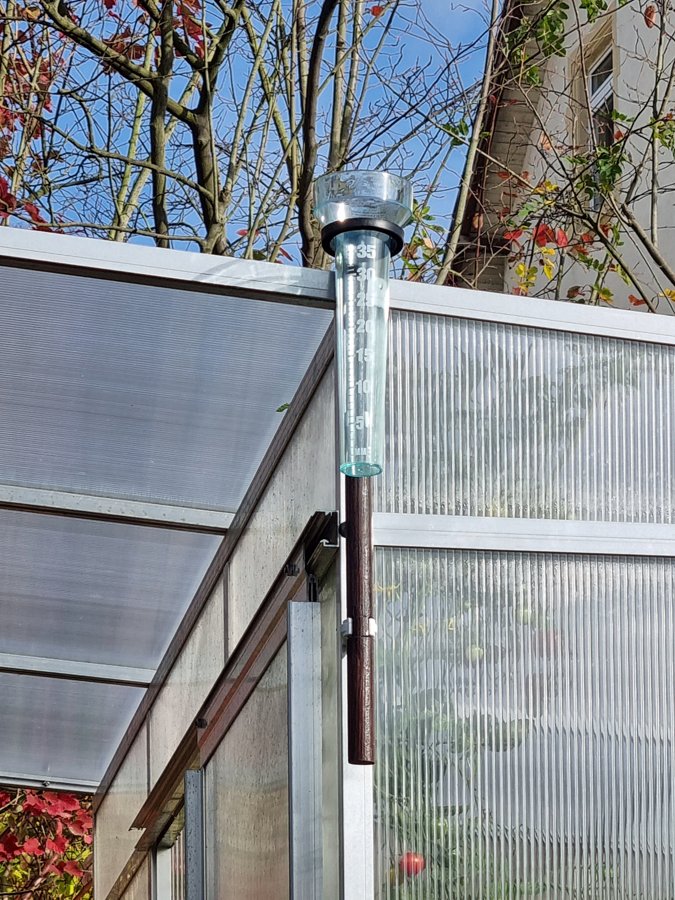
What it is.
A funnel over a small pivoting bucket with two chambers. Rain collects in one side until a fixed volume tips it, emptying that side and bringing the other up to fill, and a magnet on the see-saw closes a reed switch once per tip. Each tip equals a set amount of rain, often 0.2 millimetres or 0.01 inches. The output is just that switch closing, which any microcontroller can count, with no analog reading to interpret.
How it counts rain.
Two numbers come from one stream of tips. The total rainfall is the count of tips times the millimetres per tip, so a running tally gives the day’s or storm’s total. The intensity, how hard it is raining, is how fast the tips arrive. In code you count the reed-switch closures on an interrupt pin, debounce them so one tip is not read as several, and convert: total from the running count, rate from tips over time. Reset the daily total at midnight and you have a rain log.
Calibration and cleaning.
The gauge comes with a millimetres-per-tip figure, but it is worth checking, and worth keeping clean. To calibrate, pour a known volume slowly through the funnel and count the tips; the volume divided by the funnel area gives the rainfall it should represent, and you adjust your per-tip figure to match. To keep it honest, clean the funnel: leaves, dust, and especially insects and spiders love to nest in a rain gauge and block or slow it, so a screen and an occasional clear-out keep the readings real.
Where it falls short.
Two honest limits. In a downpour the bucket can tip slower than the rain arrives, so very heavy rain reads a little low, fine for totals, less so for extreme intensity. And it cannot measure snow: frozen precipitation just sits in the funnel until it melts, so a plain tipping bucket misses winter unless it is a heated gauge. For most growing-season irrigation decisions neither matters, but it is worth knowing before you trust it in a blizzard.
Key facts.
Where it fits, and where it doesn’t.
Where it fits
- Rainfall totals for irrigation scheduling.
- Rain-triggered automation, like skipping a watering.
- Local rain logging the nearest forecast misses.
- Feeding a water budget or evapotranspiration estimate.
Where it doesn’t
- Snow, without a heated gauge.
- Exact intensity in a heavy downpour.
- A clogged or unscreened funnel; it under-reads.
- Under an overhang or tree that blocks the rain.
Resources & where to buy.
Adafruit weather meter Anemometer & vane Weather station overview The Sketches
Frequently asked questions.
How does a tipping-bucket rain gauge work?
Rain funnels onto a small two-chamber see-saw that holds a set amount of water. When one side fills it tips, empties, and a magnet closes a reed switch, one pulse per tip, then the other side fills. Each tip equals a fixed amount of rain, commonly 0.01 inch or 0.2 millimeters depending on the model. A microcontroller counts the pulses: the count gives the total, and how fast they arrive gives the intensity.
How do I read a rain gauge with a microcontroller?
Treat it like a pulse counter. Wire the reed switch to an interrupt pin, debounce it so one tip is not counted several times, and keep a running total. Multiply the tip count by the gauge’s rain-per-tip rating for total rainfall, and measure tips over time for intensity. Reset the daily total at midnight to build a rain log you can chart and automate on.
How do I calibrate a rain gauge?
Pour a known volume of water slowly through the funnel and count the tips. The volume divided by the funnel’s collection area is the rainfall it represents, so you adjust your rain-per-tip figure until the math matches. While you are there, fit a screen and clear out any debris, since leaves and insects nesting in the gauge are the most common cause of low readings.
Can a rain gauge measure snow?
Not a plain tipping bucket. Snow and ice just sit in the funnel until they melt, so winter precipitation is missed or badly delayed. A heated rain gauge melts it as it lands and can measure the water equivalent. For growing-season irrigation decisions this rarely matters, but if you need winter precipitation, you need the heated version.