
A professional soil probe is the one whose number you can actually act on. Where a cheap capacitive sensor gives a rough, drifting hint of wet-or-dry, a research-grade probe (the METER TEROS line, Campbell Scientific, and the like) reports calibrated volumetric water content, and usually soil EC and temperature too, accurately and for years. It costs many times more, and when an irrigation or fertigation decision rides on the reading, that accuracy is exactly what you are paying for.
What it is.
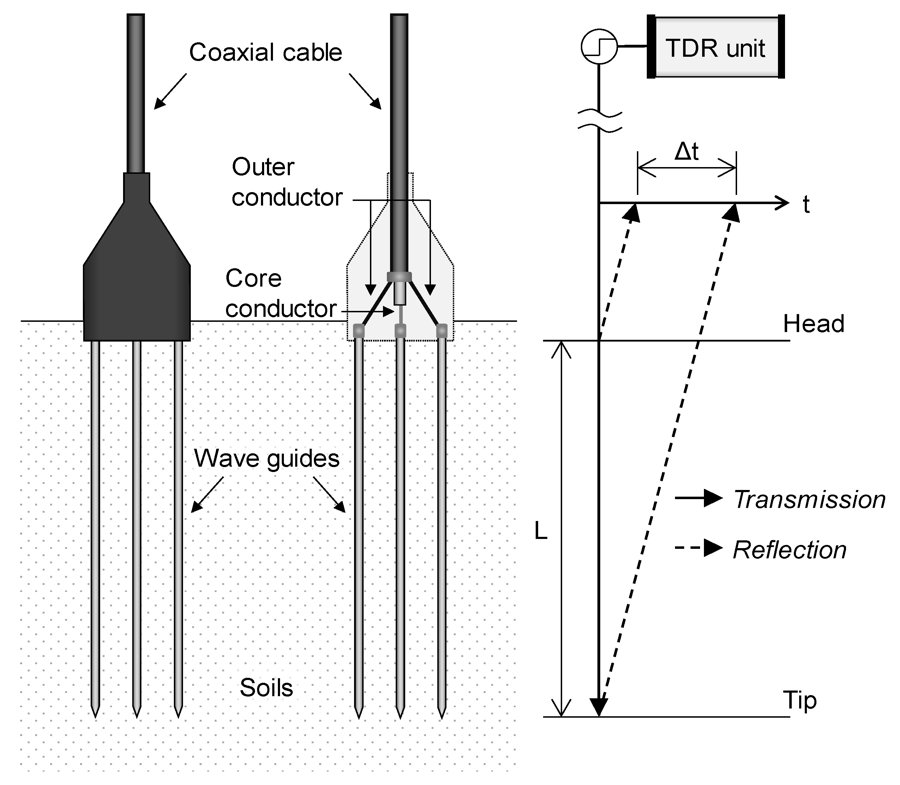
A probe with prongs you insert into the soil that measures the soil’s dielectric, how it responds to an electrical field, which tracks closely with how much water it holds. Using capacitance or a time-domain method (TDR or TDT), and a factory calibration, it converts that into true volumetric water content: the actual fraction of the soil that is water, not an arbitrary number. It is built and sealed for years in the ground, and it speaks a digital protocol rather than a raw voltage.
What it gives over a cheap sensor.
The gap is trust. A cheap capacitive sensor is fine for “is this pot dry,” but its reading is uncalibrated, drifts with temperature and salinity, and wanders over a season, so you cannot compare it across sensors or rely on the actual value. A professional probe is factory-calibrated and stable, so the number means the same thing today, next month, and on the probe two beds over. When you are scheduling irrigation by water content, or managing it across zones, that repeatability is the whole point. For a hobby pot, it is overkill; for a decision, it is the difference between data and a guess.
Three readings in one probe.
Most research probes give more than moisture from a single insertion. Volumetric water content for how wet the soil is, soil electrical conductivity (EC) for salinity and the nutrient level in the root zone, and temperature, which both affects roots and corrects the other readings. That trio matters for fertigation: water content tells you when to irrigate, EC tells you whether salts are building up or nutrients are right, and temperature ties it together. One probe, three numbers, all from the same spot in the soil.
The digital bus.
A pro probe does not hand a microcontroller a raw voltage; it speaks a digital protocol, usually SDI-12, the standard in environmental and agricultural monitoring, or Modbus over RS-485. That means several probes share one cable and bus, each answering with its calibrated numbers, and a datalogger or a microcontroller reads them all. It is more involved than reading an analog pin, but it is how you build a reliable multi-depth, multi-zone soil profile. Home Assistant can pull them in over Modbus.
Key facts.
Where it fits, and where it doesn’t.
Where it fits
- Scheduling irrigation by real water content.
- Managing salinity and nutrients with the EC reading.
- Multi-depth, multi-zone soil profiles on one bus.
- Research, or any decision that depends on the number.
Where it doesn’t
- A hobby pot or a rough check; use a capacitive sensor.
- A tight budget where qualitative is enough.
- A quick analog read; it needs a digital bus.
- Throwaway or short-term setups.
Resources & where to buy.
METER TEROS 12 Campbell Scientific Capacitive sensor (the cheap one) Soil moisture overview
Frequently asked questions.
What does a professional soil probe measure that a cheap one does not?
Calibrated volumetric water content, the actual fraction of the soil that is water, plus usually soil EC and temperature, from one insertion. A cheap capacitive sensor gives only an uncalibrated, drifting hint of wet-or-dry. The pro probe is factory-calibrated and stable, so the number means the same thing over time and across probes, which is what lets you act on it.
Is a TEROS or Campbell probe worth the money?
When a decision rides on the reading, yes. For a hobby pot or a rough wet-or-dry check, a cheap capacitive sensor is fine and a research probe is overkill. But for scheduling irrigation by real water content, managing salinity, or building a multi-zone profile you trust, the calibration and stability are exactly what you pay for. It is the difference between data and a guess.
What is SDI-12 and why does a pro probe use it?
SDI-12 is a digital protocol standard in environmental and agricultural monitoring. Instead of handing back a raw voltage, the probe reports its calibrated numbers digitally, and several probes can share one cable and bus, each answered in turn by a datalogger or microcontroller. That is how you build a reliable multi-depth, multi-zone soil network. Some probes use Modbus over RS-485 instead, which Home Assistant can read.
Why does a soil probe also measure EC and temperature?
Because together they tell the whole root-zone story. Water content says when to irrigate, EC (electrical conductivity) shows whether salts are building up or the nutrient level is right, and temperature affects root activity and also corrects the moisture and EC readings. For fertigation especially, having all three from the same spot in the soil is far more useful than moisture alone.