

Power over Ethernet carries both data and power down a single network cable. A PoE splitter is the small part at the far end that pulls the power back out, handing your device a normal power lead while passing the data through. It is what lets you run one cable to a remote camera, a Raspberry Pi, or a sensor hub in an outbuilding and have it powered and connected, with no separate supply out there to find a socket for or to fail.
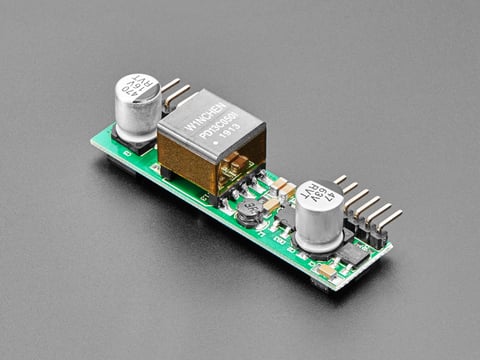
What it is.
A splitter takes a PoE-powered Ethernet line in and gives two things out: a data connection and a power lead at the voltage your device wants, often 5 volts over USB-C or microUSB for a Pi, or 12 volts for a camera. The power was injected at the other end of the cable, and the splitter simply separates it back out at the device. Many splitters, like the one pictured, are isolated, which keeps electrical noise off your device’s supply, a good thing on a long run.
Splitter, injector, switch.
Three parts share the PoE job, and it helps to keep them straight. An injector sits at the source end and puts power onto the cable. A splitter sits at the device end and takes it back off. A PoE switch is a network switch that injects power on every port at once, so you do not need a separate injector per cable. A common small setup is a PoE switch in the house feeding several outdoor cameras and hubs, each with a splitter (or built-in PoE) at its end.
Active vs passive.
The one thing to get right. Active PoE (the 802.3af/at standards) negotiates voltage with the device and runs at about 48 volts, which is the safe, standard choice. Passive PoE just puts a fixed voltage (12 or 24 volts, say) on the cable with no negotiation, common on cheap gear. The splitter must match the source: an active splitter for an active injector or switch, and a passive splitter set to the exact voltage of a passive injector. Mixing them, or guessing the voltage, is how devices get fried, so check both ends before you plug in.
Key facts.
Where it fits, and where it doesn’t.
Where it fits
- Powering a Pi, ESP32, or camera at the end of one cable.
- A remote outbuilding or greenhouse with no socket handy.
- Tidy, reliable installs with one run instead of two.
- Cleaner power on a long run, with an isolated splitter.
Where it doesn’t
- Runs past about 100 m; that is Ethernet’s limit.
- Devices needing more wattage than the splitter delivers.
- Mismatched active vs passive or the wrong voltage.
- Wireless or battery nodes; this is for wired devices.
Resources & where to buy.
Adafruit PoE module (5 V) Adafruit PoE splitter Wired networking overview Cameras (a common PoE device)
Frequently asked questions.
What does a PoE splitter do?
It sits at the far end of a Power-over-Ethernet cable and separates the power back out from the data, handing your device a normal power lead (often 5 volts over USB for a Pi, or 12 volts for a camera) and a data connection. That lets one cable both connect and power a remote device, with no separate supply at the far end.
What is the difference between a PoE splitter, injector, and switch?
An injector puts power onto the cable at the source end. A splitter takes it back off at the device end. A PoE switch is a network switch that injects power on every port, so you do not need a separate injector per cable. A typical setup is a PoE switch feeding several cameras and hubs, each with a splitter or built-in PoE at its end.
What is the difference between active and passive PoE?
Active PoE (the 802.3af/at standards) negotiates with the device and runs at about 48 volts, the safe standard choice. Passive PoE just puts a fixed voltage like 12 or 24 volts on the cable with no negotiation. The splitter must match the source: an active splitter for an active source, a passive splitter set to the exact voltage of a passive injector. Mixing them can damage the device.
How far can a PoE run go?
About 100 meters per Ethernet cable run, the standard limit for both data and PoE power. For longer distances you add a switch or a powered extender along the way. Within that 100 meters, PoE is a tidy and reliable way to get both network and power to a remote camera, Pi, or sensor hub.