

Some of the cheapest, most useful sensors in this whole library are the little Bluetooth thermometers people already buy for the fridge or the closet. A Govee or a SwitchBot costs about ten dollars, runs a year on a coin cell, and quietly broadcasts its temperature and humidity into the air. The Open Agriculture Technology move is to stop letting that reading disappear into a vendor app, and instead catch it yourself.
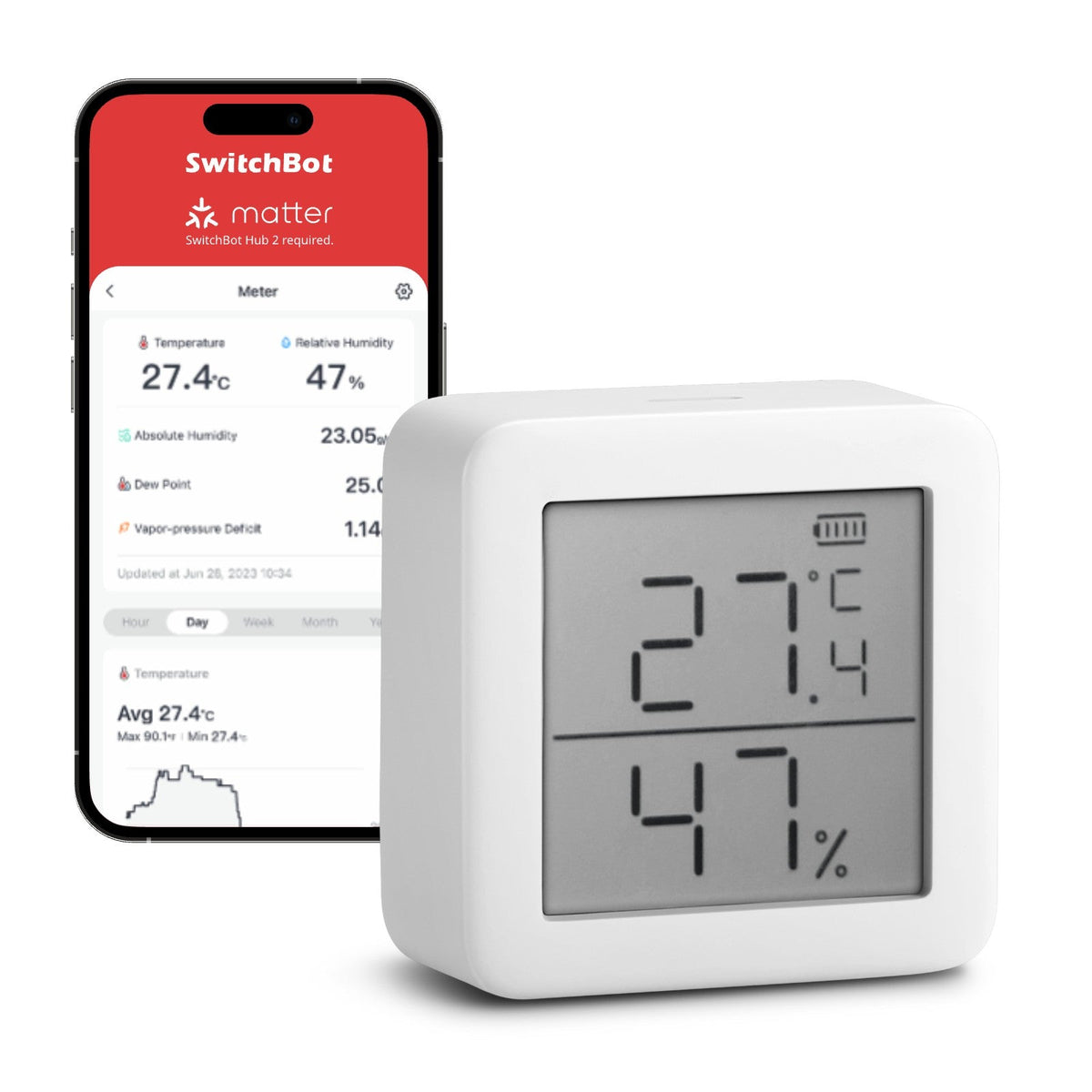
What they are.
These are small, sealed, battery-powered sensors, mostly temperature and humidity, that use Bluetooth Low Energy instead of Wi-Fi. They are dirt cheap, need no wiring, and many people own one already. The catch in the box is that the manufacturer expects you to read it through their phone app and their cloud. But because BLE sensors broadcast their reading openly every few seconds, you do not actually need the app: anything nearby that knows how to listen can hear them.
Capturing them is the trick.
This is where Open Agriculture Technology comes in. The BLE Sensor Listener, a sketch you flash onto an ESP32 from your browser, listens for these broadcasts, decodes around a hundred and twenty device models, and pushes the readings to an endpoint you own. No app, no cloud, no wiring. A Home Assistant Bluetooth proxy does the same job into Home Assistant. Either way, a ten-dollar consumer gadget becomes a sensor on your network, reporting to your place. That is the own-your-data idea, running on hardware you already had in a drawer.
Compare the sensors.
A few popular ones a grower is likely to find. The tinted column is the easy, well-supported default.
| Spec | Govee H5075Listener-ready | Xiaomi LYWSD03MMC | SwitchBot Meter | Inkbird IBS-TH |
|---|---|---|---|---|
| Reads | Temp + RH | Temp + RH | Temp + RH | Temp + RH |
| Broadcasts over BLE | Yes | Yes | Yes | Yes |
| Custom firmware | No, decoded as-is | Yes (ATC/pvvx) | No | No |
| Battery | Coin cell, ~a year | Coin cell | AAA | Coin cell |
| Notes | Well-supported by the listener | Cheapest; flash for clean data | Also makes actuators (bots) | Logging models available |
The Xiaomi LYWSD03MMC is the bargain favorite: a few dollars, and flashing it with open ATC/pvvx firmware gives clean, battery-friendly broadcasts. SwitchBot also makes actuators (button pushers, curtain pullers) that pair with its sensors; for the deep dive see the SwitchBot Meter page.
Where they fit, and where they don’t.
Where they fit
- Cheap temperature and humidity with zero wiring.
- Reusing thermometers you already own.
- Many small spots: shelves, benches, a fridge, a tent.
- Capturing the data yourself with the BLE Listener.
Where they don’t
- Long range; BLE reaches only tens of feet.
- Readings other than the ones the device makes.
- High accuracy; these are consumer-grade.
- Total cloud-avoidance, if a device demands its app to set up.
Resources.
These open in a new tab:
Theengs decoder (supported devices) ATC/pvvx (Xiaomi custom firmware) Home Assistant Bluetooth
Frequently asked questions.
Can I use cheap Bluetooth thermometers for growing?
Yes, and they are among the cheapest sensors around. Devices like Govee and SwitchBot broadcast temperature and humidity over Bluetooth. With a listener you capture those readings to your own system instead of the vendor app, so a ten-dollar gadget becomes a real sensor on your network.
How do I read a Govee or Xiaomi sensor without the app?
Use a listener. An ESP32 flashed with open listener firmware can decode the Bluetooth broadcasts from around 120 device models and push the readings to an endpoint you choose. A Home Assistant Bluetooth proxy does the same job into Home Assistant. Neither path needs the manufacturer’s app or cloud.
What is the range of a BLE sensor?
Bluetooth Low Energy reaches only tens of feet, typically up to about 30 feet indoors. To cover a larger space you place several listeners or Home Assistant Bluetooth proxies around the area. For long outdoor distances, use LoRa instead.
Which BLE sensor is best to start with?
A Govee H5075 is a common, well-supported choice that the BLE Listener decodes as-is. The Xiaomi LYWSD03MMC is cheaper still and, flashed with open ATC/pvvx firmware, broadcasts clean, battery-friendly readings. Both are inexpensive ways to begin.
Do BLE sensors need the cloud?
Not to read them. Their broadcasts are open, so a listener on your own hardware captures the data with nothing leaving your network. Some devices do ask for the vendor app once for initial setup, but the ongoing readings can be entirely yours.